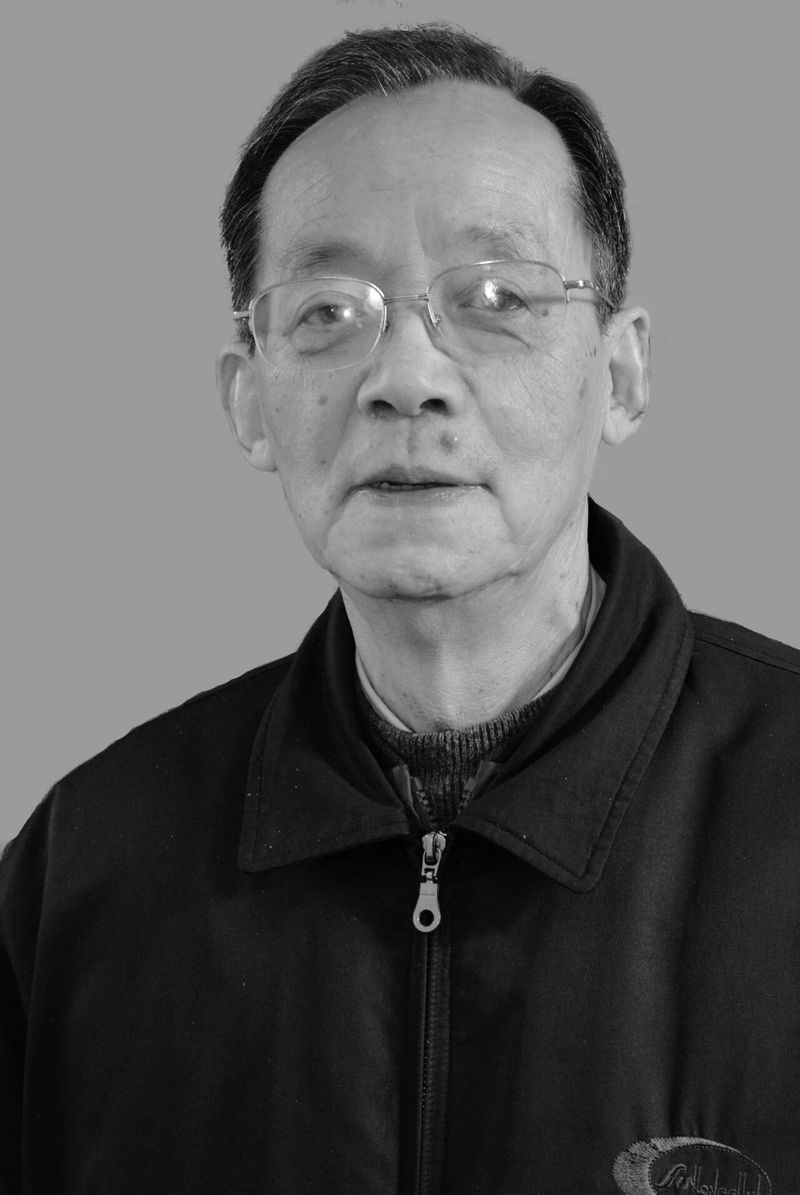
On December 5, renowned physicist WANG Xun, an Academician of the Chinese Academy of Sciences and Professor in the Department of Physics at Fudan University, passed away in Shanghai at the age of 91.
Pioneer of Surface Physics in China
During his undergraduate studies at Fudan University, Wang took many courses taught by XIE Xide—a distinguished physicist and former President of Fudan University, and notably the first woman to lead a university in China—who was then in charge of key subjects including optics and theoretical mechanics.
Upon completing his bachelor’s degree in 1956, Wang continued his studies as a graduate student, becoming Xie’s first postgraduate supervisee. Four years later, he completed his postgraduate studies with distinction and remained at Fudan, and has dedicated the rest of his life to physics research and teaching.
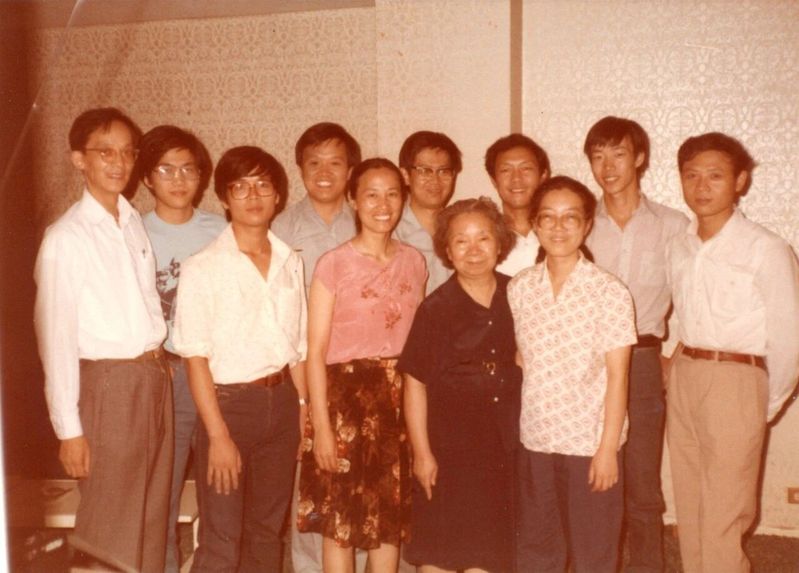
Specializing in surface and semiconductor physics, he conducted seminal research on interface structures, silicon-based low-dimensional quantum systems, and the luminescent properties of porous silicon. Working alongside Xie, he was instrumental in establishing surface physics as a new discipline in China.
Wang was among the first internationally to propose structural models for two types of InP polar surfaces. He achieved the first blue light emission from porous silicon,which was recognized as one of the major advances in the field in 1992. Furthermore, his observation of infrared up-conversion provided crucial evidence for the quantum confinement model of porous silicon luminescence. Over his career, he published more than 300 papers, including over 170 in international SCI journals, with more than 1,200 citations.
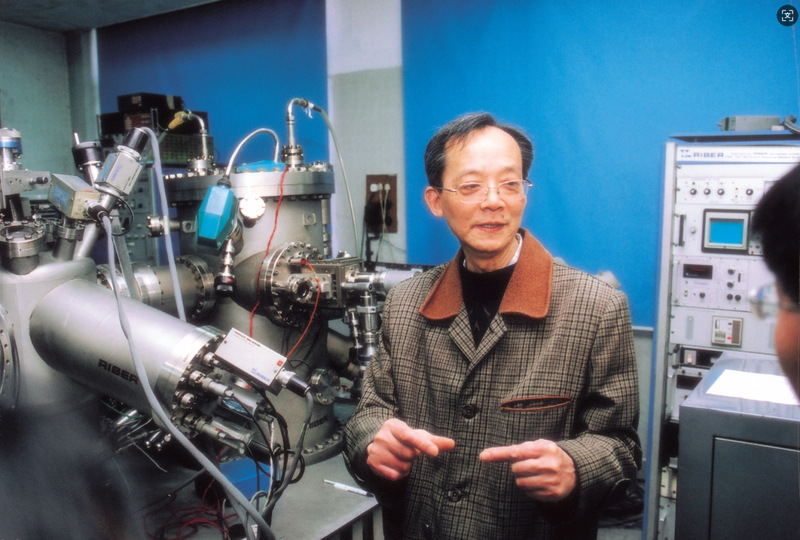
In 1984, Wang began supervising his first doctoral candidates, resolved to build a vigorous launchpad for young researchers. This vision was realized six years later with the establishment of the State Key Laboratory of Applied Surface Physics at Fudan: Xie was appointed its inaugural Chair of the Academic Committee, and Wang its first Director. For more than three decades since, the laboratory has continuously pushed the frontiers of condensed-matter physics and materials science.
Teaching at 84: “I Prefer ‘Professor Wang’ to ‘Academician Wang’”
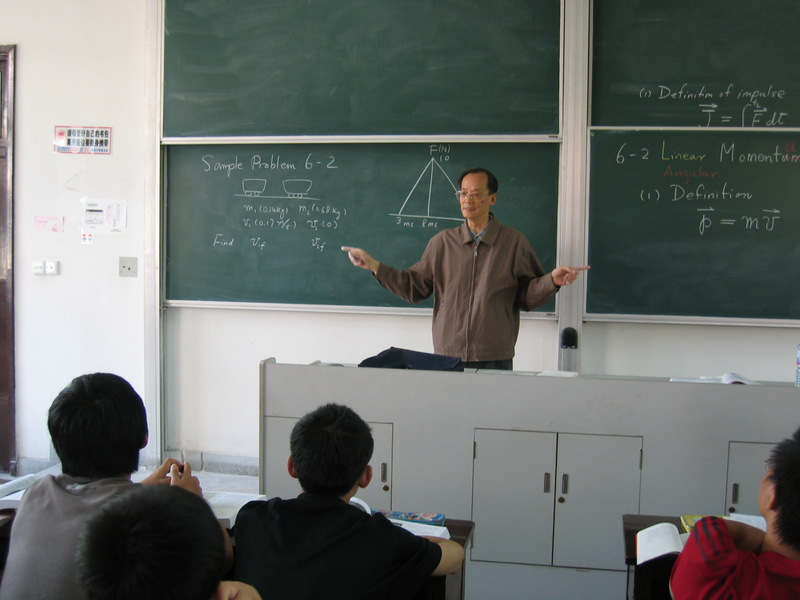
“I’ve broken the age record for teaching in the Physics Department—probably the oldest undergraduate lecturer Fudan has ever kept on,” Wang remarked in 2018.
At 84, he was still pedaling to campus on the samewell-worn bicycle, just as he had for every semester since his first lecture to 200 students in 1961. He never stepped away from the undergraduate classroom until his retirement 57 years later.
He never used notes, having internalized every detail of his lectures on thermodynamics, electromagnetism, solid-state physics, and more. He would forgo breaks to remain in the classroom and answer students’ questions, paying special attention to those who struggled. Through his personal mentorship, he helped several students rise from the bottom of their class to top rankings. “That is what brings me the greatest joy,” he said.
Wang treated every student with the care of a craftsman polishing a gem. In the 1980s, he pioneered English-language instruction for graduate students. When imported textbooks proved too expensive, he organized younger faculty to write their own series, eventually publishing several volumes.
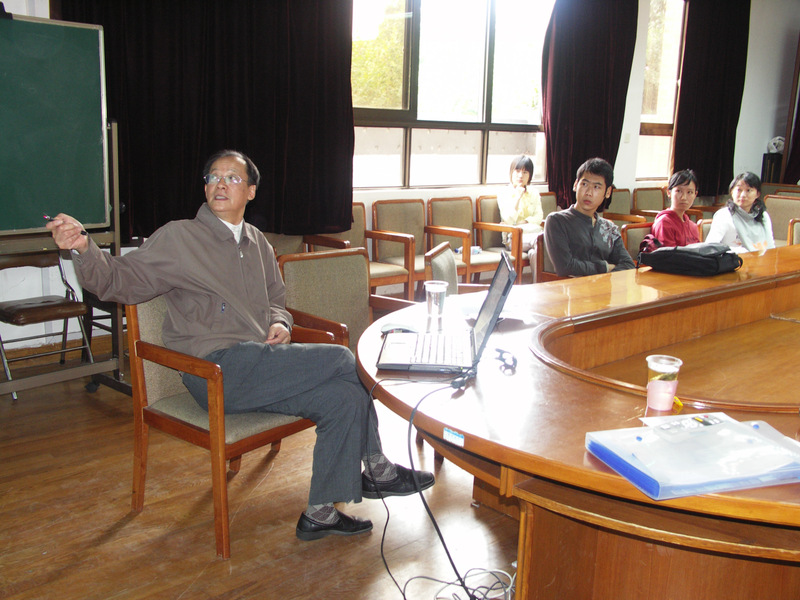
JIN Xiaofeng, Wang’s student who is now also a professor in Fudan’s Department of Physics, recalls that when William Spicer, the celebrated surface-physics pioneer from Stanford, visited Fudan, Wang insisted that Jin present his undergraduate thesis to this distinguished guest—in English. Jin’s halting English made the presentation a struggle. “Looking back,” Jin says, “Wang’s insistence was deliberate kindness. He wanted to give me a chance to learn and grow; had he spoken himself it would have been far easier—and far clearer.”
In 2002, on the cusp of 70, he volunteered to step in as a substitute lecturer. Freshman courses were his favorite to teach: he wanted first-year students to meet an academician at the blackboard, not merely glimpse one from the far side of a ceremonial stage.“I do not like being called Academician Wang,” he once told the students. “I am, first of all, a professor at Fudan University. So I prefer to be addressed as Professor Wang.”
From Teacher to “Stepping Stone”
Wang believed that a true teacher offers a shoulder sturdy enough for students and colleagues to climb higher. He provided his doctoral candidates the map to uncharted territory—and the freedom to move beyond his guidance.
HOU Xiaoyuan, now a professor in Fudan’s Department of Physics, experienced Wang’s mentorship firsthand. Back then, Wang encouraged students to use the lab’s costly imported machines at nights and weekends to ensure they were fully utilized. When Hou signed up for evening sessions, Wang would come and wait quietly outside the lab, ready to assist with safety or technical questions. He kept this up for over a month, until Hou could operate the experiment on his own.
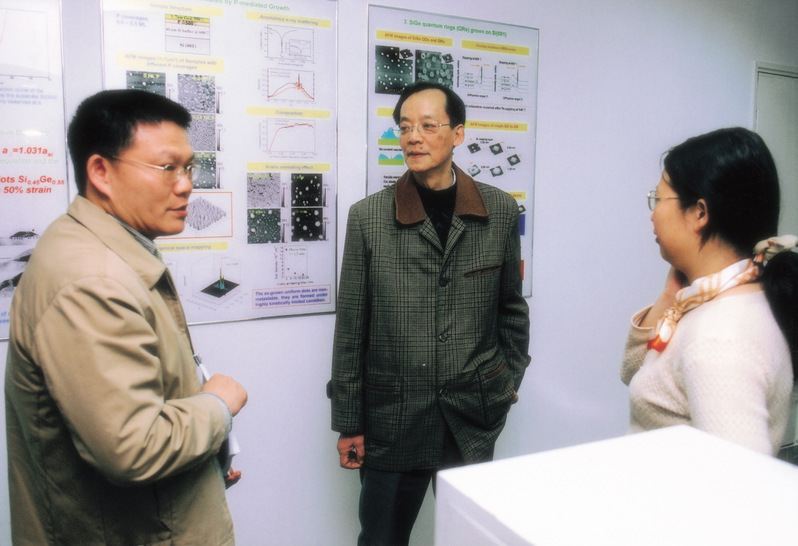
From 1978 onward, Wang supervised nearly 60 graduate students, yet his mentorship extended far beyond the lab. When two newly minted Ph.D.s joined the department, he ushered them to teach the Solid-State Physics course and sat in the back row, observing attentively and offering quiet support when needed. “We must bury the old master-and-apprentice mindset,” he declared. “Step aside, give them the best instruments, and let the young blaze their own trail.”
Before retiring, when asked about his post-career plans, he replied, “Frontline research now belongs to the next generation. They will do better than I did. My role is to think about the future: how to make Fudan’s Physics Department world-class and how to foster a culture of joyful teaching and research.”
(END)
Writer: Edward Turdmat
Editor: WANG Mengqi, LI Yijie