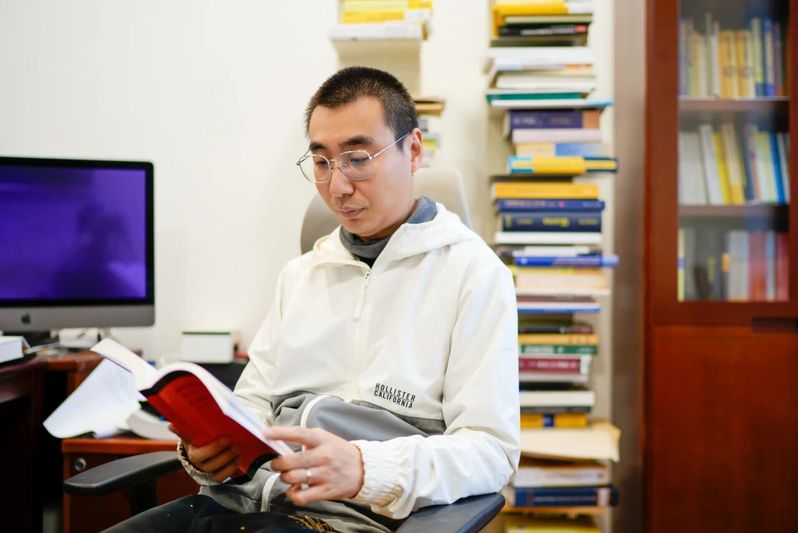

By the time Tony (Nuttadanai Boonwongrath) decided to come to Shanghai, his life had already fallen into a steady routine.
He had graduated from a medical school in Thailand, completed a master’s degree in the United Kingdom, and worked as a dermatology doctor for five years. His days were structured, professional, and full. But somewhere along the way, he began to feel that something was missing.
“I asked myself what I would regret not doing,” he recalled. “One thing that kept coming back was learning Chinese — properly.”
That moment of introspection eventually led him to Fudan University, where Tony, as an exchange student from Bangkok, is now spending a year studying Chinese. Outside the classroom, he is also an internet content creator whose videos reach audiences across platforms and around the globe.
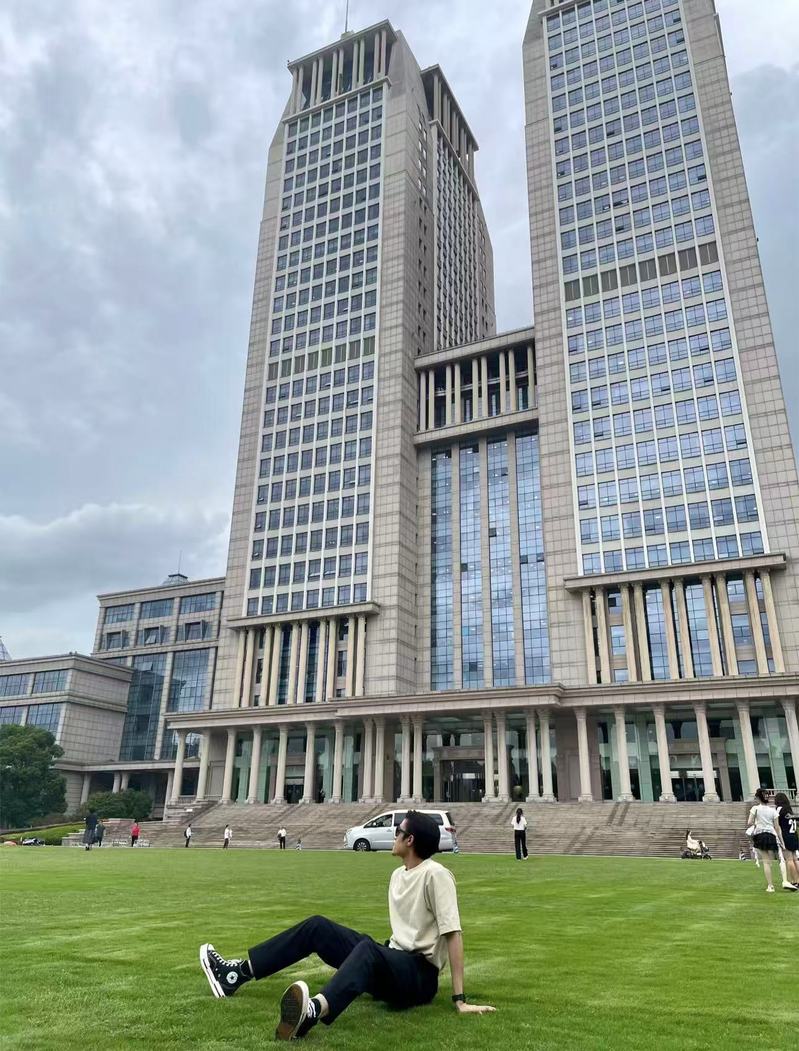
But at Fudan, Tony’s days revolve around something much more basic: listening, speaking, reading, and writing Chinese — often struggling, sometimes succeeding, but always exciting.
Learning Chinese as Lived Experience
For Tony, learning Chinese has never been just about textbooks or exams. He shared the very moments when it truly hits — the “I had really learned something” moments — are always simple. One example was when he could finally communicate with Didi taxi drivers in Chinese fluently. “I could not even say clearly that I wanted to get out of the car months ago,” he recalled. “Then suddenly, you just came to realize that you have really improved.”
Tony’s motivation to learn Chinese began early. Growing up in Thailand, he said he could feel many similarities between Chinese and Thai culture. Over time, his curiosity towards China deepened into a serious interest in the language itself. Before coming to Fudan, he had already spent several years learning about Chinese language and culture on social platforms and from his Chinese clients.
Yet immersion, he found, was different.
“In the first month, it was difficult,” he admitted. “Pronunciation, tones, grammar—everyone in my class had to adjust.” Fudan’s intensive Chinese program quickly became central to his routine. Classes and homework were sometimes demanding, but structured, pushing students to use Chinese not only as an academic subject but as a living language.
In class, language learning goes beyond vocabulary and grammar. His teachers often introduce cultural context, explaining, for example, why certain holidays matter or why people travel during specific times of the year.
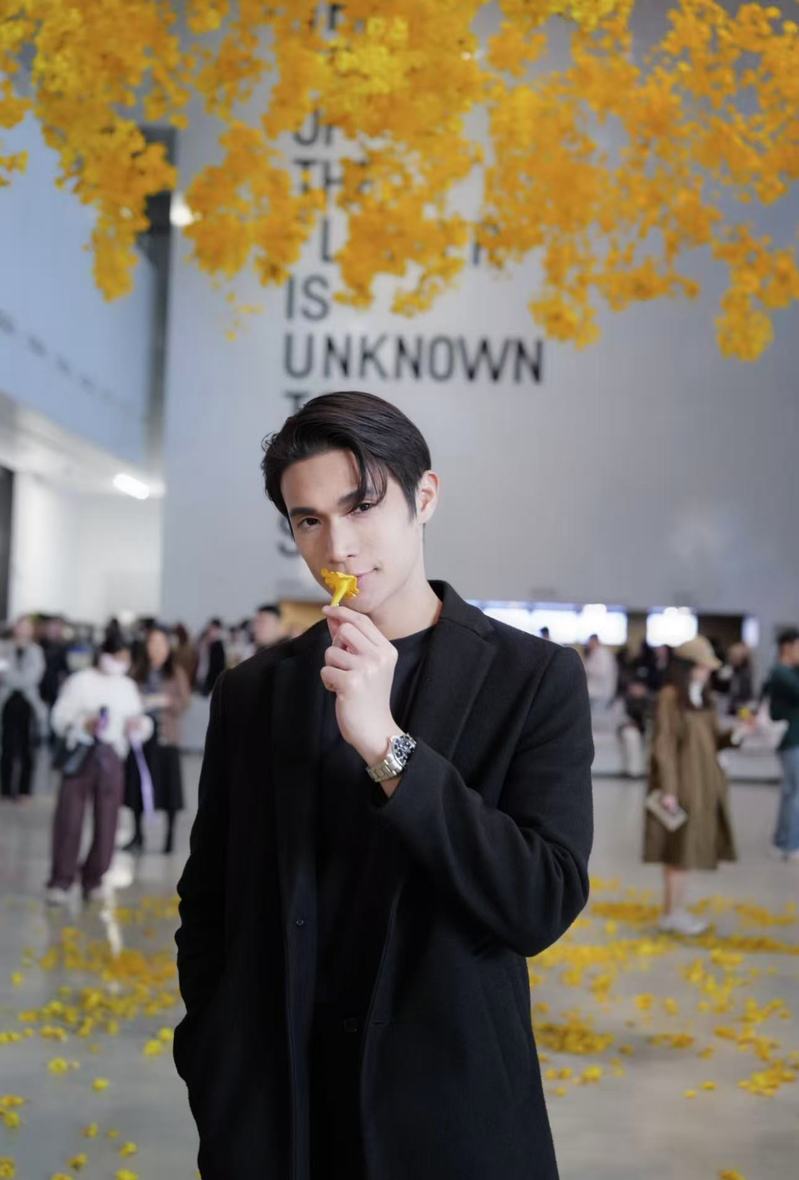
Tony’s first time visiting a museum in Shanghai
“It’s not just about learning the language itself,” he said. “The teachers revealed the culture behind it.” For Tony, he enjoyed the feeling of getting immersed, being surrounded by students around the globe and constantly exposed to real-life conversations that show how people actually spoke.
“You have to learn and try,” he concluded. “Don't worry about making mistakes.”
Bridging Cultures As A Content Creator
Alongside his studies, Tony continues to maintain his presence as an internet blogger. Tony began making videos online in 2020, during the COVID to answer his patients’ questions. But eventually, having talked about medical topics for years, Tony said he wanted to step out of his comfort zone.
Now living in Shanghai, he started producing Thai-language videos on Chinese platforms like Xiaohongshu (a.k.a RedNote, 小红书), zeroing in on the nuances of communication — word choice, tone, and meaning. In the comments section, he often engages with his Chinese audience, unpacking questions like how to differentiate between the different Thai expressions for “我喜欢你”(I like you).
It started from comments left by his new fans on Chinese social platforms. “When I was uploading my previous videos in Thai, some Chinese viewers would ask me what certain words meant. So I began extracting short phrases from my videos and creating a new series around them.”

Tony’s Thai-teaching video on Xiaohongshu
His daily studies in Fudan University, where he absorbed language and cultural knowledge simultaneously, also sparked ideas. “I realized how much language, together with culture matters through my own study experience,” he said. “It's not just what you say, but how you say it.” That awareness once shaped the way Tony approached Chinese, and now he believes his Chinese audience would also resonate with this insight.
Tony admitted that maintaining an online presence comes with its own costs. “Some people are always behind a mask,” Tony said, referring to the influencer world. “It can be exhausting.” But he shared that his past three to four months in Shanghai “felt the most relaxed”: “It exposed me to things that I haven't seen before, and broadened my understanding of how the world really works.”
Through short videos, he shares language learning tips, cultural discovery, and everyday campus life. In doing so, Tony trying to become a bridge of sorts: between Thailand and China, between online audiences and offline academic life, reflecting a new kind of international exchange shaped by personal storytelling.
A Year That’s Still Unfolding
Tony’s year at Fudan is far from over, and he is careful not to frame it as a completed transformation. Instead, he sees it as a process—of learning, adjusting, and slowly gaining confidence in another language and culture.
He chose Fudan with a clear expectation: he treasured Fudan’s outstanding humanities disciplines, and wanted a serious academic environment for learning Chinese. “I didn’t want to just be a visitor in China,” Tony explained. “I wanted to study in a top-flight university, one with a proper system, qualified teachers and engaged classmates.”
At Fudan, Tony found not only language instruction but also an international campus atmosphere. Studying alongside classmates from different countries made him more aware of how language shapes identity and communication.
“We've all witnessed the rise of China over the past few years,” he observed. “So more people, including me, feel that Chinese is very important now, just like learning English was in the past.”
As for the future, Tony does not describe his plans in rigid terms. This year at Fudan, he said, is more about building foundations than making final decisions. “Learning a language is not something you finish in one year,” he reflected. “You just keep going.”
For the winter holiday, Tony decides to move between two roles: the explorer in other regions of China, where he experiences how Chinese is used in daily life, and the explainer on the digital screen, where he demystifies how Thai works to his followers. In both roles, language is the central currency — not one to be saved for a test, but to be spent freely in the daily transactions of attention, patience and connection.
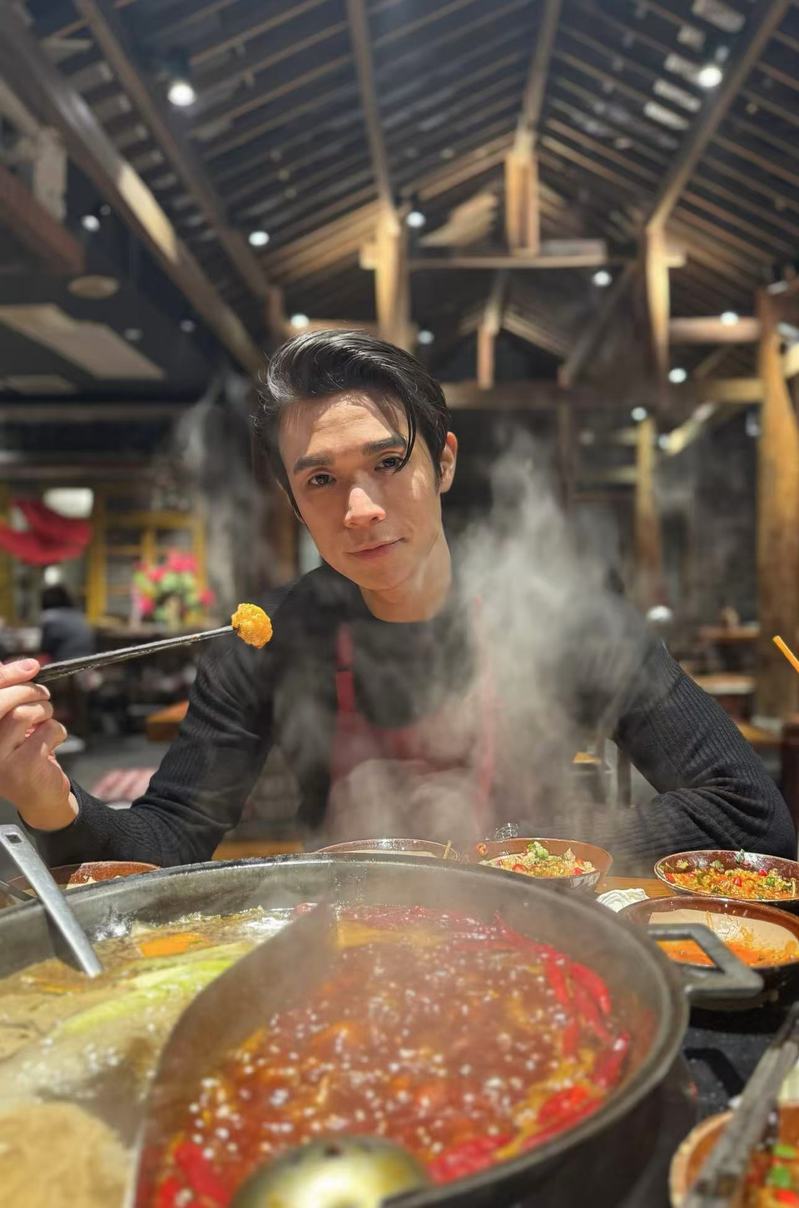
Tony sampling the authentic spicy hot pot in Chongqing
What he values most, he says, is the chance to “think and live in Chinese,” even imperfectly. And Fudan, with its academic depth and international openness, has given him the space to do exactly that.
(END)
Writer: YANG Xinrui
Videographer: Edward Turdmat
Editor: WANG Mengqi, LI Yijie