Editor's Note:
Every day at Fudan, the world walks through our gates.
Borders blur and new stories begin. A stranger becomes a friend. The unfamiliar clicks. You see yourself in a story not your own.
This series —#MyChinaMoment— simply collects those discoveries: real stories from Fudaners around the world building lives and learning here.
What is it like to have a robot dog as a pet? For Shoaib Awan, a Pakistani master's student at Fudan's College of Future Information Technology, it's an everyday reality.
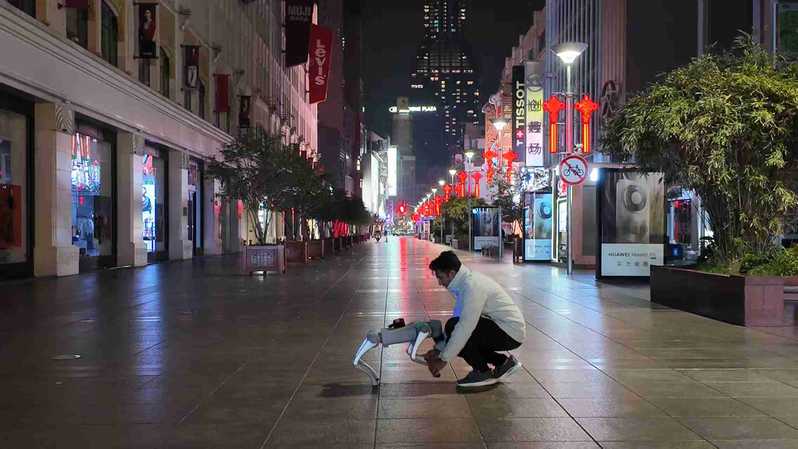
He even gave his mechanical companion a name: Meraxes—after a dinosaur from his favorite paleontology studies. For Shoaib, walking Meraxes is a nightly ritual. "I usually take it at least once a day out for a walk after I finish my work," he says. But these walks are far from ordinary. They have become a source of unexpected connection on campus.
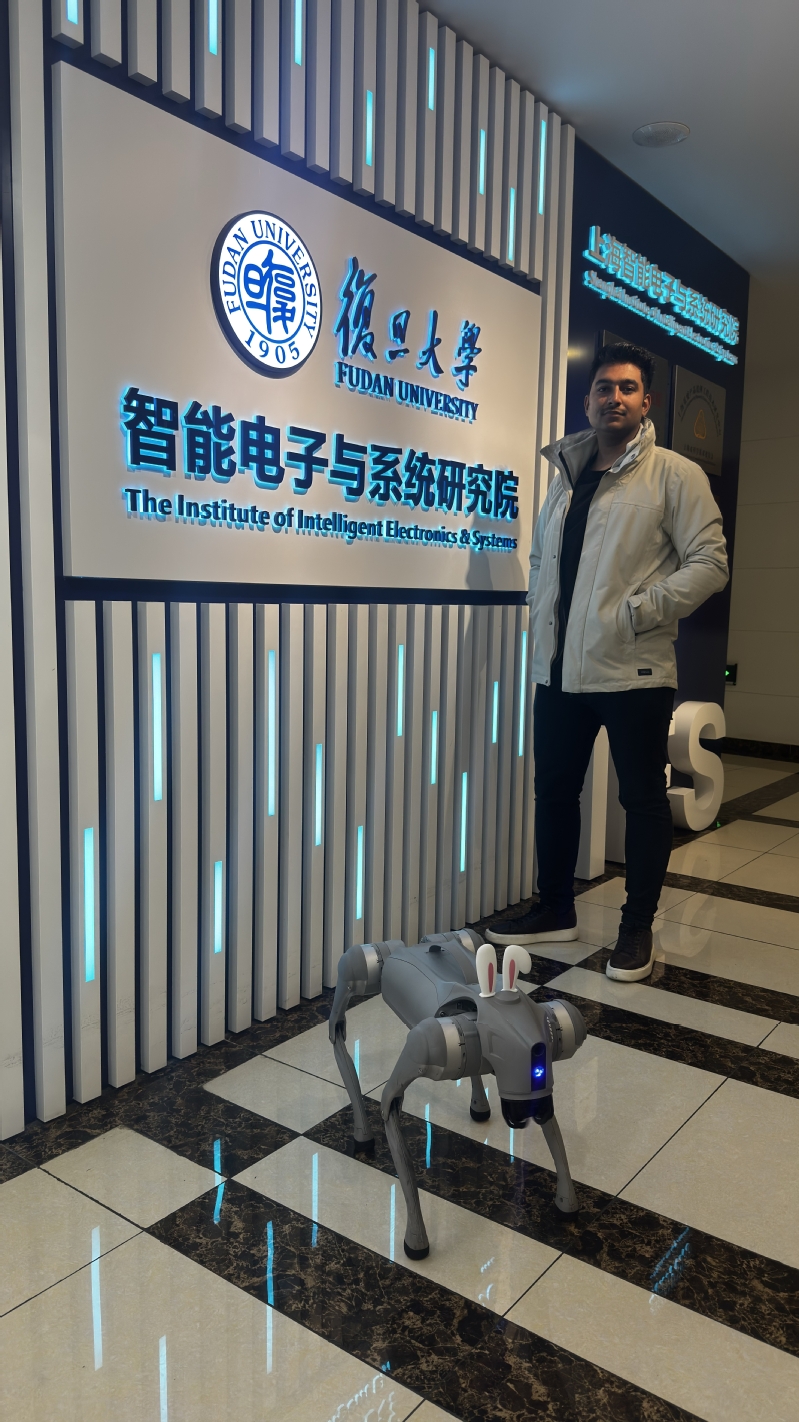
The reactions from the Fudan community have been overwhelmingly positive. "They have a really good reaction," Shoaib shares. "They sometimes give me a thumbs up and sometimes they reach out to me and ask about it."
One of the most delightful surprises has been the demographic most curious about his high-tech pet. "Interestingly, it's something with senior citizens. They are even more curious than people my age or a little younger than me. I like that they have that curiosity and open mind."
The most magical moments, however, happen when the dog interacts back. "Especially when I walk it around and people wave at it, and then they realize the dog could wave back. They don't initially get it that I'm the one controlling it."
"Home is where the machines are."
Shoaib purchased the robot dog from Unitree, a Chinese robotics company, through a simple transaction on Taobao. The experience was a perfect example of what makes life in China so convenient for tech enthusiasts like himself.
"Online shopping is actually one of the best experiences in China," he says. This ease of access extends far beyond consumer gadgets. With a background in hardware development, Shoaib knows the value of quick turnaround times. According to him, prototyping a circuit in Pakistan might take eight to twelve days—and even then, most components were ordered from China. Now, living in China, he can have a circuit in hand within one or two days. "You can quickly finish your work and move on to the next stages," he explains.
Shoaib's fascination with machines began long before he arrived in Shanghai. It started back in 2019 in Pakistan during his bachelor's in electrical engineering. "I was interested in 3D printers. And at that time, 3D printers were more DIY than commercial products. So I thought why not build one."
That year-long project was a turning point. "From there, it sparked my interest in robotics or any machine." Shoaib says. He likes to surround himself with machines, a passion best summed up by his personal philosophy: "Home is where the machines are."
This drive led him to Fudan in 2024. The decision was sealed after meeting his supervisor Prof. HU Laigui in October 2023. "I decided to major in microelectronics because it seemed futuristic and fit my interest," he says. Now, his research on microelectronics focuses on the future of computing. "We are working on optical image recognition and next-generation neuromorphic computing for AI."
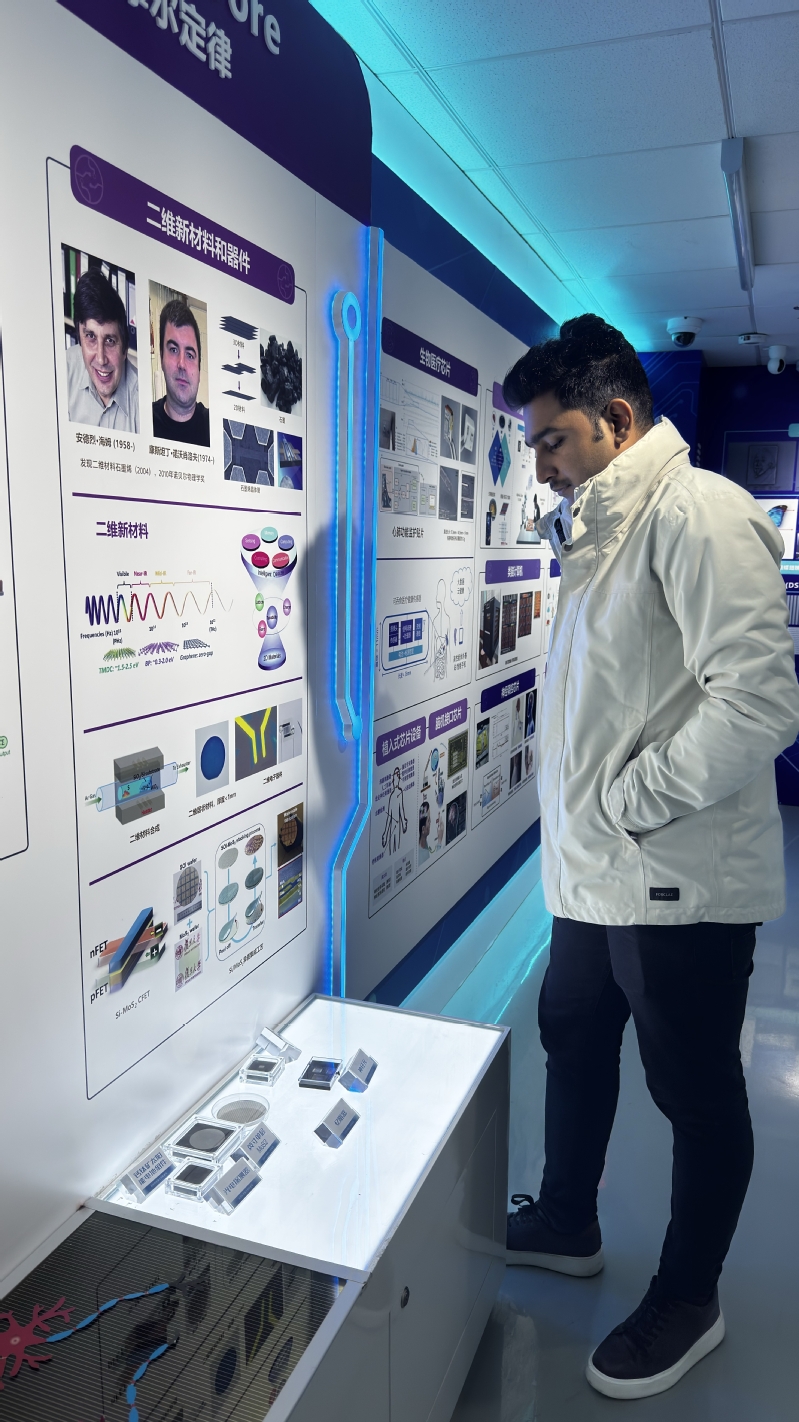
His playful evenings with Meraxes are, in fact, an indirect extension of his academic work. It turns out that his four-legged companion is more than just a pet—it's a living laboratory, sparking ideas for his work on machines. "As a hardware engineer, I can say that this robot dog has much more potential than it has been currently programmed into it. For example, it can be used for patrolling on campus." The tech enthusiast also made his own drone a few years ago—a project that now sits proudly on his desk. He sees his personal projects as a long-term investment in innovation.
For Shoaib, innovation is never linear. It's a cycle—ideas flowing from one project to the next. "Probably years later, I can apply the ideas or knowledge I've gained (from Meraxes) to other projects." He envisions a future where the image recognition modules he researches could one day be integrated into robots like Meraxes.
A Second Home in China
Before arriving, Shoaib had heard about China's resources from his professors and friends back in Pakistan. But the reality surpassed all expectations. "After coming here, I saw it with my own eyes and it was something that struck me with awe."
For a researcher, this access is transformative. He explains that the technology or resources he needs for his research is readily provided at Fudan. This abundance, he says, is what truly sets China apart. He emphasizes the profound impact this has on the creative process. "Human imagination should not be limited by resources—only by time or imagination. If the only limiting factor is resources, that really de-motivates you."
Beyond the facilities, it's the collaborative spirit that has left the deepest mark. "In case sometimes I hit the wall, I just go and have a chat with my supervisor. He'll come up with some ideas on his own behalf or find me a person with the same interests or expertise. They could help me figure out and move further. That's one of the most rewarding experiences."
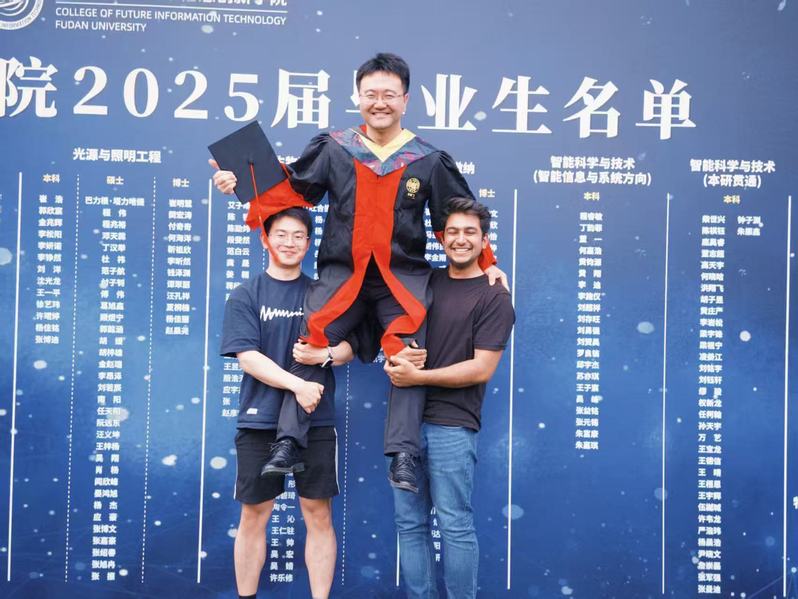
This support system extends far beyond the lab, creating a genuine sense of belonging. "Actually, the Chinese are my family here now, and my best friend is actually Chinese." He often joins them for hiking trips and shared meals, describing these moments as opportunities for mutual cultural exchange.
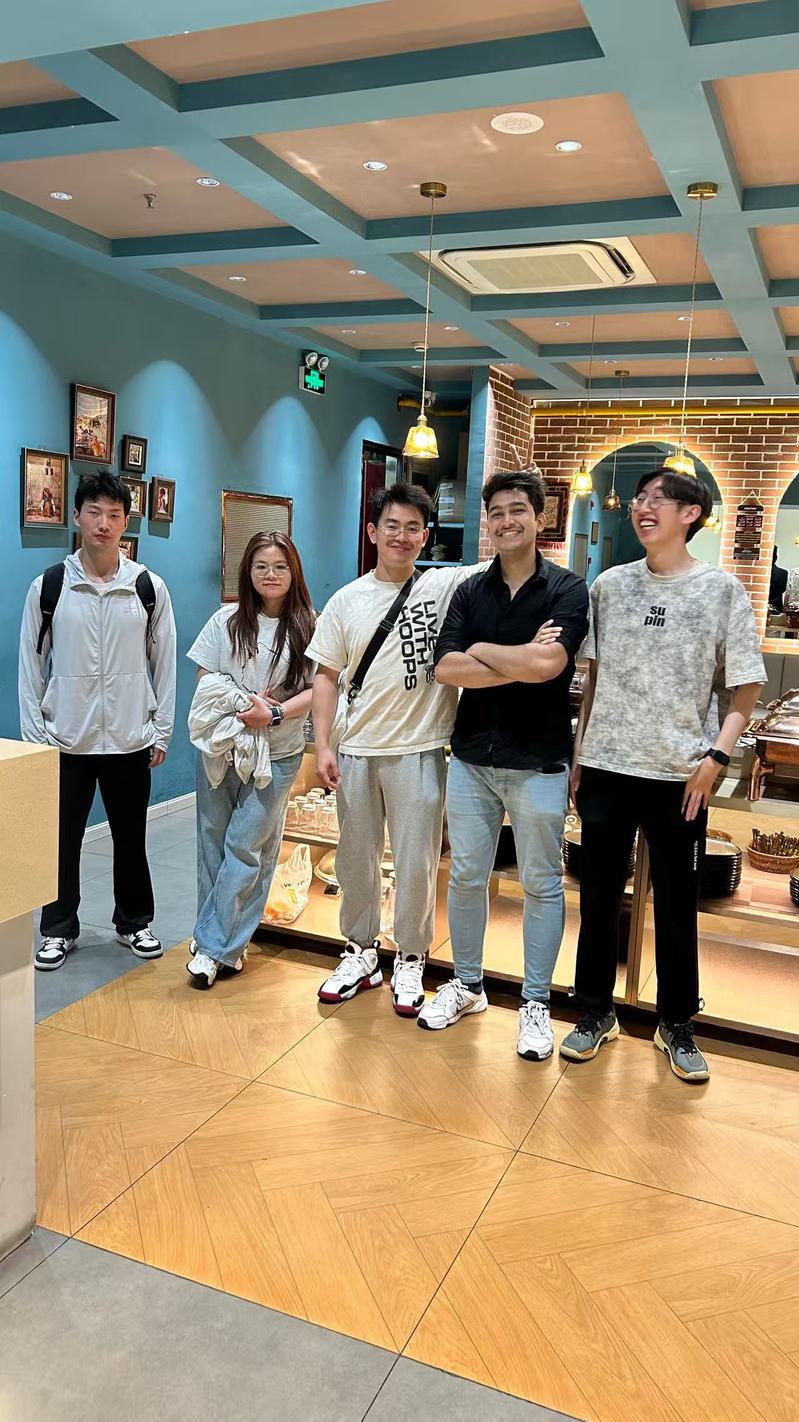
Coming from a different faith and cultural background, he deeply appreciates how his Chinese friends accommodate him while also teaching him about their own traditions. This warmth, he says, extends beyond his peers to the faculty and staff at Fudan as well. Whenever he needs help—whether personal or academic—he knows he can turn to them, "If I ever need anything, I can just go to them, and they always help me out with it."
Looking to the Future
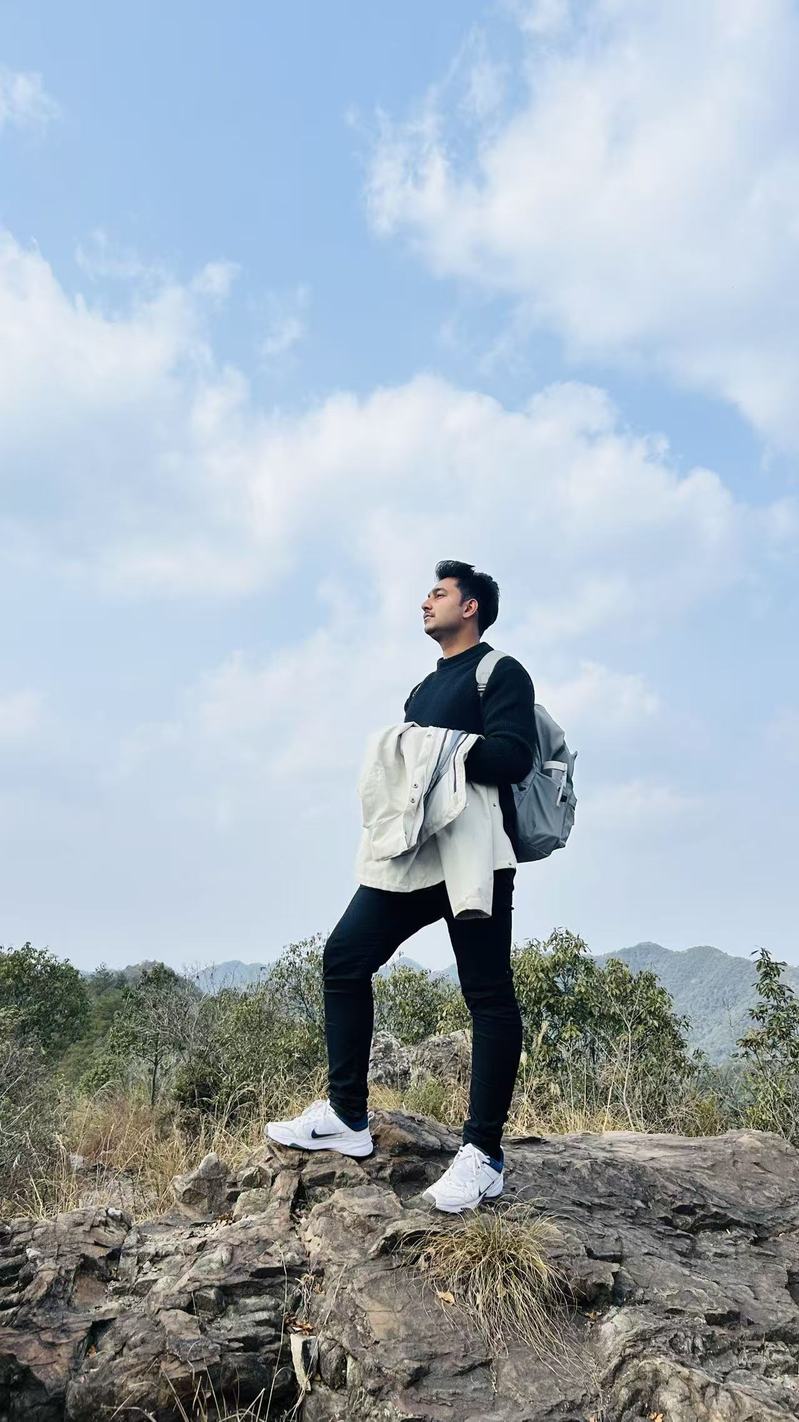
With his graduation set for 2027, Shoaib is optimistic about the future. He notes the growing technological synergy between China and Pakistan. "During my last visit to Pakistan, I saw a lot of similar core technologies between China and Pakistan. It has been really fulfilling to see that China and Pakistan are working so closely."
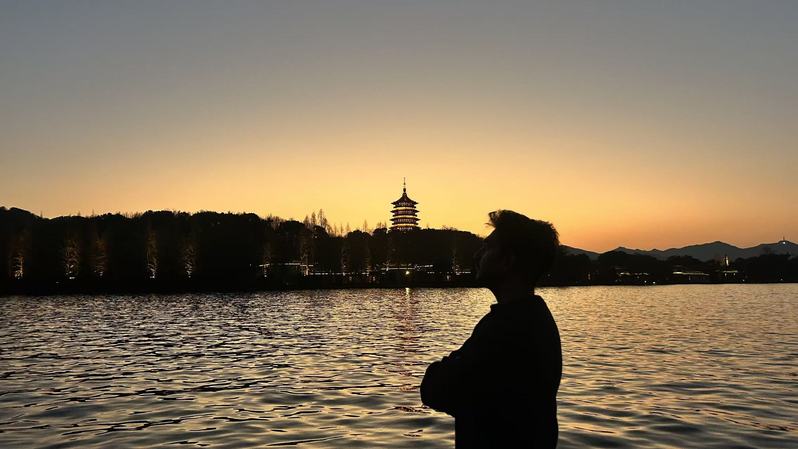
He sees himself as part of a global community of problem-solvers. "In engineering, the main goal is to make improvements for humanity, and that would be my goal wherever I would be." Shoaib said. Having a background in engineering, Shoaib would like to be a citizen of the world, "but I would love to be in China for the longest period of my life."

For now, his immediate goal is to continue his research and enjoy the simple, rewarding experiences—like walking Meraxes across Fudan's campus and watching as the future he's helping to build waves back at an appreciative audience.
(END)
Writer: WANG Mengqi
Video: Edward Turdmat
Header Image: WANG Zhenyi
Editor: WANG Mengqi, LI Yijie