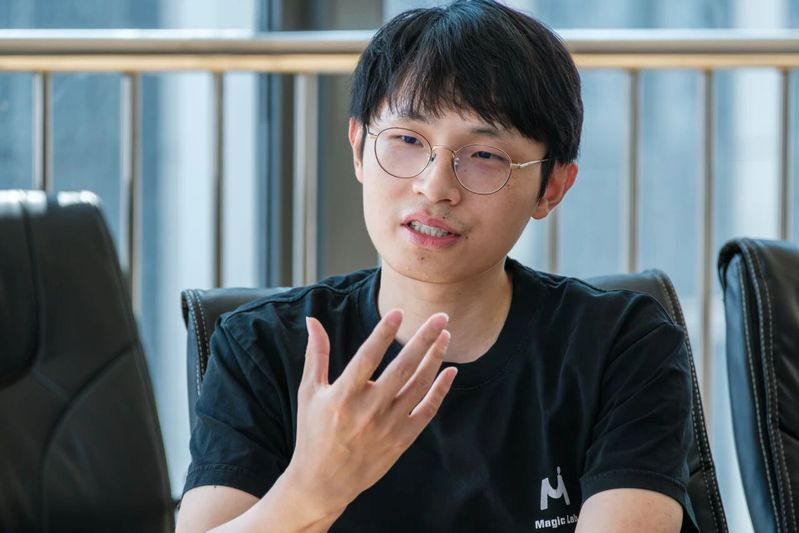

From ImageNet to PointNet, ShapeNet, SAPIEN, and ManiSkill, SU Hao, a leading figure in 3D vision and embodied AI, returns to China to lead the establishment of the Institute of General Physical Intelligence at Fudan University.
Su is no stranger to those following the evolution of modern artificial intelligence. He has spent 17 years persistently advancing the boundaries of machine intelligence—from 2D to 3D vision, from simulation to skill acquisition. Along the way, he contributed to ImageNet in its early days, co-authored the landmark PointNet paper, co-created ShapeNet, and later led the development of SAPIEN and ManiSkill for embodied AI. His work has helped unlock a central ambition of AI: enabling machines to comprehend and act within the physical world.
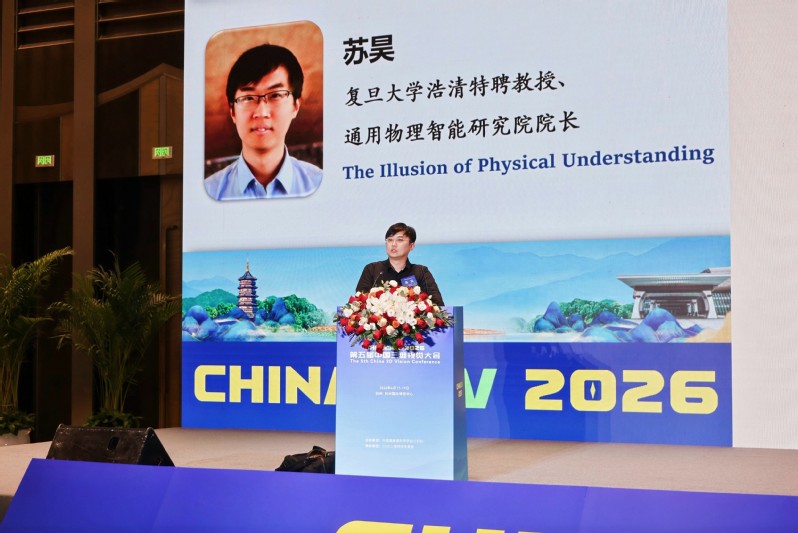
On April 17, at the opening of the 5th China 3D Vision Conference (China3DV 2026), Su delivered a keynote titled 'The Illusion of Physical Understanding.' On the same occasion, he announced his appointment at Fudan University as Haoqing Distinguished Professor and Inaugural Dean of the Institute of General Physical Intelligence.
This marks not only a pivotal homecoming of a leading scholar, but also a decisive move by Fudan as AI advances from “language space” into the “physical world” — where a new generation of profound scientific challenges awaits. Su aims to tackle these challenges together with Fudan.
A Shared Mission with Fudan
Why Fudan? Su’s answer is clear: “Fudan is doing exactly what I want to do.”
At the core of that shared ambition is physical intelligence — AI systems capable of understanding and operating effectively in the physical world, extending beyond algorithms into robotics, interdisciplinary integration, and industrial ecosystems.
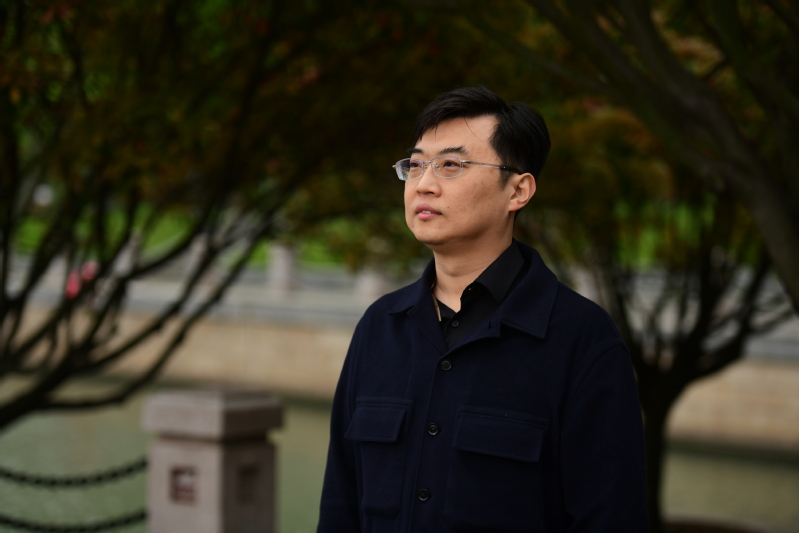
Su sees Fudan’s strengths in mathematics and physics, its commitment to new engineering disciplines, and its location in Shanghai as uniquely suited to realizing this vision. That is why he chose Fudan as the starting point for his next mission: to push the frontiers of physical intelligence and cultivate the next generation of AI leaders.
Cultivating the Next Generation of AI Leaders
Su’s vision extends beyond research to building a new system for talent development, nurturing AI leaders for the next 5–10 years. The Institute of General Physical Intelligence aims to break disciplinary boundaries, bringing together experts in mathematics, physics, computer science, human-computer interaction, brain-computer interfaces, and beyond.
Here, the ultimate measure of success is not academic publications, but whether intelligent agents can achieve robust, autonomous action in the real world.
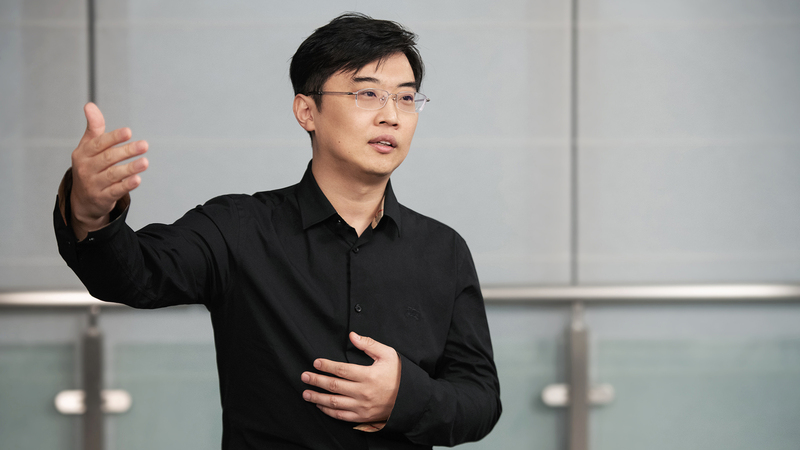
Su emphasizes two essential qualities of future AI leaders: the ability to identify meaningful problems and the patience for long-term inquiry. Echoing Einstein’s conviction that “curiosity has its own reason for existing,” he advocates independent thinking, critical questioning, and original contributions. The institute will design a new curriculum to accelerate the path from fundamentals to frontiers, and support innovation and entrepreneurship.
The Future of Embodied AI
Su approaches the field of embodied AI with cautious optimism. His optimism stems from its significant scientific depth and immense potential, and his caution arises from the gap between impressive demos and genuine generalization. Achieving a ChatGPT moment for embodied AI will still take time, but the path forward is clear.
He envisions a future in which embodied AI transforms industries such as manufacturing, services, and eldercare — reshaping human interaction with the world and ushering in an era of human-machine coexistence.
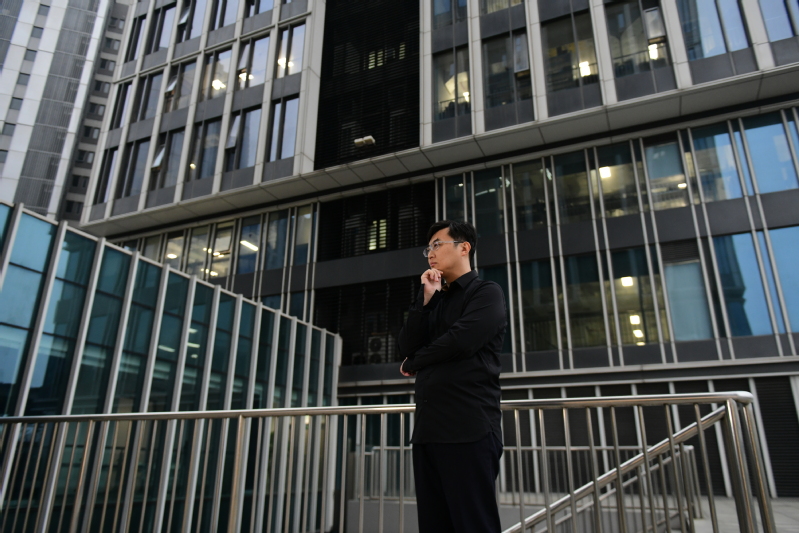
This frontier demands collective endeavor. At Fudan’s Institute of General Physical Intelligence, the call is open. Global recruitment starts soon.
Come shape the future with us.
(END)
Writer: ZHANG Xinning
Proofreader: Mahek
Editor: WANG Mengqi, LI Yijie