
Hosted by Fudan University, the 2nd “China’s Governance” National College Students Governance Case Analysis Competition drew nearly 180 participants from 24 countries. Contestants translated practical experience summed up from China’s governance practices into relevant theories and ideas, contributing young people’s insights to modernizing China’s governance system and governance capacity.
Beyond formal academic discussion, their firsthand experiences in China highlight cultural exchange, mutual learning and shared growth between global youth and Chinese communities, alongside Fudan’s open, diverse educational strengths.
Cross-border Innovation and Cultural Bridge
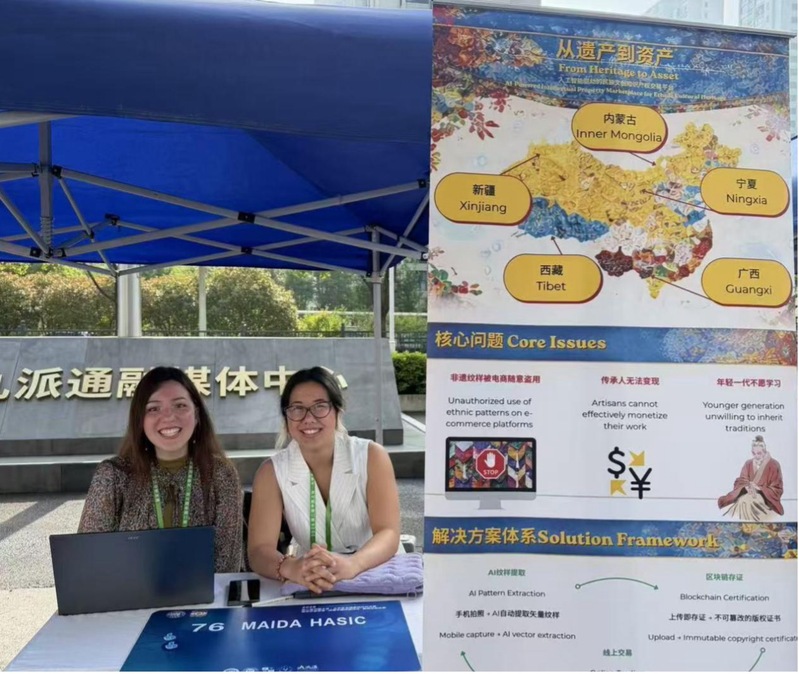 Fanni Elizabet Li (Right)
Fanni Elizabet Li , a Hungarian student of mixed Chinese-Hungarian ancestry ,studying at Fudan School of International Relations & Public Affairs, grew up surrounded by Chinese culture. “I have long been exposed to Chinese culture,” she notes, adding that she attended a Sino-Hungarian bilingual school where she mastered fluent Mandarin. For her, coming to Fudan was more than just studying abroad—it was a chance to finally immerse herself in authentic Chinese daily life and academic atmosphere. “This is one of the most important and worthwhile choices I have ever made,” said Fanni.
Enthusiastic about cultural heritage preservation, Fanni teamed up with Chinese and international peers to build an AI platform protecting ethnic Chinese cultural heritage and supporting its sustainable commercial use. “Our project solves a common industry problem,” she explains: traditional ethnic cultural patterns are often copied and used without permission, leaving grassroots creators unprotected and unpaid. The AI-powered platform provides legal protection and ensures creators get fairly compensated.
A highlight of her work is connecting these cultural resources with European markets. “We bridge Asian traditional patterns with European luxury brands,” she shares, proud to build a solid cross-cultural bridge for the innovative inheritance of Chinese ethnic culture.
With faculty guidance, she applies AI tools to academic research in class, while interdisciplinary programmes let her collaborate with classmates from varied fields.
After graduation, whether settling in China or returning to Hungary long-term, she intends to work as a cross-cultural coordinator, drawing on her bilingual background to advance practical cultural exchange and cooperation between China and Europe.
Cultural Collision and Immersive Growth
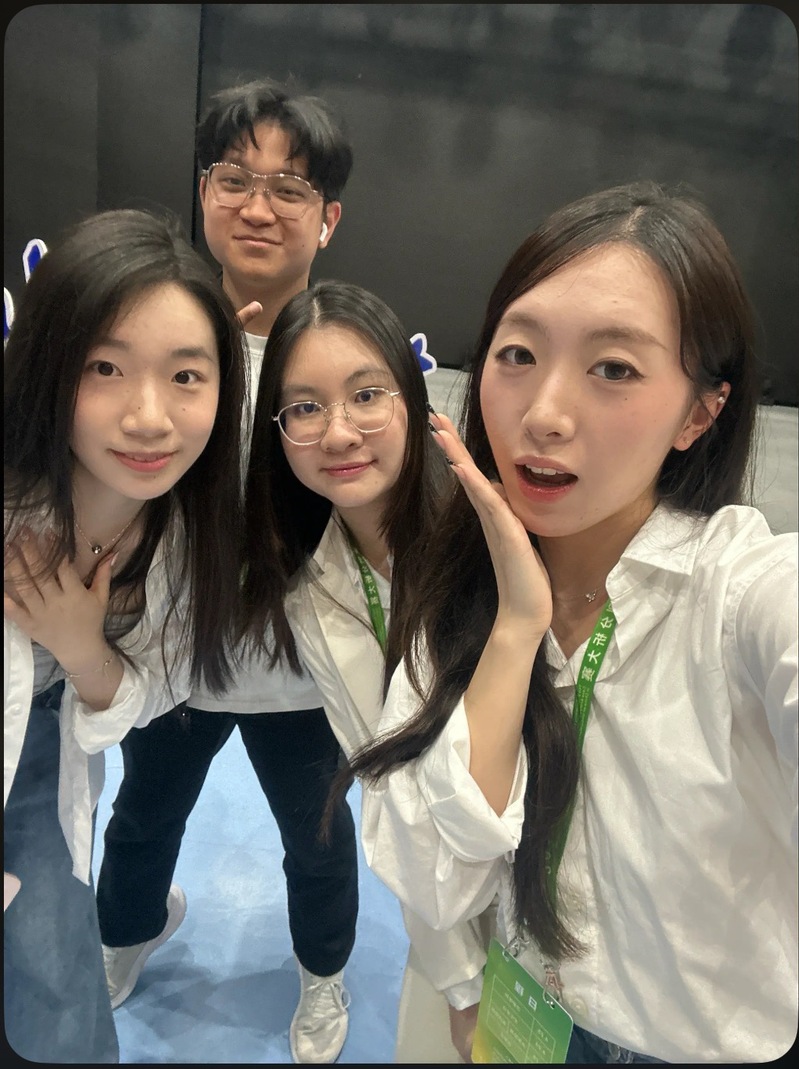
Yamaguchi Yasuki (Right)
Yamaguchi Yasuki from Japan, studying at Department of Cultural Heritage and Museology, has had close contact with China since childhood. Having previously lived in China and picked up fluent Chinese, she came to Fudan to experience Chinese culture and the wisdom of Chinese governance in an immersive way.
Her research focused on inbound tourism and urban opening-up, comparing the development models of Shanghai and Tokyo. Through fieldwork, she identified digital governance strengths in major Chinese cities and well-established institutional governance practices in Japan, developing her own perspective on urban public administration.
“Fudan’s flexible interdisciplinary curriculum, the university’s signature “2+X” programme, removes major restrictions and allows me to collaborate with students from other fields.” said Yasuki.
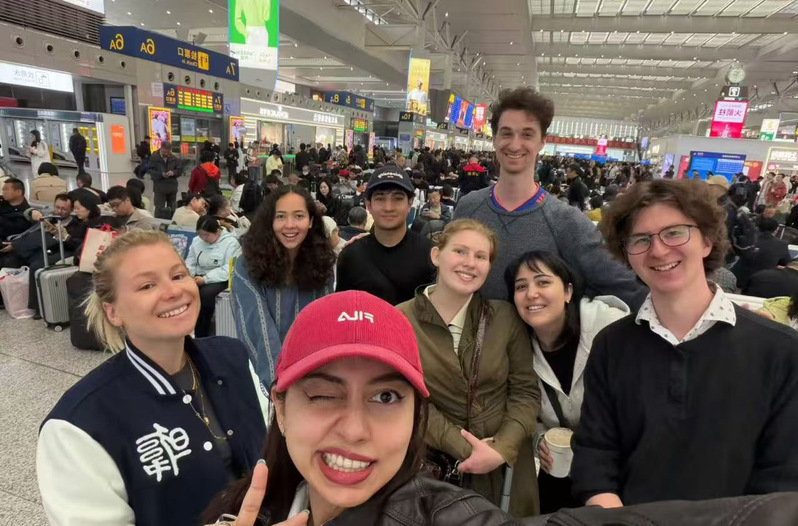 Francesca Ran Rositudottir (The front)
Francesca Ran Rositudottir, an Icelandic PhD candidate at Fudan’s School of International Relations and Public Affairs, joined the contest as an observer. Hailing from Iceland, a global benchmark for ecological sustainability, she connected closely with the competition’s focus on green governance and gained fresh perspectives on China’s modernization drive.
She was struck by China’s development mantra: lucid waters and lush mountains are invaluable assets. Aligned with Iceland’s core sustainable development ethos, the policy gave her clear insight into China’s long-term green development commitments. Her interest in China began with an exchange programme; attracted by Fudan’s teaching resources and inclusive campus culture, she later enrolled in its doctoral programme for advanced research.
Looking forward, Francesca will continue her career in China. She hopes to share China’s green development and educational experience with Iceland after graduation and boost bilateral academic and practical exchange, describing her Fudan experience as flawless.
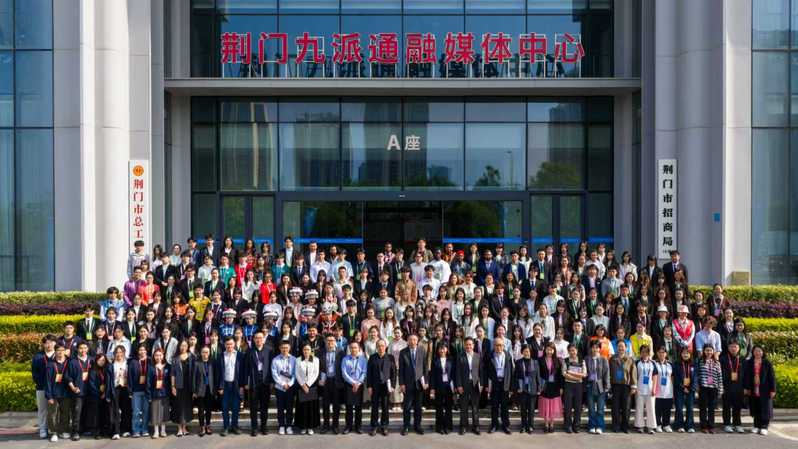
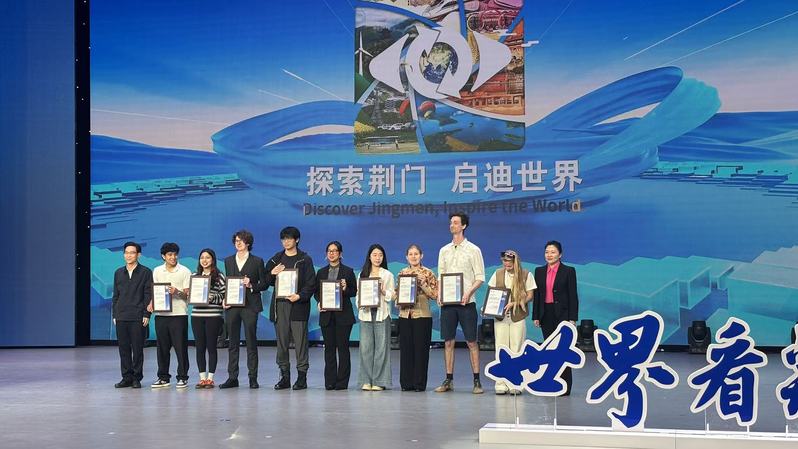 Fanni Elizabet Li (3rd from left) and Francesca Ran Rositudotti (6th from left)
Fudan’s diverse course offerings and welcoming campus culture help international students from all backgrounds overcome bias, integrate into local life and build grounded understanding of China. These three students from Hungary, Japan and Iceland each found distinct cultural encounters and integration during their studies. As young cultural intermediaries, they document authentic China through lived experience, and keep building steady people-to-people ties between China and the rest of the world.
(END)
Writer: WANG Yiyao
Proofreader: YANG Xinrui
Editor: WANG Mengqi, LI Yijie