
A Malaysian Chinese family has traced their roots back to their hometown in China with the help of RootLink, an AI-powered ancestry tracing platform developed by Fudan University students. The family’s ancestor left Fujian at age 12 and never returned.
For nearly a century, the name “Shi Maiguo” existed only as a sound in a Malaysian Chinese family—a Hokkien pronunciation passed down orally, with no written characters to anchor it to a place. Then his great-granddaughter Kong Jing Lam built an AI tool that helped bring him home.
Shi Haiwen—remembered in Kong’s family as “Shi Maiguo”—left Fujian Province around 1928. He was 12 when he left with his mother and sister for what is now Malaysia. He never saw China again.
In his new home in Malaysia, he woke at 2 a.m. to grind soybeans, make tofu, and boil soy milk. The tofu-making craft was his mother’s skill, and it became his lifeline. Later he made a living tapping tree gum. Years of backbreaking work left him with chronic asthma. Through it all, he kept his Hokkien dialect—a thread of home that was passed down through Kong Jing Lam’s grandmother, mother, and finally to Kong herself. He gave his daughters names containing the character “珠” (“pearl”) and his sons names containing “金” (“gold”). These names carried his precious, resilient hopes in a hard new land. But he died in Malaysia, never having returned.
All he left behind were fragments: a tombstone inscribed with a place name “Anxi Bantou” (安溪坂头), alongside a name transliterated from the Hokkien pronunciation of “Shi Maiguo”. No one knew the characters behind the pronunciation.
Kong Jing Lam, a Malaysian Chinese graduate student at Fudan University’s School of Journalism, grew up hearing that her family came from a place called Bantou of Anxi in China’s Fujian Province. Her grandma often told Kong: “Your great-grandfather left home at 12 and never returned. As his child, I want to make this trip for my father.” Last Qingming Festival, when Chinese people usually pay respects at their ancestors’ graves, Kong’s grandma sent her a photo of her great-grandfather’s tombstone and asked: “Can you find where your great-grandfather came from? I’m old. If I don't get the chance to go back and visit, there will be no chance later.”
To fulfill Grandma’s wish, Kong set off for China to find answers, hoping to solve this puzzle with professional expertise.
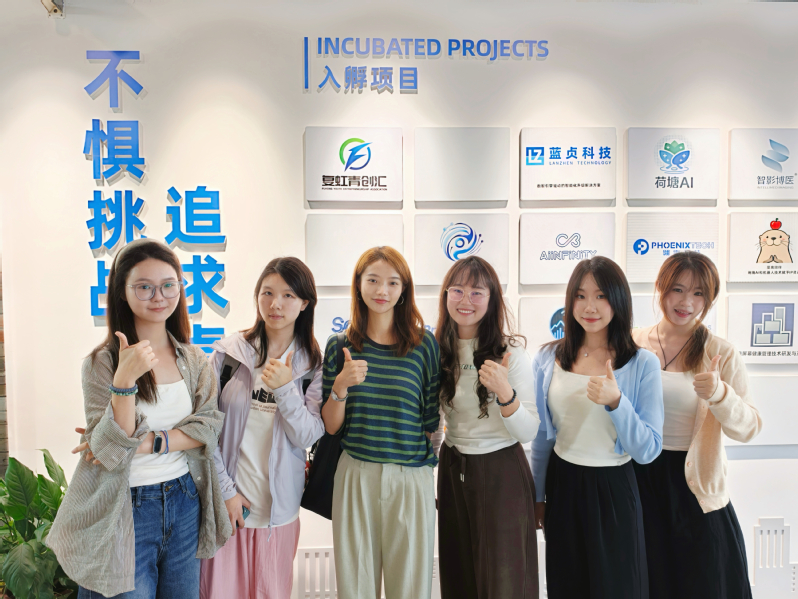
RootLink team members (left to right: WU Yixuan, HUANG Wenyue, Professor LAN Xingyu, Kong Jing Lam, Lee Xin, Ooi Yi Ling)
At Fudan, Kong joined Prof. LAN Xingyu’s research group in human-computer interaction and intelligent communication. With the help of two classmates from China and two Malaysian friends, she built RootLink, an AI-powered root-seeking platform for overseas Chinese. The project won first prize in Fudan’s International Student Innovation and Entrepreneurship Competition, got into a university incubation program, gained support from a youth innovation hub in Shanghai’s Hongkou District, and received media coverage. But for Kong, the real goal was to fulfill her grandmother's dearest wish.
RootLink’s AI engine narrowed the search from the whole of Anxi down to several villages in Longmen (龙门镇), a township under Anxi, by analyzing surname clusters and local histories. But AI could only offer possibilities. The breakthrough came from two old qiaopi, letters and remittance notes sent by overseas Chinese back in the day, found through distant relatives who shared the surname Shi. A local WeChat public account put Kong in touch with local officials — and one of them turned out to be a distant cousin of her great-grandfather.
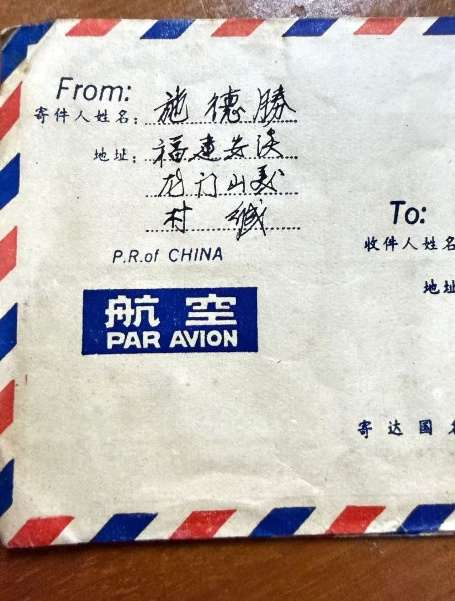
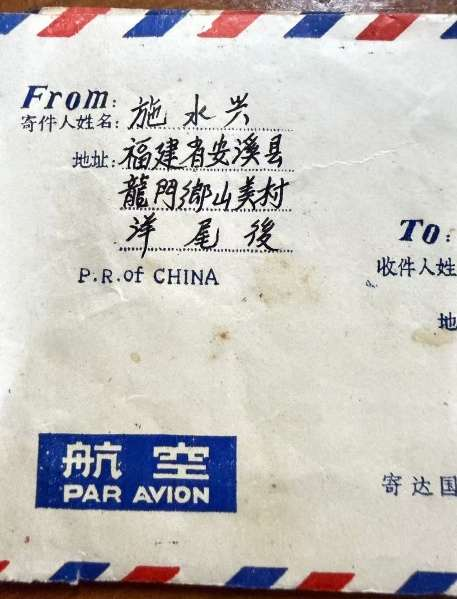
Qiaopi sent back to Longmen by distant Shi relatives also living overseas
Then came a setback. The thick Shi clan genealogy did not match the names the family had repeated for generations: Shi Maiguo and Shi Guizi (Kong Jing Lam’s great great grandfather). They were Hokkien sounds, not the characters recorded. Pronunciation had shifted over time. With that, the trail went cold.
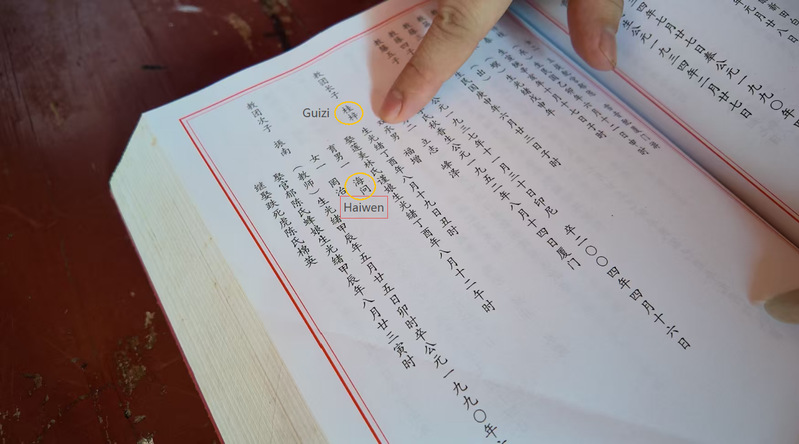
“Guizi” and “Haiwen” listed in the Shi family genealogy
Local officials and genealogy researchers refused to give up. They stayed up late, poring over one yellowed page after another. After days of investigation, one night, a miracle happened. Two names stood out plainly in the genealogy: Shi Guizi and Shi Haiwen.
The sounds finally locked onto characters. The sojourner, called “Shi Maiguo” in the local accent of his hometown, was actually recorded in handwriting as “Shi Haiwen” (施海问).
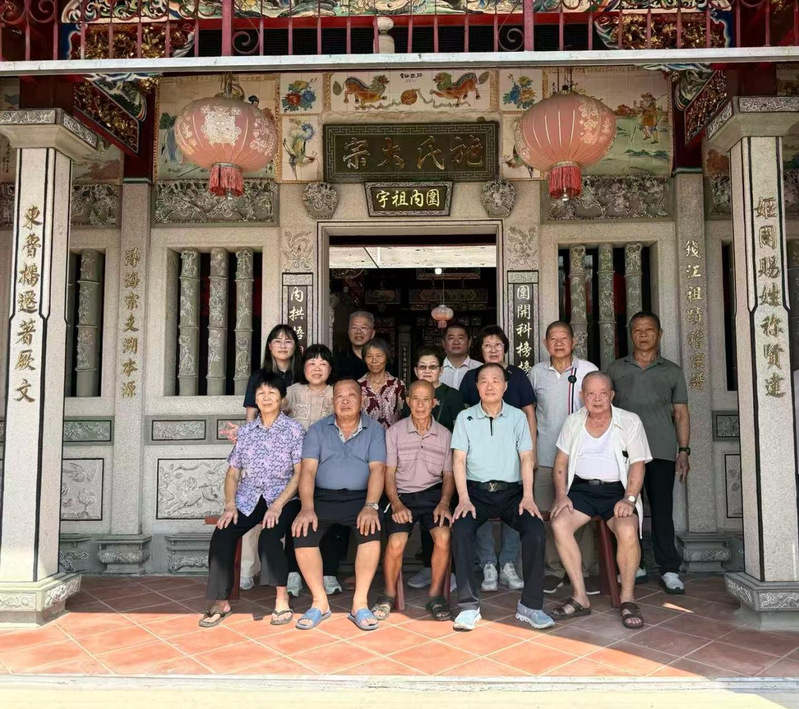
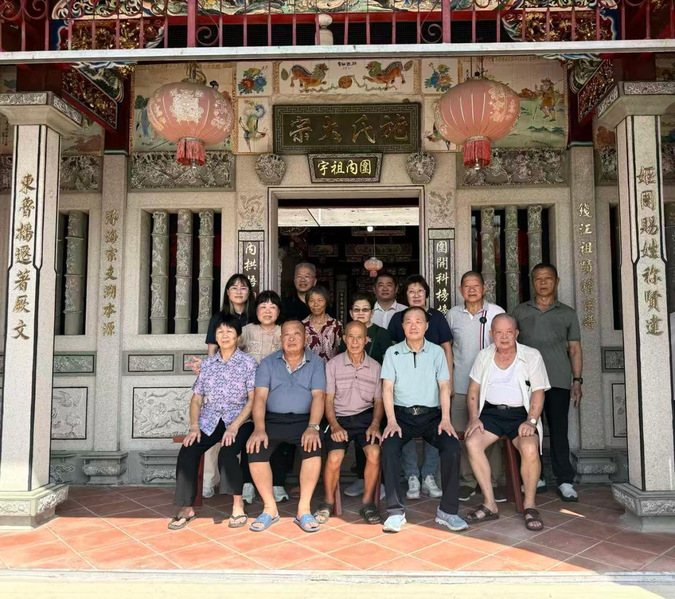
The Shi Family in front of the Shi Ancestral Hall
On August 23 this year, the homecoming came a century late. Kong’s grandmother and her siblings—Shi Haiwen’s four children, all born in Malaysia—crossed the sea to the land their father had left as a boy. Together, the elders were nearly 300 years old. Inside the Shi Ancestral Hall in Guangxiao Village (光孝村) in Longmen, with Hokkien all around them, the distance melted. They performed traditional rites and visited the old family house. They paid respects to local deities and shared a meal with relatives they had never met. Standing on their ancestors’ soil, they said what Shi Maiguo never could: “I’m home.”
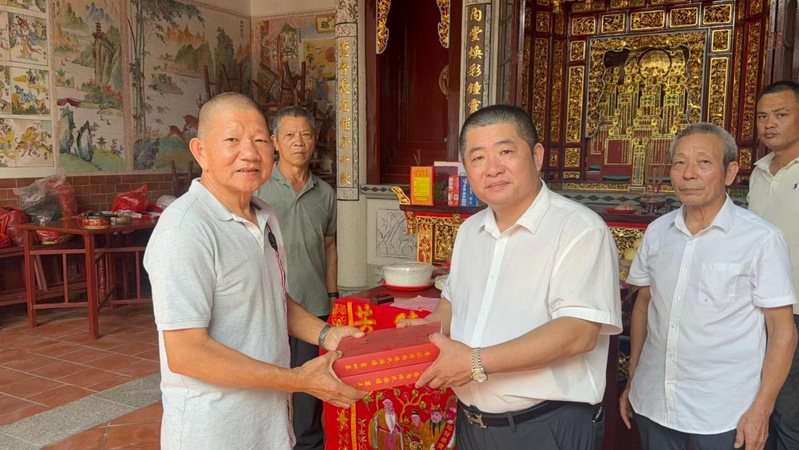
The current head of the Shi family (right) presents the Shi family genealogy to Kong's great uncle (left)
It was RootLink’s first successful case: AI-generated leads, verification through local intermediaries, and an on-the-ground reunion. Kong was reminded of A Love Letter to Grandma (《给阿嬷的情书》), a Chinese film released earlier this year about the qiaopi letters that kept families connected across the sea and the regrets that lingered when someone never made it home. Fortunately, in her own family, that regret had finally been put to rest—just as it was in the film.
Millions of overseas Chinese share similar fragments—a tombstone, a childhood nickname, a half-remembered place name—and the same longing to find the door back. For Kong, that door leads somewhere bigger. “China is not only our family’s root,” she says. “It is also a land of opportunity for young overseas Chinese to study and build.” That belief is what drives RootLink: the hope that technology, and human connection, can help more families find their way home—and turn sounds into names, and fragments into homecomings.
(END)
Writer: WANG Yiyao
Editor: LI Yijie