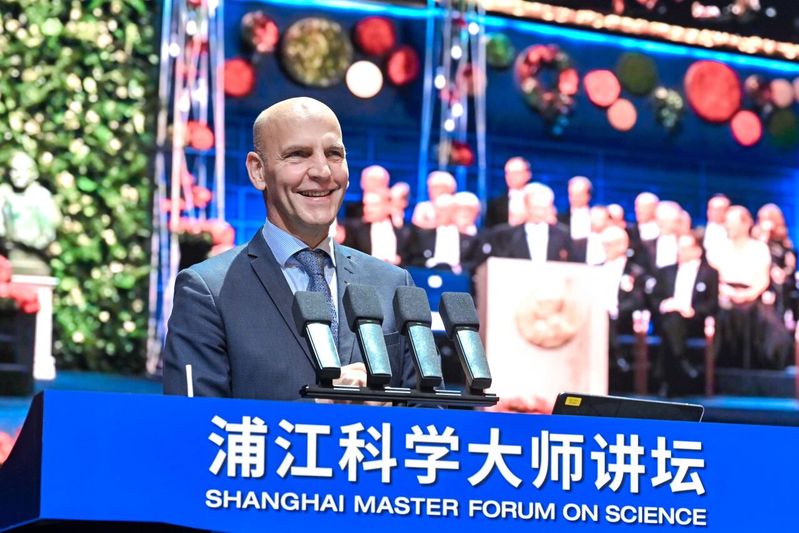
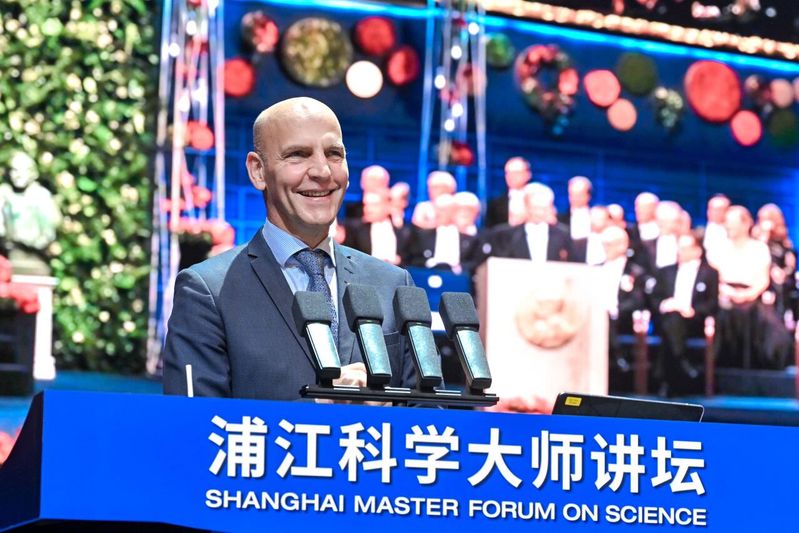
“A crazy idea is a necessary condition for a revolutionary discovery.” So said Benjamin List, winner of the 2021 Nobel Prize in Chemistry, at the 16th Shanghai Master Forum on Science held on October 12 at Xianghui Theater, Fudan University. List, Director of the Max Planck Institute for Coal Research in Germany, spoke face-to-face with faculty and student representatives from Shanghai universities and high schools on the topic “Catalysis for Our Beautiful World—Three Messages to the Next Generation,” with a focus on the frontiers of organocatalysis.
In 2021, he and American scientist David MacMillan shared the Nobel Prize in Chemistry for their work on asymmetric organocatalysis. The significance of this concept lies in enabling chemists to build molecules more precisely using non-metal catalysts, offering a new option, guiding reactions to preferentially produce the desired chiral molecules.
Follow Your Enthusiasm
“Follow your enthusiasm, try something different, and aim high.” He opened with the three messages in his lecture title.
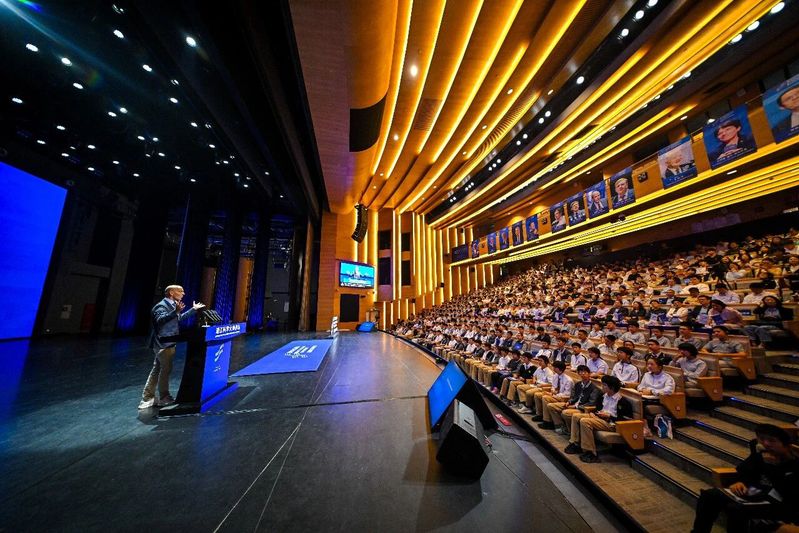
His love for chemistry began young. Believing the world was made of molecules and atoms, he decided chemists could understand everything. Since his middle school did not yet offer chemistry, the curious boy took matters into his own hands: at 13, he built a lab in the cellar of his friend’s house. They bought chemicals from a pharmacy under the pretext of “making washing powder” but were actually making gunpowder. After an accidental fire, the pharmacist saw smoke and refused to sell them anything more. Later, he learned that Justus von Liebig, often hailed as the father of organic chemistry, had done something similar as an apprentice. That parallel, along with his passion for chemistry, only strengthened his desire to become a chemist.
During his doctoral studies in chemistry, he synthesized vitamin B12, a complex small molecule. For three years, he worked day and night and over the weekends. “You really have to have enthusiasm to go through this, because it is difficult and it is not working every day.”
While he was grinding away in the lab—painfully, yet with success—a paper emerged where some scientists set out to uncover how nature makes his target molecule, vitamin B12. They produced vitamin B12 through cell-free total biosynthesis. It was a revelation for List: it opened his eyes to the true power of chemical synthesis—how nature performs it, and what underpins it. And it conveniently led him to catalysis.
He described catalysis as a fascinating science. “In principle, a single molecule can catalyze the production of tens of tons of a new material. That’s where the beauty of catalysis comes in—it’s almost like magic, isn’t it?”
Try Something Different
“If you want to go to Stockholm to receive a Nobel prize, it is mandatory that you do something different than what has been done before.” The research path that won List the Nobel Prize five years ago began precisely with trying different things.
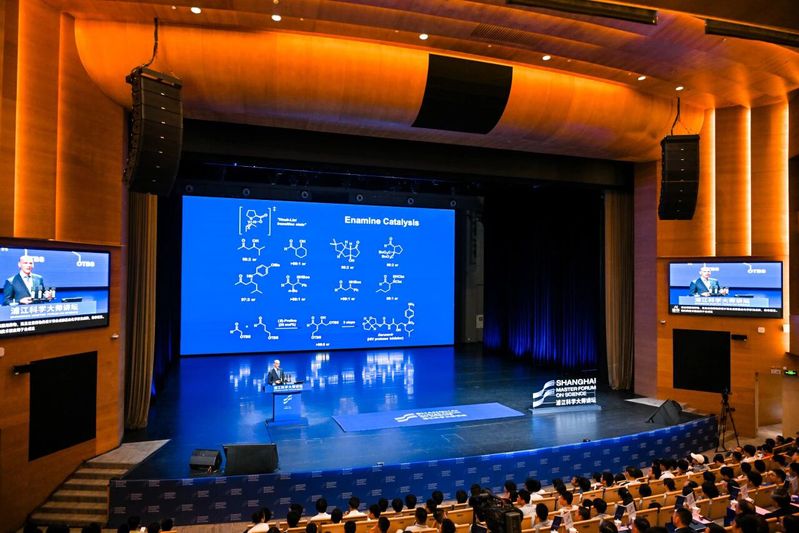
“For over 100 years, everybody in chemistry thought catalysis needs metal as the key element.” Indeed, since 1900, nine Nobel Prizes in Chemistry have been awarded for achievements related to metal catalysis.
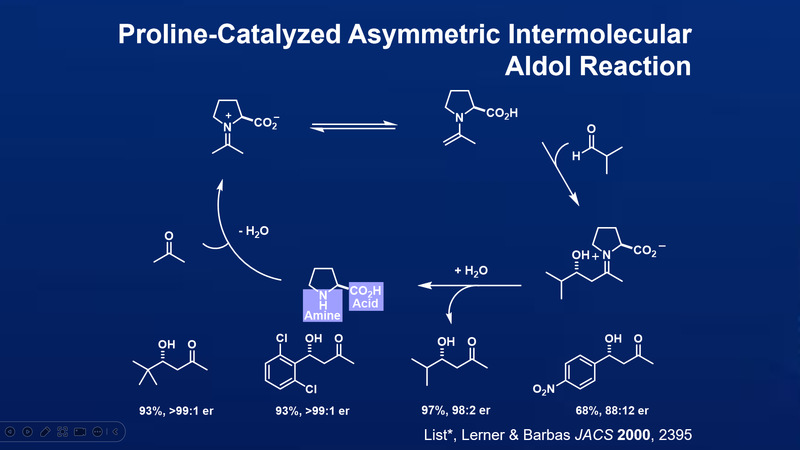
In 1997, List began his postdoctoral research at the Scripps Research Institute in the United States, studying the mechanism of antibody catalysts. He discovered a fact that overturned conventional wisdom: an enzyme catalyzing an aldol condensation reaction had no metal in its active site, only an amino group and an acidic group. List saw new possibilities and decided to try amino acids. He found proline, a simple molecule that the human body can synthesize itself, is non-toxic, and exists in all plants. It could not only catalyze the aldol reaction through the same mechanism as enzymes but also catalyze many other transformations with high selectivity.
This eventually led List to the Nobel Prize. Grateful as he is, however, he has called the honor “somewhat premature”, because what he really wants to accomplish is to find a universal catalyst capable of solving all chemical problems. That path is far more difficult than imagined. A cyclization reaction, for instance, may produce multiple stereoisomers, whereas natural enzymes can precisely produce just one of them.
Now his team has successfully delivered a new answer: confined catalysts. These small organic molecules create a confined active site in which a chemical reaction can take place, mimicking enzymes by building a limited volume around the reaction. This allows the reactivity to be tuned. List’s team can make extremely strong acids with very low pKa values and also extremely strong bases. In one aldol reaction, 1 milligram of catalyst produces 388 grams of product, a catalyst loading that rivals natural enzymes; scaled up, 1 kilogram of catalyst would yield 388 tons, enough to meet the global annual demand for a blockbuster drug.
In the fragrance field for example, ambergris, a waxy substance produced in the digestive system of sperm whales, was once acquired by perfume merchants at sky-high prices. Now, with confined catalysts, researchers are expected to synthesize molecules with the same aroma characteristics at lower cost and in a cleaner way, potentially transforming the entire perfume industry.
Aim High
“You better aim high. Do something different and challenging enough. It also has to be a big problem that you solve,” said List.
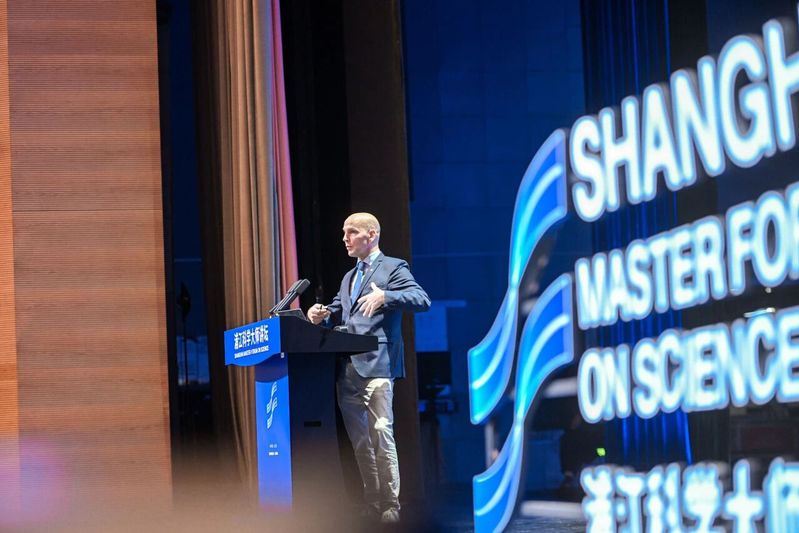
One of the studies his team is currently conducting is artificial photosynthesis. In natural photosynthesis, carbon dioxide and water are converted into carbohydrates while releasing oxygen, which is not only extremely important for the Earth’s carbon cycle but also sustains life on Earth. Can humans imitate nature and create artificial photosynthesis?
List’s initial idea was very simple: design a chemical reaction that takes up light from the atmosphere, converts water and carbon dioxide into synthesis gas, a mixture of carbon monoxide and hydrogen, and then uses the Fischer-Tropsch process to produce fuel. Burn that fuel, and carbon dioxide is released, which can be converted back into synthesis gas—a perfect cycle.
However, problems soon emerged: extracting carbon dioxide from the air and then making gasoline is a difficult process. More importantly, this solution cannot solve climate change. “Climate change is on a gigaton scale. Even if you make all the fuel in the world in this way, you will not stop climate change. We have to be even better than that.”
So a bolder idea was born: extract carbon dioxide and use light and catalysts to directly split it into oxygen and carbon. List admitted that this sounds like a crazy idea. “This idea is simple and naive. But if it would work, it could really change the world.”
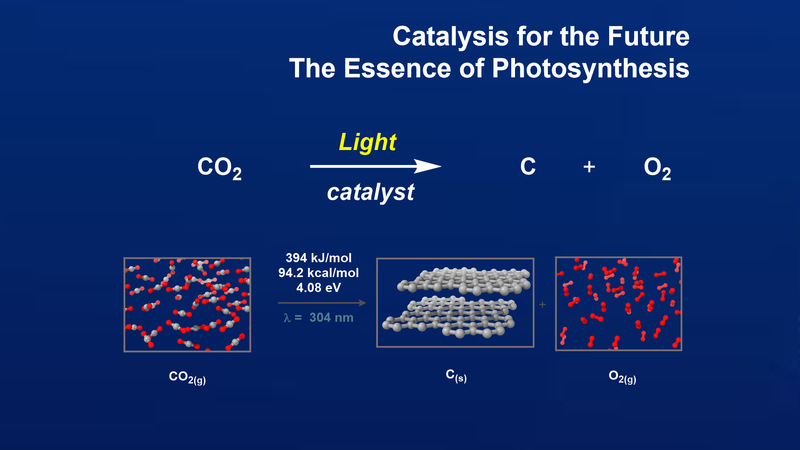
Is this idea feasible? Behind the seemingly crazy idea, List did the math: converting gaseous carbon dioxide into solid graphite and oxygen requires 94 kcal per mole. “That’s an outrageously high number, I admit that.” But he offered a key comparison: plant photosynthesis requires 124 kcal per mole, 25% more than this conversion. In other words, this idea, though crazy, is not impossible. “Potentially, if we do it really on a gigaton scale, we could stop climate change.”
“A crazy idea is a necessary condition for a revolutionary discovery.” In List’s vision, this artificial photosynthesis system may solve three of the most pressing problems of humanity: sustainable chemical industry, energy supply, and climate.
Beyond the Three Messages: List on Persistence and AI
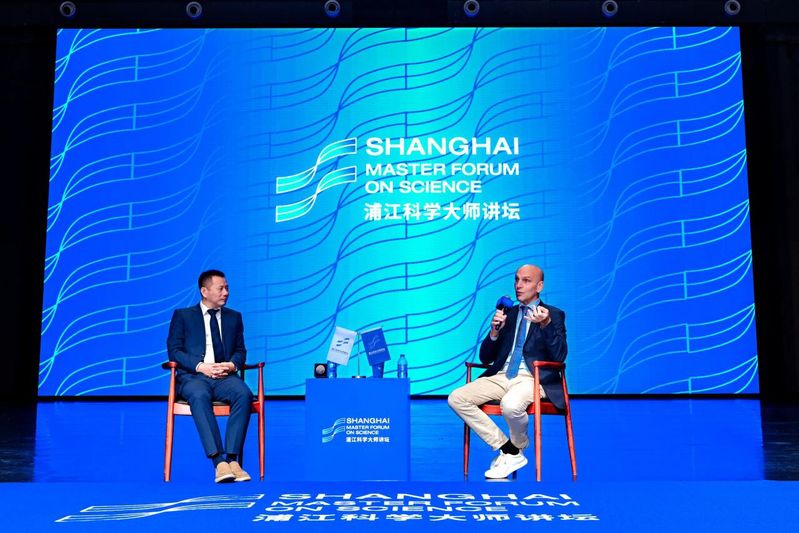
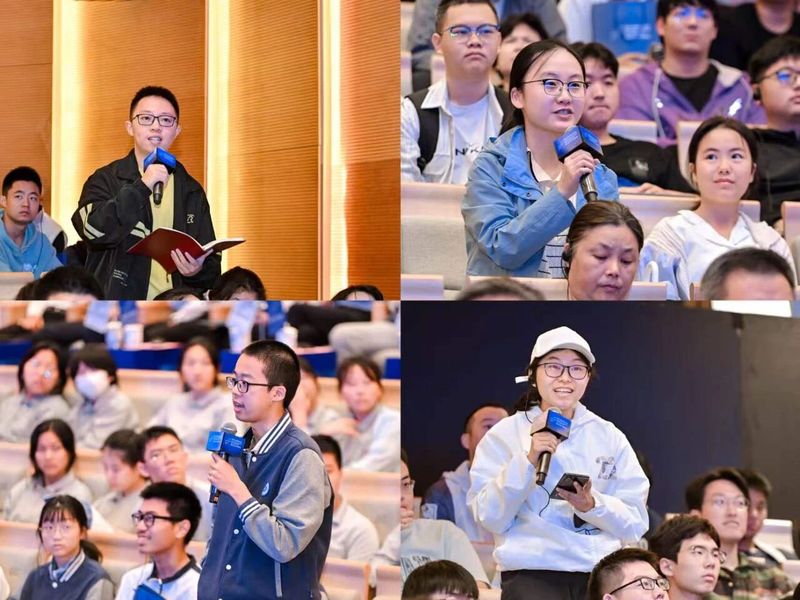
During the Q&A, an audience member asked how to persist with “crazy ideas” that often break the textbook rules and fail. List said we must first read everything and listen to our teachers and parents. Then, at some point, we begin to think independently and develop seemingly crazy ideas, and we must withstand the pressure and put them into practice.
When a graduate student said she felt confused about her research direction, he compared science to going alone into the forest. “I hope you love what you do because if you don't, then it’s unbearable. I love the pursuit of discovery and then finding something that nobody has seen before. It is just incredibly rewarding. That can carry you a long way into the dark forest.” Still, he cautioned against blind persistence: give yourself two years, and if there is still little progress, talk with your advisor about changing direction.
List remains cautious about whether AI can create truly “new” things. He said AI relies on massive amounts of human-provided data, and that large language models only generate answers based on the probability of the next word. “At some point you may think you can swipe yourself to a Nobel prize, but it's not gonna happen. You have to be really smart, strategic and not rely only on AI. Be careful. This is a temptation.”
On doing research across countries, List said science is by nature a global human effort, not so much a national one. He likes international teams and embraces different cultures and styles of doing science. “I like to have international teams. I'm happy to always have at least five Chinese people in the team at all given times and they really contribute to our work.”
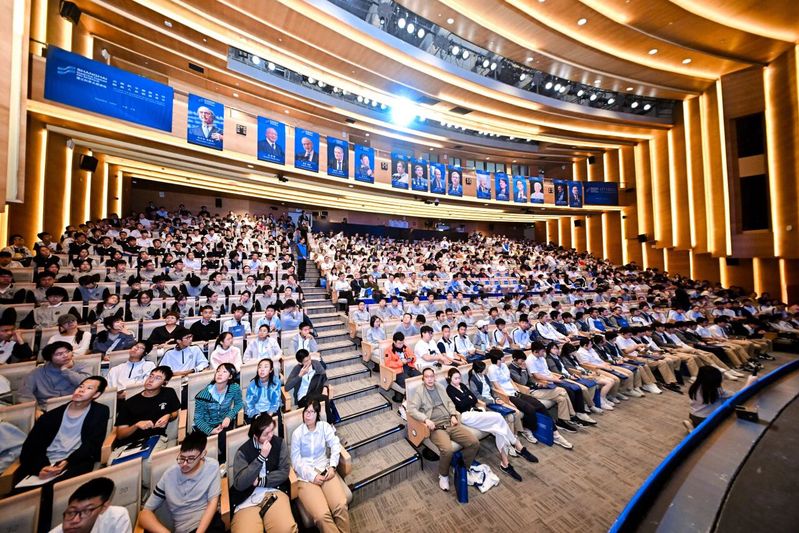
After winning the Nobel Prize, List received thousands of invitations worldwide and could not attend them all, but he gladly accepted the invitation to the Shanghai Master Forum on Science. “Fudan University is one of the top universities in the country, and my best students come out of China. I always say ‘yes’ to go to the best places in China. And if I’m lucky, some of the people who listened to my talk would join my lab,” he said with a smile.
(END)
Writer: LI Yijie
Editor: WANG Mengqi