

“Establishing geographical connectivity is only a necessary condition, not a sufficient one, to achieve inclusive development,” said Siwage Dharma Negara, senior fellow and co-coordinator of the Indonesia Studies Programme at the ISEAS-Yusof Ishak Institute. This reflects a broader shift: international connectivity alone builds access, but partnership ultimately determines value creation.

Speaking at the Shanghai Forum 2026, Negara focused on Indonesia–China digital economic cooperation and the challenges emerging from the rapid expansion of e-commerce. While Indonesia views digital cooperation as an opportunity to upgrade its industrial capacity and improve competitiveness, he noted that implementation also brings structural challenges, especially in supply chains, trade balance, and domestic industry development.
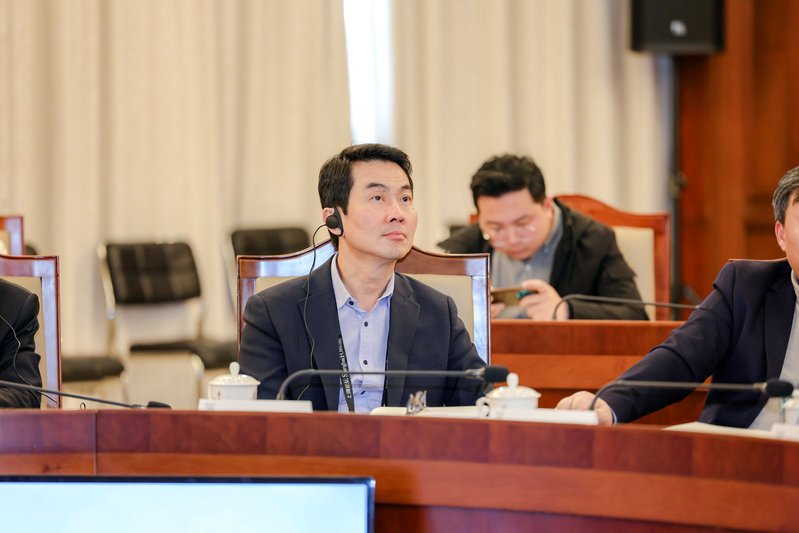
Q: In your speech, you noted that Indonesia, as an archipelagic country, faces structural logistical challenges due to its geographical fragmentation. In this context, does e-commerce exacerbate this fragmentation, or does it help alleviate it?
A: This is a complex question that could, in itself, constitute a research topic. In the case of Indonesia, e-commerce generally helps address geographical fragmentation by facilitating the distribution of goods across islands. The development of e-commerce ecosystems, including infrastructure, logistics, and distribution networks, enables products manufactured in regions such as Java to reach other islands more efficiently. However, the establishment of fully efficient channels remains a gradual process. Overall, the expansion of e-commerce represents a constructive and effective strategy for addressing geographical fragmentation.
Q: Turning to specific platforms, what are the primary distinctions between Temu and TikTok Shop, and how do they impact the Indonesian market differently?
A: The two platforms operate on fundamentally different business models. TikTok Shop relies on social media, allowing users to discover and purchase products directly through the platform. In contrast, Temu functions as an independent e-commerce platform, similar to traditional marketplaces such as China’s Taobao, with a primary focus on goods and branded products.
A key distinction lies in their supply chain structures. Temu directly connects Chinese manufacturers with consumers in Indonesia and other countries, establishing a factory-to-consumer model. TikTok Shop, by contrast, typically involves intermediary roles, such as traders and distributors, between producers and end consumers, although exceptions do exist.
As a result, TikTok Shop in Indonesia generates spillover effects, as it enables local intermediaries to participate in distribution networks. Conversely, Temu largely bypasses third parties and intermediaries, simplifying the supply chain. This renders Temu’s model more efficient, as it reduces distribution layers.However, in economies such as Indonesia, where a significant number of traders depend on intermediary roles, this model may lead to income displacement. Consequently, such developments may evolve into politically sensitive issues that require policy responses. Q: You mentioned that “future cooperation should emphasize partnership rather than simple connectivity”. Could you explain the difference?
A: Connectivity refers to the establishment of infrastructure,such as communication networks, cables, transportation systems, and flight connections. Many of these forms of connection have already been established. The current challenge is to move beyond geographical connectivity toward partnership, involving deeper collaboration to create substantive cooperation between Indonesia and China.
For example, Huawei not only builds infrastructure but also forms partnerships with local companies, including joint ventures with Indonesian state-owned enterprises. More partnerships of this kind are needed. Connectivity acts as the baseline, partnership is the value-multiplier.
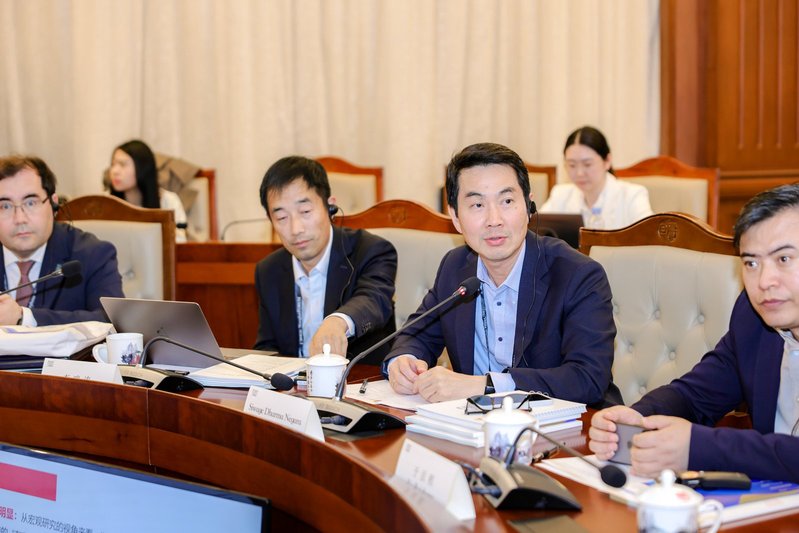
Q: Can localization today be understood not only as adaptation by foreign firms, but also as a form of two-way co-creation in building a new ecosystem?
A: Two-way co-creation is more challenging than localization. Localization may simply involve relocating production to Indonesia and adapting to the local market. By contrast, co-creation requires the host country to become more empowered, including the ability to absorb new technologies, understand foreign innovation, and engage with different cultural and technological systems. This contributes to better mutual understanding and supports joint improvements in productivity.
Cooperation should not rely solely on foreign firms or technology, but should also incorporate local culture and knowledge. This is essential for building a more balanced and sustainable collaborative ecosystem.
Q: In a few words, what kind of balance do you expect in the future of China–Indonesia digital cooperation?
A: In the short term, greater imbalance is likely. China currently has stronger competitiveness and efficiency in areas such as platforms and manufacturing. For example, after Indonesia opened its digital platforms, its trade deficit increased significantly—reaching more than $20billion in 2025. This suggests that further digital cooperation with China may further increase the trade deficit.
However, this is not necessarily negative. If the deficit is offset by surpluses in other sectors, the overall economic impact may remain positive. Chinese goods, intermediate inputs, and products can support Indonesia’s manufacturing sector, improving efficiency and cost-effectiveness, and enabling Indonesian products to compete in global markets.
In the short term, imbalance may increase. In the long term, if Indonesia adopts appropriate strategies to utilize Chinese inputs to enhance productivity and competitiveness, it may also benefit. The long-term objective is a mutually beneficial outcome, although achieving this is not easy.
Q: For students interested in this field, particularly those studying international trades and relations, or language students, what is the most important thing they should understand today?
A: Students should understand the geopolitical context faced by many countries, including China, Indonesia, and major economies such as Japan and the United States. Increasing geopolitical fragmentation has implications for the digital economy.
For example, tariffs imposed by the United States on Chinese goods affect global trade dynamics. Indonesia, which also trades with the United States, is subject to similar measures. Therefore, cooperation between Indonesia and China may have implications for Indonesia’s trade relations with other countries. Understanding these linkages is important for students of international relations.
In terms of language, continued learning is important. English remains important, and Chinese is becoming increasingly significant. Learning additional languages, such as Japanese or Korean, may also be beneficial depending on career goals. Students who aim to work in international organizations should consider which languages will be most useful for their future work.
(END)
Writer: LI Siyu
Proofreader: YANG Xinrui
Editor: WANG Mengqi, LI Yijie