
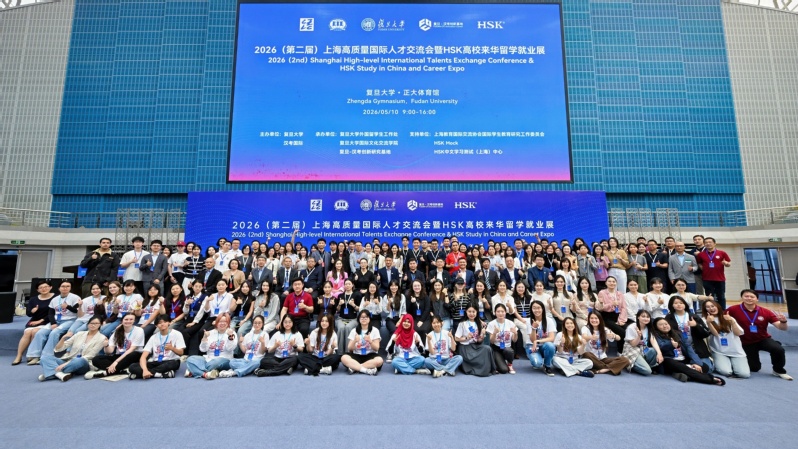
The 2026 (2nd) Shanghai High-level International Talents Exchange Conference & HSK Study in China and Career Expo, co-hosted by Fudan University and Chinese Testing International (CTI), kicked off at Fudan University’s Zhengda Gymnasium on May 10.
Over 50 renowned enterprises, including JD.com, Alibaba, Xiaomi, and Tencent, as well as representatives from nearly 40 prestigious universities nationwide such as Fudan University, Peking University, Tsinghua University, and Shanghai Jiao Tong University, Tongji University, East China Normal University, gathered with more than 3,000 international students studying in China, returned Chinese language teachers, and volunteers from around the world.
The Expo provided international talents with a one-stop platform that integrates language learning, professional practice, and career and startup opportunities through university synergy and industry-academia collaboration. This further burnishes the Study in China and Study at Fudan brands, injecting fresh momentum into building a more open, inclusive, and win-win international education ecosystem.
It represents a concrete step toward implementing the integrated reform of institutions and mechanisms pertaining to education, science and technology, and talent under the 15th Five-Year Plan. The Expo also embodies Shanghai's accelerated push to build a globally influential socialist modern international metropolis and establish itself as a global talent hub.
YANG Zhou, deputy director of Center for Language Education and Cooperation (CLEC) of the Ministry of Education; YE Linlin, deputy director of Shanghai Municipal Education Commission; FANG Ming, vice chairperson of Fudan University Council; HU Ying, deputy director of Exit-Entry Administration Corps of Shanghai Municipal Public Security Bureau; and LIU Xinyang, executive vice president of Lazada Alibaba International Digital Commerce Group, attended the opening ceremony.
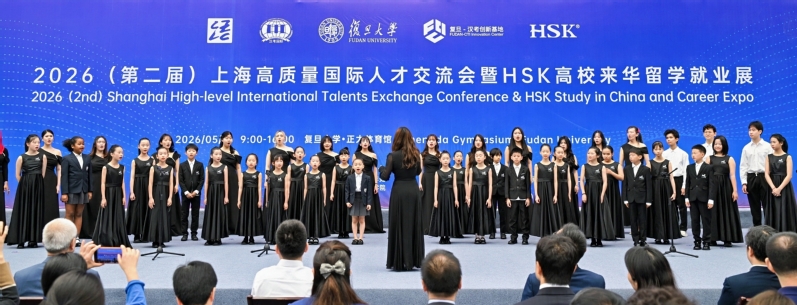
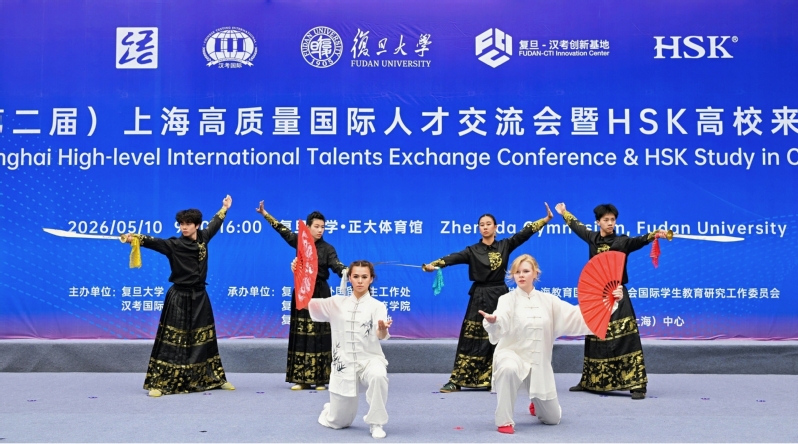
The opening ceremony commenced with performances rich in Chinese cultural charm. The Fudan University International Student Choir and the Fudan International School Choir jointly performed the Chinese version of Kleine Kinder, Kleine Sorgen. Fudan international students also presented Wuxia Shadows, a martial arts performance blending strength and grace.
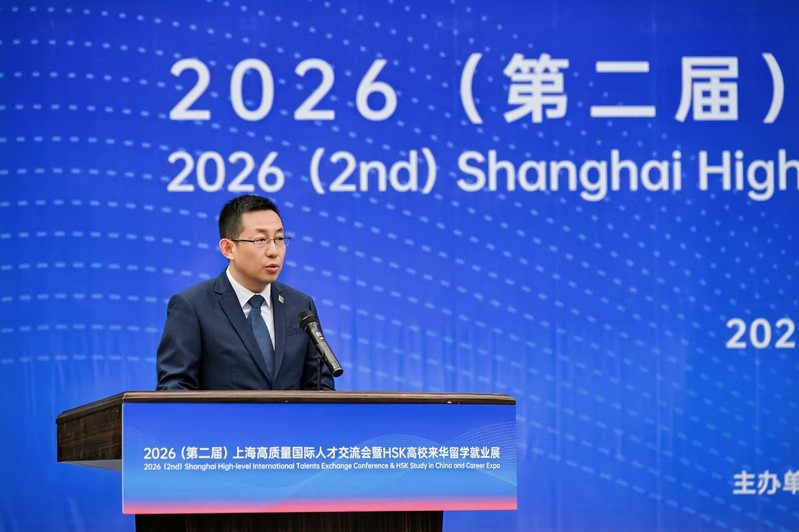
In his address at the opening ceremony, YANG Zhou stated that China’s modernization, exemplified by Shanghai, continues to generate dynamism, attracting a growing number of international youth to build their careers in China. Currently, CLEC has established Chinese language education partnerships with over 190 countries and supports 83 Chinese language learning and testing centers and 1,477 HSK test centers. Each year, over 810,000 people take the HSK exam, while the total number of global Chinese language learners has reached 210 million.
As a flagship program developed by CTI under the guidance of CLEC, the “HSK Study in China and Career Expo” has been held more than 200 sessions in 51 countries, serving over 900,000 participants and helping more than 200,000 learners pursue academic or professional opportunities in China.
He called on CLEC and its partners to build a new “standards–training–certification–employment” model and promote the integrated development of “Chinese+” education and talent cultivation. Going forward, they will continue to upgrade HSK 3.0 services, explore new paths for Chinese language education and service trade, and enhance the practical value of Chinese — all in service of international talent development and industry needs, contributing to a world-class talent hub and innovation powerhouse.
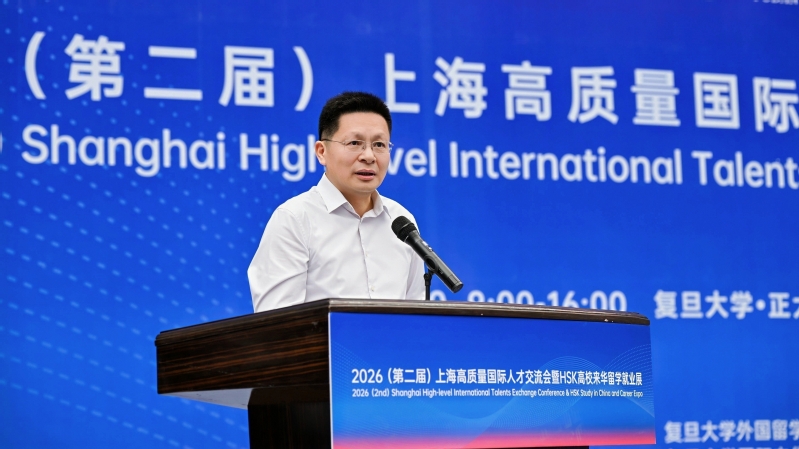
YE Linlin noted that Shanghai is accelerating its development into a socialist, modern, and international metropolis with global influence, while striving to build a high-level hub for talent. The city’s demographic profile, concentration of multinational corporations, and degree of internationalization serve as key pillars for enhancing its attractiveness. He stressed that deepening international engagement is crucial for strengthening Shanghai’s appeal as a global city.
Ye further emphasized that “Study in China” is becoming an increasingly popular choice among international youth. For them, this means more than just completing academic programs in China—it also involves resonating with the country’s development and forging deep connections with the opportunities China offers. Guided by a global perspective and national strategy, Shanghai will offer comprehensive services to international talent, with an ongoing effort to refine its foreign talent service system—delivering true “warmth, speed, and depth”.
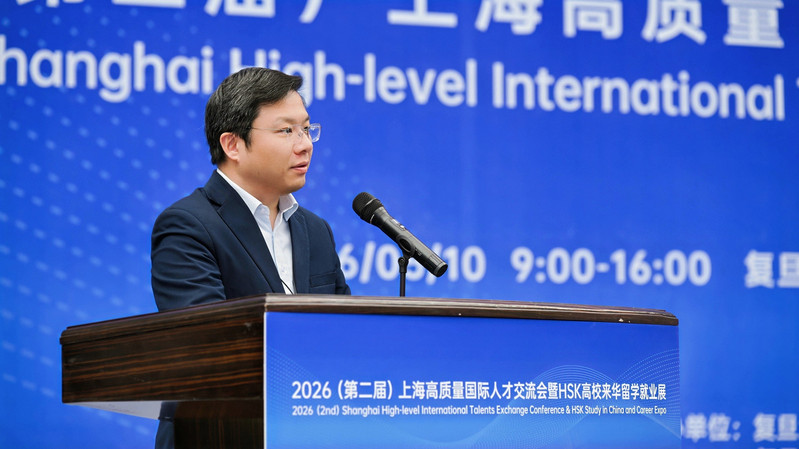
FANG Ming emphasized that against the backdrop of the integrated reform of systems related to education, science & technology, and talent under the 15th Five-Year Plan, Shanghai is accelerating its construction of an international talent hub. The trend of international students choosing to stay in China for development is becoming increasingly evident. This exchange conference aims to implement talent strategies and facilitate the transformation of international students from “learning” to “career development”.
He proposed three key concepts: rootedness, synergy, and co-creation. First, international students should be rooted in China while staying connected to the world, serving as bridges between China and other countries. Second, universities need to break down silos and empower through collaboration, better aligning talent with market demands. Third, enterprises should embed international talents into their innovation and globalization strategies, enabling co-creation between talent and the broader ecosystem.
Through the combined efforts of all three parties, the conference will help international talents realize their career aspirations in Shanghai and inject momentum into the city’s efforts to gather global talent and build an international metropolis.
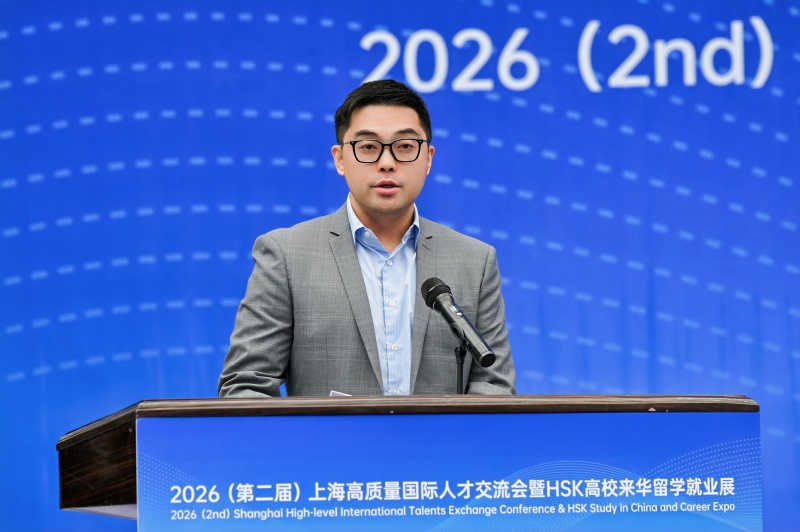
LIU Xinyang mentioned in his remarks that globalization is in Alibaba’s DNA. International students, equipped with China knowledge, global vision, multilingual abilities, and cross-cultural agility, represent the core talent that global enterprises urgently need. He extended a sincere invitation at the event: Alibaba International will provide international youth with hands-on opportunities on a global stage, an AI-empowered growth system, and a diverse and inclusive development environment, and through special talent programs, design customized growth pathways from campus to workplace for international students.
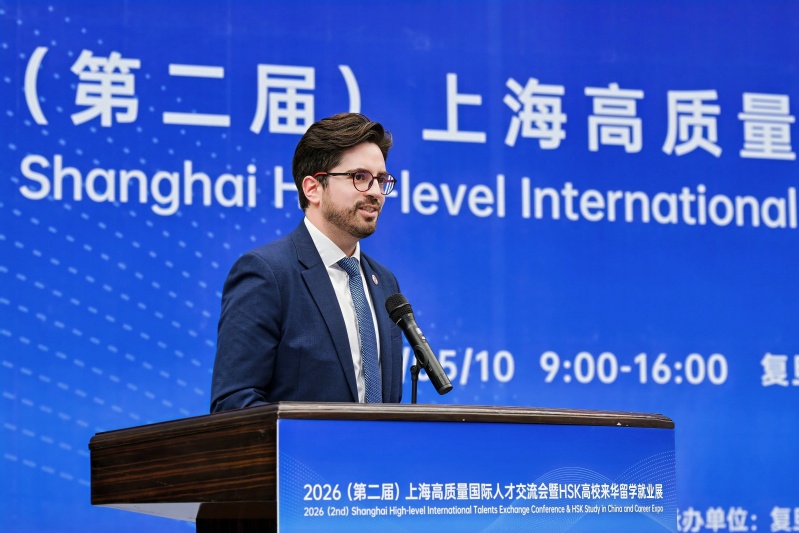
Pablo Carpanetti, a Chilean student from Fudan International School of Finance, shared his experience studying and living at Fudan: the university not only provided professional guidance in Chinese language learning but also enabled him to deeply integrate into campus life through rich cultural activities and platform support. At the same time, Fudan attaches great importance to international students’ academic advancement and career development, providing comprehensive information and resources to help students plan their future path and transition smoothly to future studies.
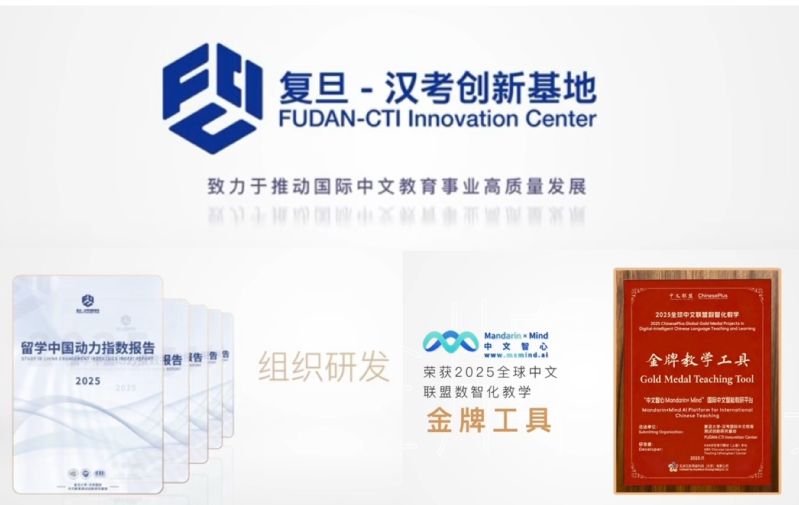
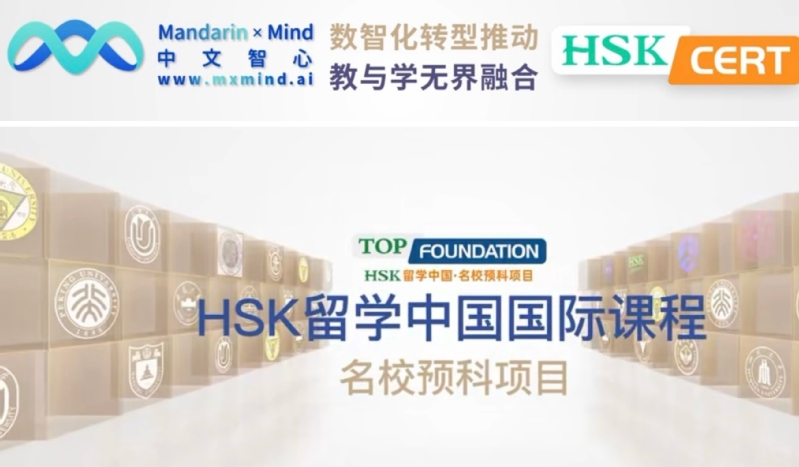
At the opening ceremony of this Expo, the Fudan-CTI Innovation Center reported its achievements via video, highlighting preliminary progress in think tank research, digital transformation, and standardization, including the Study in China Motivation Report, Mandarin x Mind, HSK CERT, and the HSK China International Courses (China Top University Preparation).
Established during the 2022 World Chinese Language Conference, the Center is the world’s first innovation and research institution focused on international Chinese education and testing, co-founded by CTI under CLEC of the Ministry of Education and Fudan University. Among its initiatives, the “HSK Study-in-China International Curriculum–Prestigious University Preparatory Program” is one of the core standards led by the center.
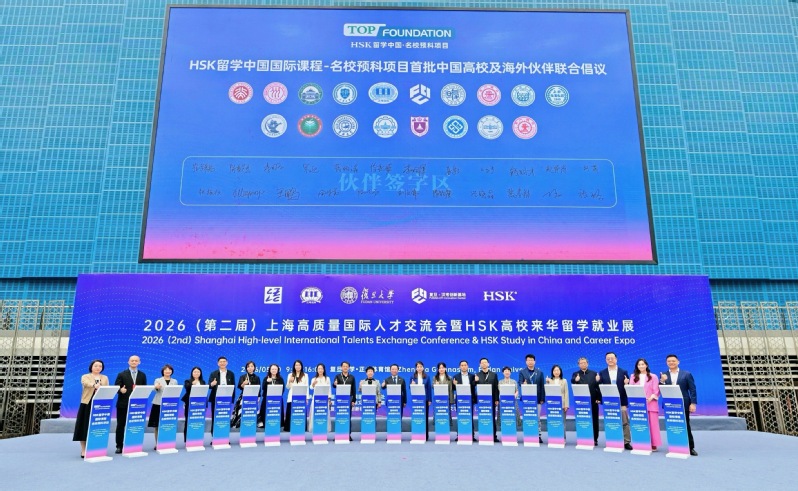
At the Expo, the joint initiative ceremony for the first batch of Chinese universities and overseas partners of the HSK Study-in-China International Curriculum–Prestigious University Preparatory Program was held. 23 partner institutions including Fudan University, Peking University, Shanghai Jiao Tong University, and 20 others, signed the joint initiative.
Going forward, the Fudan-CTI Innovation Center will leverage the disciplinary strengths, academic capabilities, and mature experience in preparatory education of its partner universities to provide academic standards and curriculum system support for the program, promoting the development of a high-level study-in-China pathway through innovative models.
Six industry-leading enterprises, JD.com, Alibaba International, OPPO, Gotion High-tech, Hangzhou CIEC Group, and Shanghai CYTS, took the stage one after another to present their opportunities, drawing the keen attention of a large number of international talents.
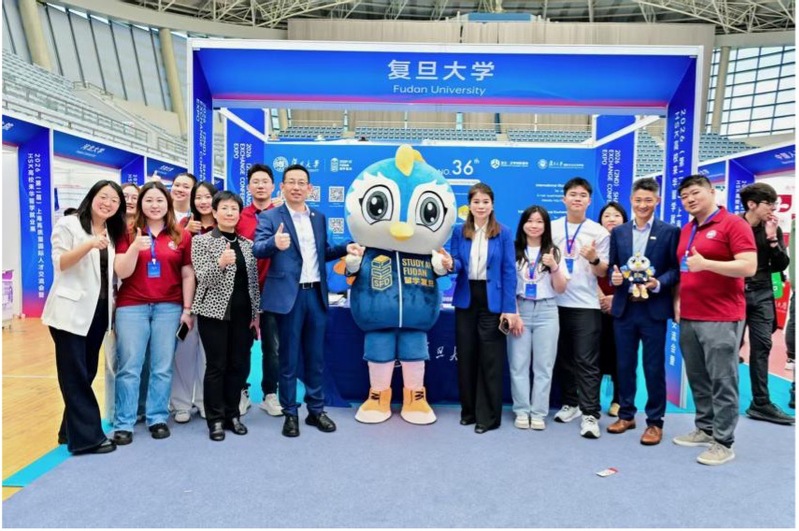
In parallel, the exhibition featured two dedicated zones: the “Corporate Recruitment Zone” and the “University Study-in-China Zone”. Exhibitors engaged in in-depth discussions with international attendees on topics such as career development, job requirements, and training systems. Notably, this year’s event marked the debut of the “Startup Space”, an area designed to provide policy consulting and resource matching services for international graduates aspiring to start their own ventures in China.
(END)
Source: International Students Office at Fudan University
Editor: WANG Mengqi, LI Yijie