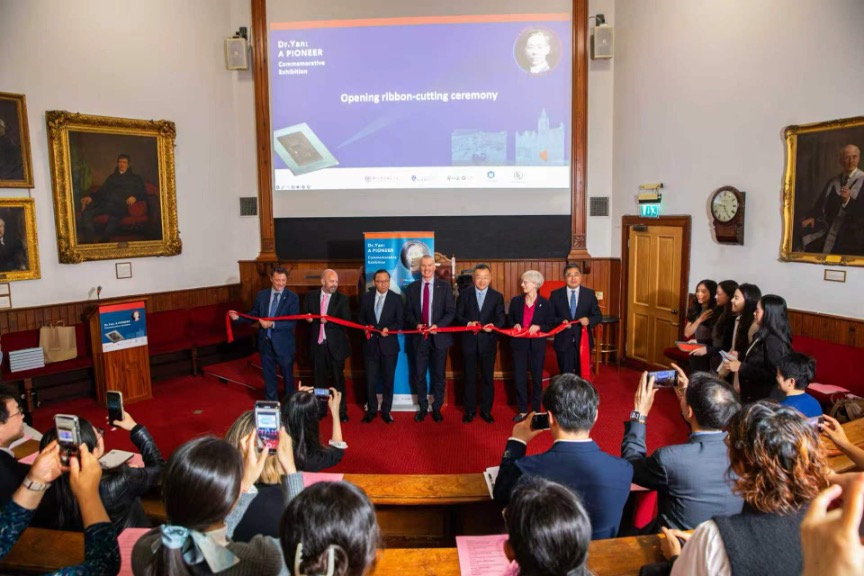

On August 27, 14 German university students from the Confucius Institute Frankfurt “Chinese Bridge”summer camp visited Fudan University for a hands-on cultural experience. Guided by members of Fudan’s Dragon and Lion Dance Association, they immersedthemselves in the charm of traditional Chinese culture.
This is what cultural sharing looks like. But for Fudan's Dragon and Lion Dance Association, their commitment goes much deeper—all the way to the remote villages where these traditions were born.
From Observation to Creation: A Three-Year Journey
The association’s engagement with Shiyang Town began three years ago, when members first witnessed the Dingbu (碇步) Dragon Dance, which is performed on slippery stone pillars above the water. What they saw was not only a unique tradition—the only dragon dance in China performed over water—but also a heritage under threat: immovable stones, limited funding, and the decreasing number of young people practicing it.
The team documented the Dingbu dragon dance through extensive research, video recordings, and oral histories. In 2025, they returned to Shiyang Town, rehearsing a new stage performance using portable equipment to simulate the immovable stones.
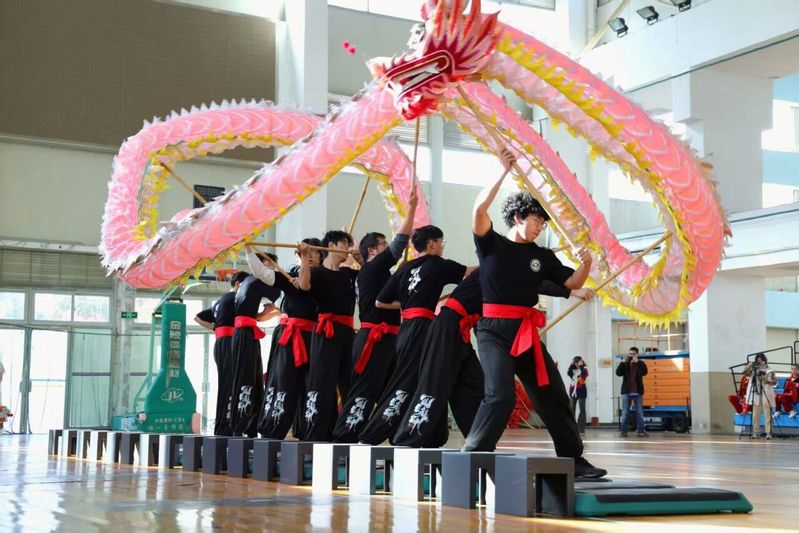
This year, they delivered the final product: a complete choreography portfolio with edited music tracks, interview transcripts, and two versions of performance. Their innovative staging uses lighting to simulate the stepping stones and musical transition to represent the rise and fall of the river, preserving the spirit of landscape while drastically reducing transportation costs for tour.
The materials are now being used in local school programs. “Now every school wants our classes,” Master Lin said with a smile. “I teach at two or three schools each week.”
Tradition, communication and innovation
This July, Fudan’s International Summer Session welcomed 400 overseas participants to campus, and the Dragon and Lion Dance Association hosted more than ten workshops.
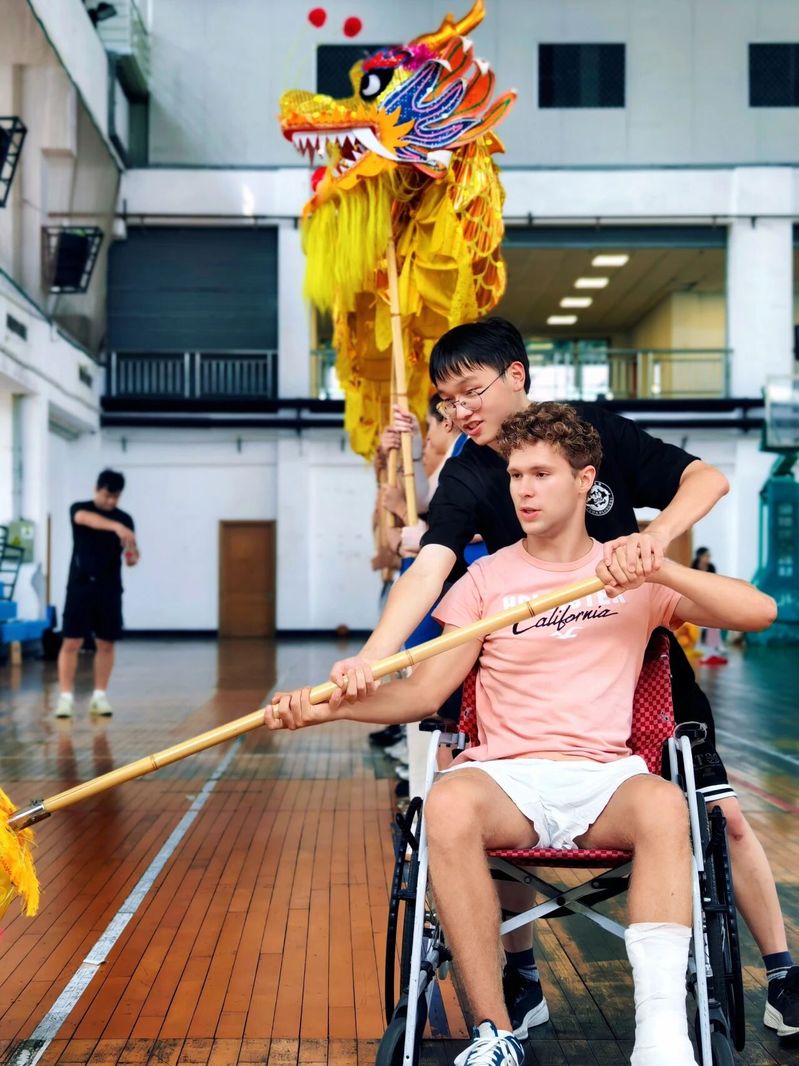
HUANG Zheng, a history major and men’s dragon team captain, led many of these workshops. “I prepared a full page of technical terms in English,” he recalled. “But on site, I realized it wasn't necessary. I just said ‘follow me’ and used gestures. Once they tried it themselves, they picked up faster than I expected.” One international student, despite a broken foot and using a wheelchair, completed a dragon dance performance with Huang’s assistance. “Language can be a barrier, but the joy of moving together transcends it,” Huang said.
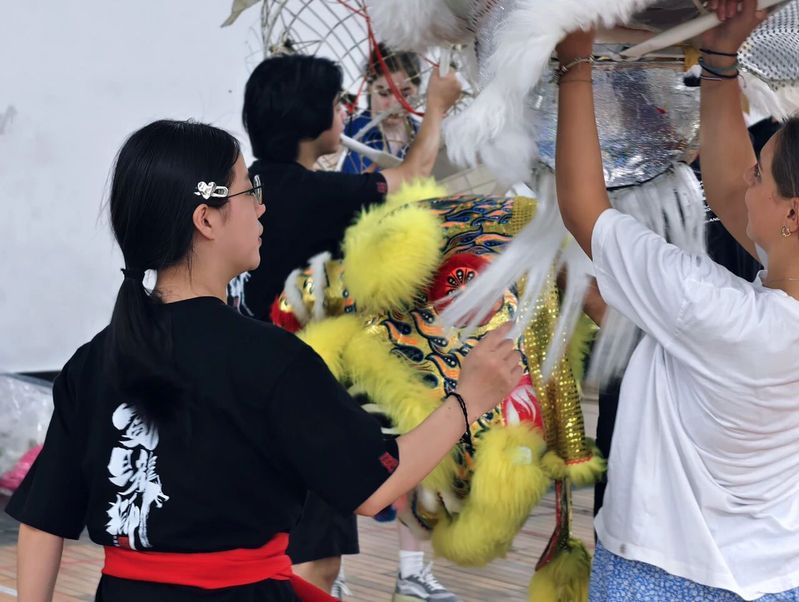
The association has now developed a standardized international teaching system, including cultural background guides, tiered course plans, bilingual scripts, safety protocols, and equipment management documents—a replicable model for future exchanges.
The association also follows the wave AI, using its efforts to combine tradition and innovation. One of the members, DENG Zitong, a sophomore from the College of Computer Science and Artificial Intelligence, joined an “AI + Sports” initiative that developed an AI-powered coaching tool for dragon dance, melting new elements into this traditional dance. The association is also exploring how AI might recreate the dance's riverside environment.
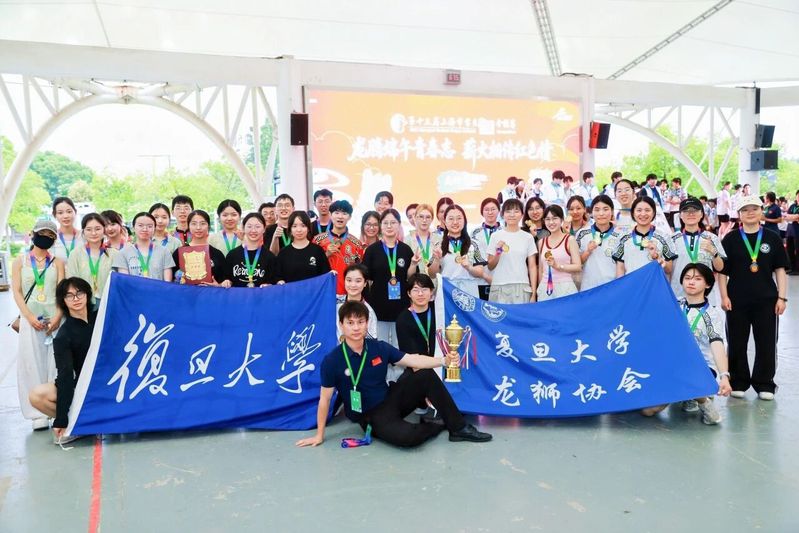
From a stream in rural Zhejiang to a global classroom at Fudan, Fudan University’s Dragon and Lion Dance Association has turned a three-year commitment into a model of cultural preservation that does not just document tradition but actively reinvigorates it. By blending systematic research with creative performance, and local heritage with global outreach, the association has found a way to let the dragon dance, literally and figuratively, keep moving forward.
(END)
Writer: LI Yijie
Editor: Wang Mengqi