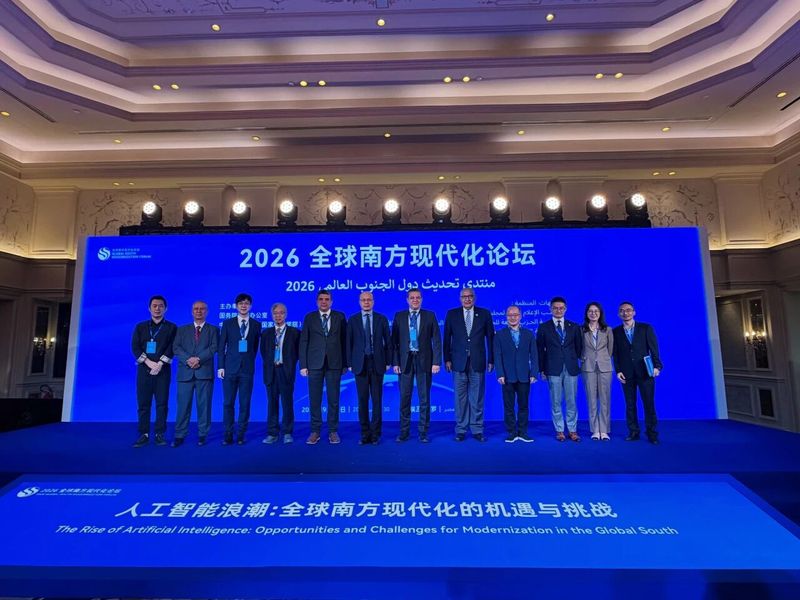

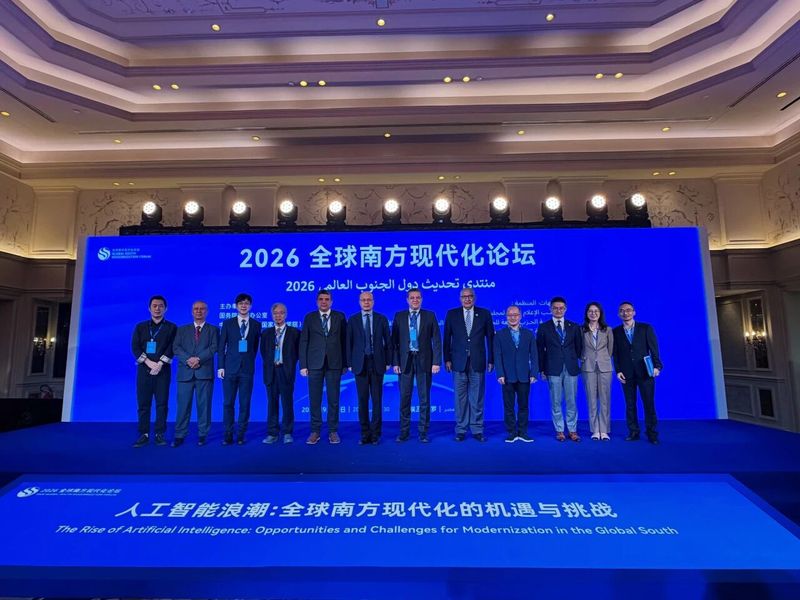
The 2026 Global South Modernization Forum was held in Cairo on September 30 under the theme “The Rise of Artificial Intelligence: Opportunities and Challenges for Modernization in the Global South”.
The event featured a main forum and four parallel forums. As a co-organizer of a parallel forum, Fudan University brought together Chinese and international guests to explore modernization in the AI era.
The Forum was jointly hosted by the State Council Information Office of China, the Party School of the Communist Party of China Central Committee (National Academy of Governance), the Chinese Academy of Social Sciences, Peking University, Renmin University of China and Cairo University.
AI for Good and for All: Promoting Shared Development of the Global South through China's Inclusive AI Philosophy
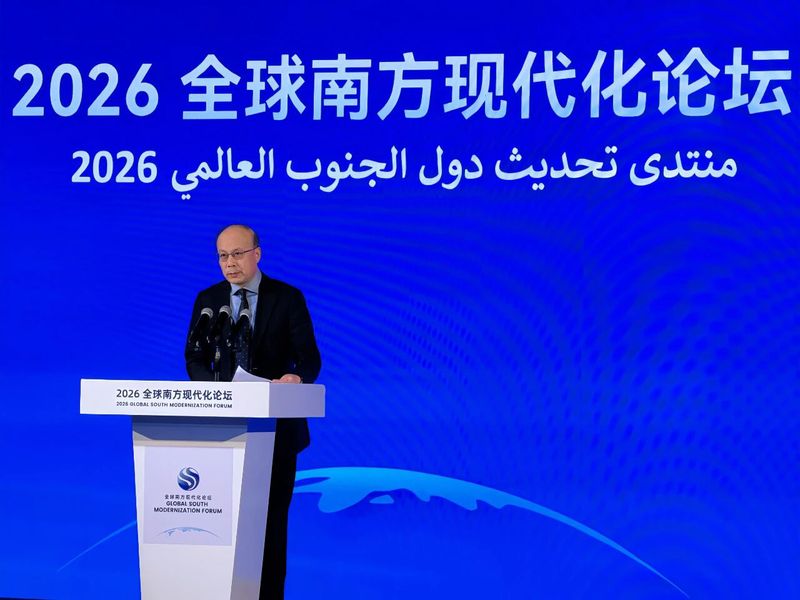
At the main forum, CHEN Zhimin, vice president of Fudan University and executive director of the Center for Global AI Innovative Governance, emphasized in his keynote address that AI development should be geared toward advancing the shared well-being of humanity, ensuring that more countries particularly those of the Global South, to have an equal seat at the table in both developing and governing the technology.
Looking ahead, he argued that international cooperation must be more responsive to the diverse linguistic and cultural contexts, industrial landscapes, and development priorities of different countries. By connecting technology, talent, expertise, and project resources, and by investing in capacity building and public goods, the global community can help more countries build their own capabilities to harness AI—so that the technology ultimately serves the development paths each nation has chosen for itself.
Parallel Forum 3, themed “Advancing Mutual Learning Among Civilizations Through the Proper Use of AI”, was held on the same day. It was hosted by the Chinese Academy of Social Sciences, co-organized by Fudan University and Shanghai International Studies University, and organized by the Global Civilization Institute.
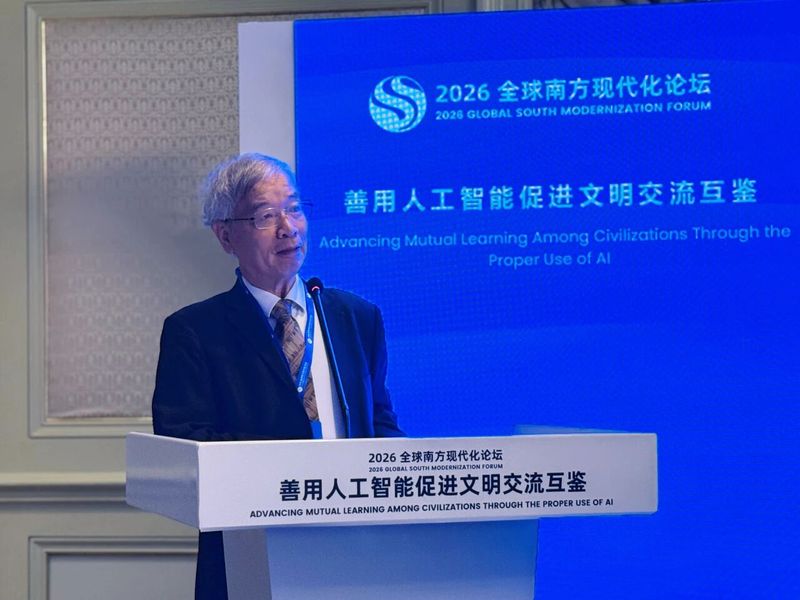
HUANG Renwei, chief researcher and distinguished professor at Fudan Institute of Belt and Road & Global Governance, identified digital and intelligent infrastructure and economic development as emerging priorities for China–Global South cooperation. Linking inclusive AI development with Belt and Road digital infrastructure could strengthen capabilities and share opportunities.
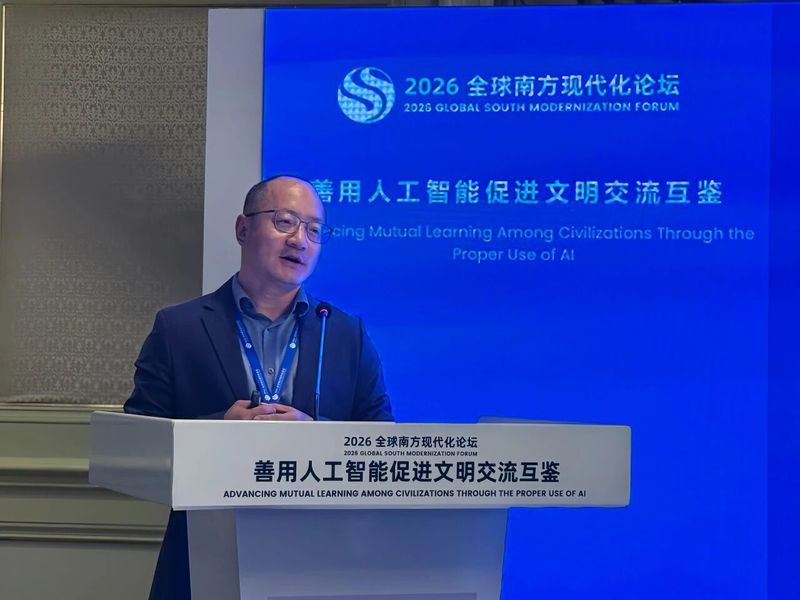
CHEN Hongyu, professor at Fudan’s College of Future Information Technology, presented a dedicated aerospace information solution for disaster mitigation in Africa. Onboard AI in very low Earth orbit satellites processes remote-sensing imagery, detects floods, wildfires and building damage, and issues early warnings. The project is endorsed under UNESCO’s International Decade of Sciences for Sustainable Development. Nighttime satellite imagery tracing Egypt’s new capital’s emergence from the desert illustrated Earth observation’s contribution to urban development and disaster resilience.
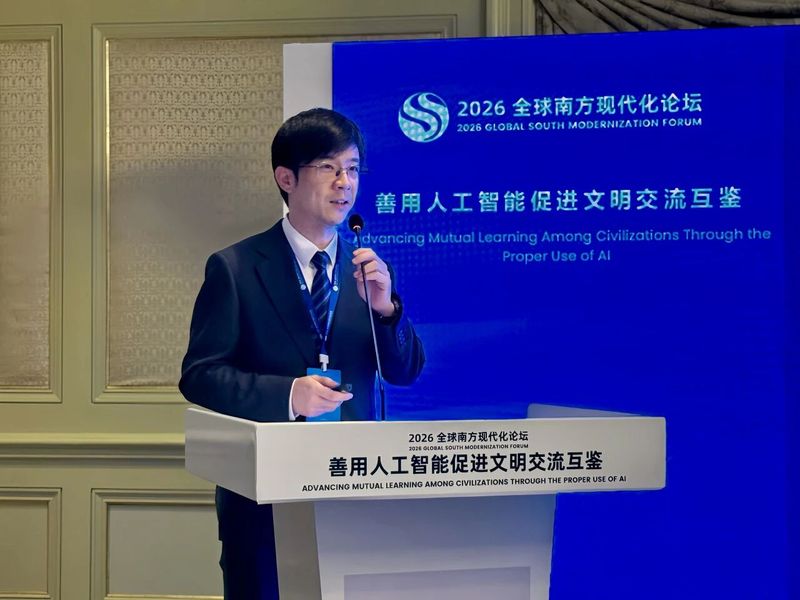
ZHANG Li, vice dean and professor at Fudan Institute of Belt and Road & Global Governance, emphasized turning technology access into independent, sustainable development capacity. Marking the 10th anniversary of Lancang–Mekong Cooperation, he drew on Fudan’s youth exchanges and AI governance research to advocate locally driven technology sharing, capacity building and safety governance, with universities and young people supporting mutual learning.
Fudan University specially invited representatives of its international partners to deliver thematic presentations at Parallel Forum 3.
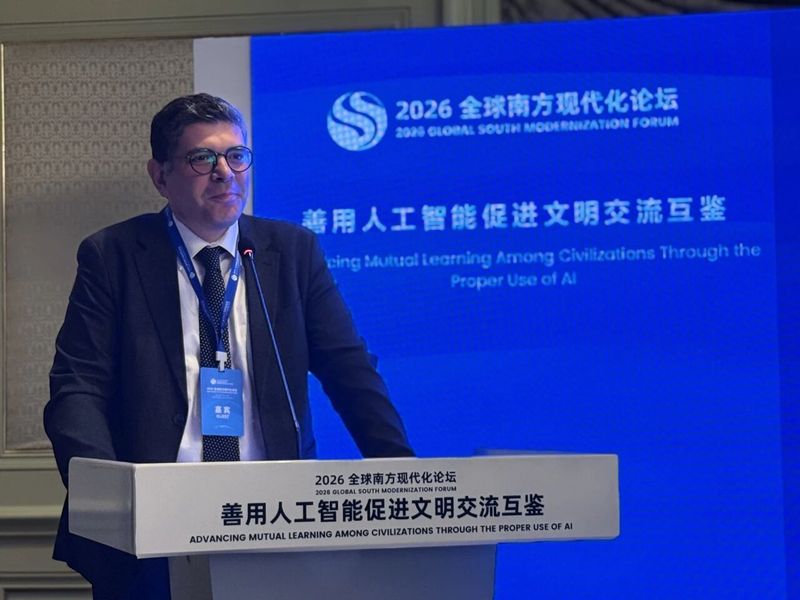
Mohamed ElGabry, director of the African Disaster Mitigation Research Center, emphasized that responsible AI use requires mutual learning, shared knowledge, local capacity development and long-term institutional partnerships. Disaster science illustrates how scientific cooperation can strengthen dialogue between civilizations while supporting sustainable development and societal resilience.
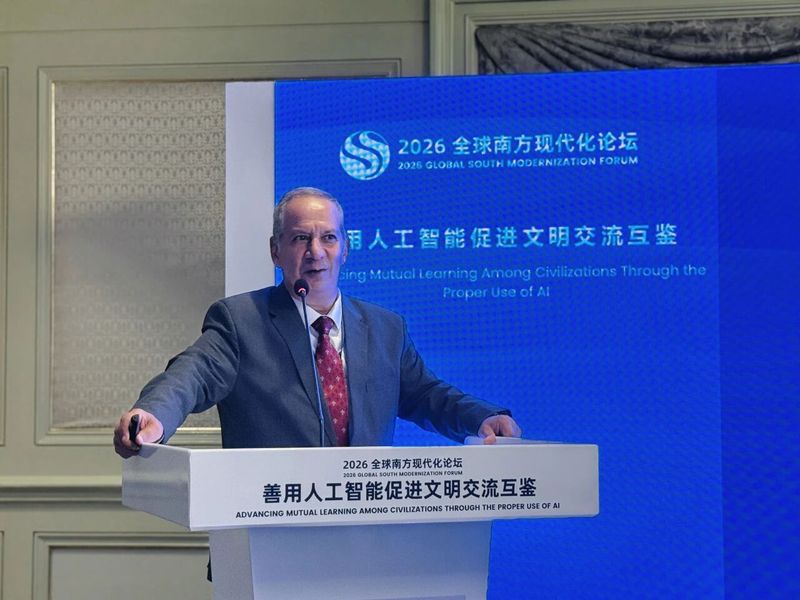
Maged Reda Botros, professor at Capital University in Cairo, argued that integrating “civilization intelligence” into AI could deepen dialogue while respecting civilizational diversity and preserving cultural identities. He posed the question Can technology help humanity become more intelligent about itself?, and advocated “Multilayer Global South Platforms” encompassing executive leadership, opinion leaders and people-to-people exchanges to advance comprehensive cooperation.
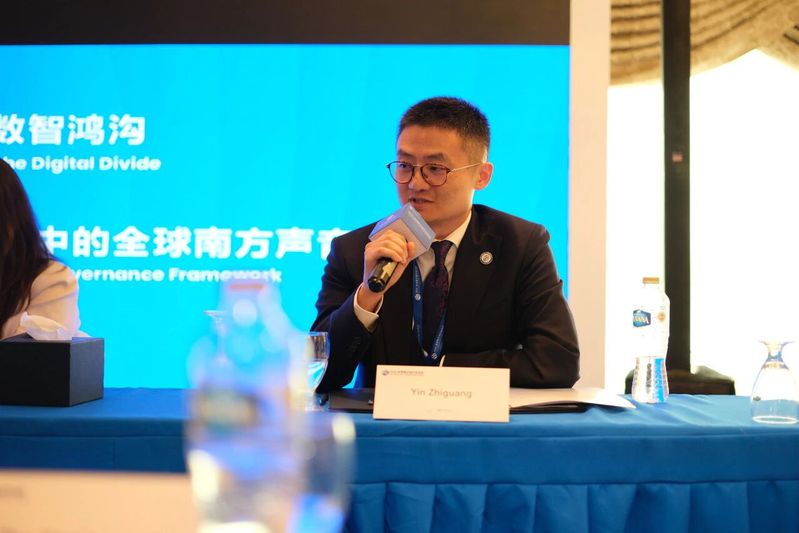
YIN Zhiguang, professor at Fudan’s School of International Relations and Public Affairs, spoke at Parallel Forum 4, “Safeguarding Security and Bridging the Digital Divide”. AI governance, he argued, should transcend industrial considerations and hegemonic competition, serving shared development across the Global South and humanity.
A Showcase of Multidisciplinary Research: Diverse Pathways in Serving the Global South
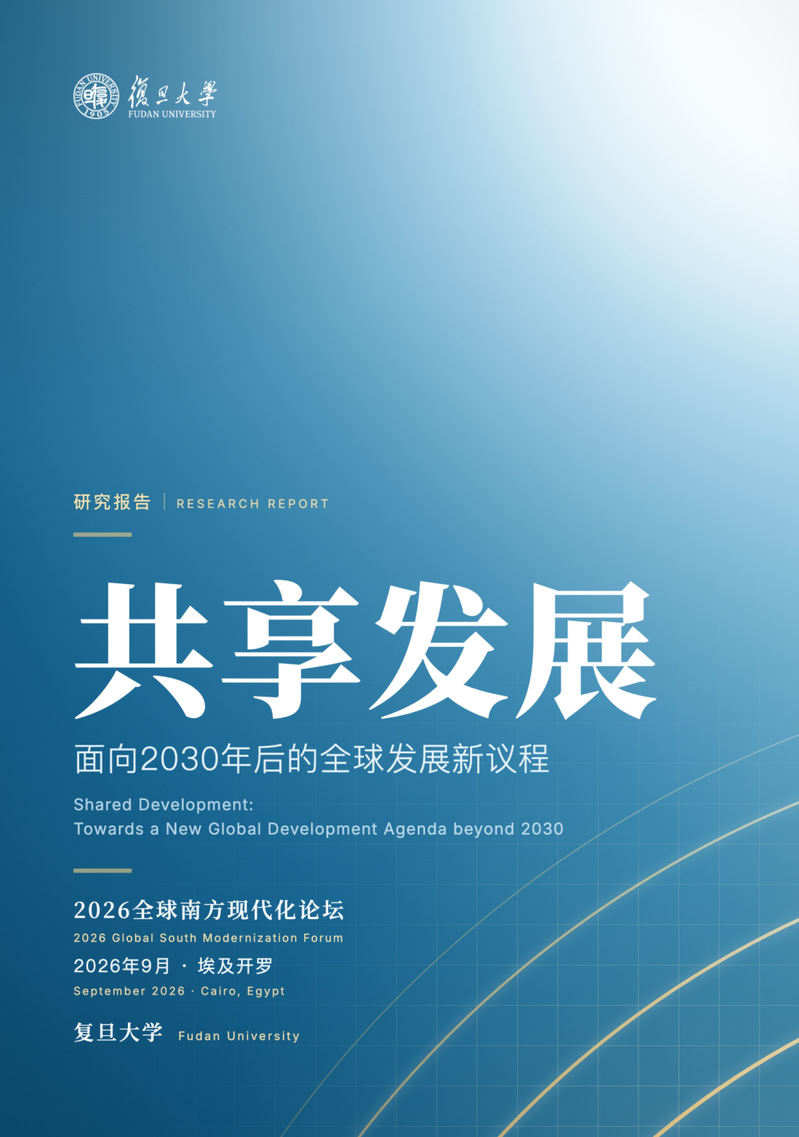
Fudan also launched a research report and action initiative, “Shared Development: Towards a New Global Development Agenda beyond 2030”. As the 2030 deadline for the UN Sustainable Development Goals approaches, the Shared Development initiative proposes a joint research agenda to sustain and advance global development beyond 2030.
The agenda rests on three core convictions. First, value generated through international trade, production, loans, aid, and foreign direct investment should be systematically reinvested in social foundations such as transportation, education, and healthcare, building each country's capacity for self-sustaining growth. Second, effective governance requires governing parties to organise diverse social sectors, concentrate limited resources, and pursue contextually appropriate, socially grounded policies that integrate state and society. Third, the relationship between market, society, and state must be reconceptualised. The market should be understood as an instrument embedded within social relations, serving human wellbeing rather than operating as an autonomous force. At the global level, the initiative calls for a world order that is collectively negotiated, jointly built, and universally shared. It champions substantive equality among sovereign states, urging reform of existing international governance through UN platforms and new multilateral mechanisms such as the Belt and Road Initiative and BRICS, in contrast to elite-driven, great-power-dominated models.
To put these aspirations into practice, Fudan University's School of International Relations and Public Affairs will lead a five-year international knowledge network with three missions: advancing South-South knowledge cooperation, enabling transnational mobility of governance expertise, and bridging academia and practice. To facilitate the cooperative research on the Shared Development Agenda, the School of International Relations and Public Affairs at Fudan will provide short-term programmes such as online courses, comparative governance workshops, and summer schools, as well as long-term programmes such as Fudan INSPIRE (International Scholars Program in Research and Education for the Global South) Programme, all designed to amplify Southern voices in shaping international order and global development thought.
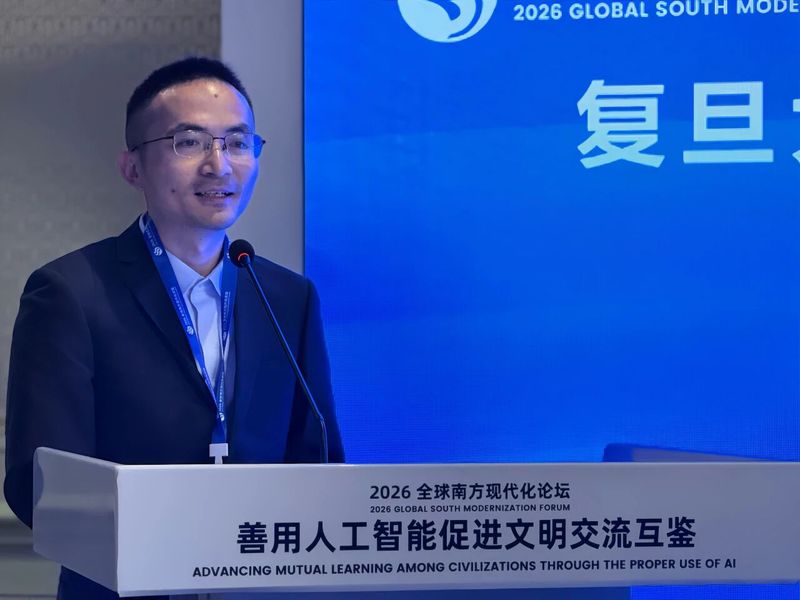
HUANG Zhenqian, tenured associate Professor at Fudan’s School of International Relations and Public Affairs, presented the research report on behalf of the research team.
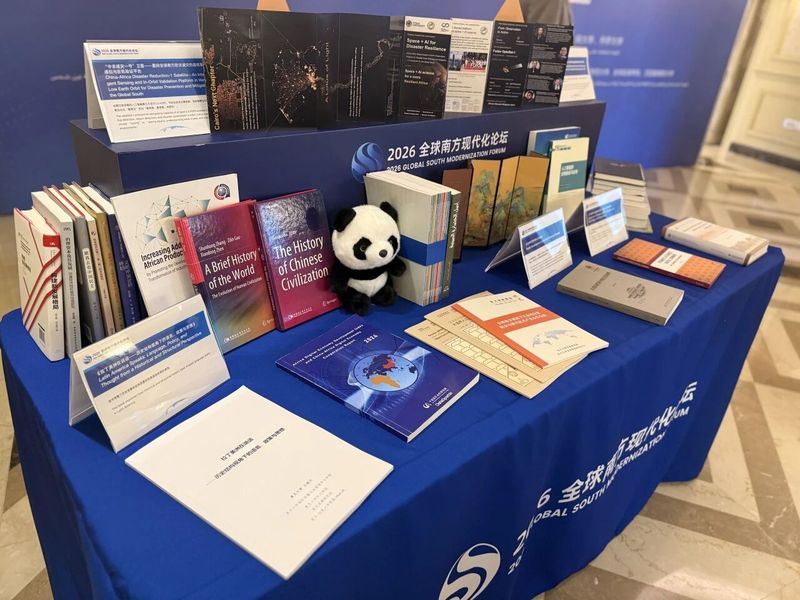
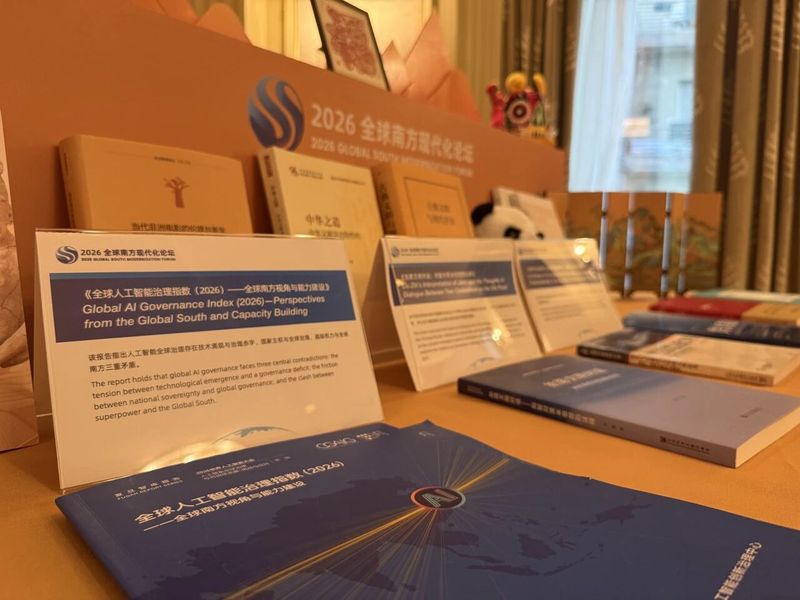
Fudan also exhibited 19 academic works and research outputs spanning global governance, international relations, AI, energy transition, disaster mitigation and international communication, highlighting its multidisciplinary contributions to global development.
Two youth-focused seminars at Fudan were also selected as part of the forum's youth exchange and think tank programs. “The Lancang–Mekong Youth International Future Science and Technology Training Camp”, hosted by the School of International Relations and Public Affairs, and “The Global South in the AI Era: Development and the Future through Youth Perspectives”, jointly hosted by the Center for Global AI Innovative Governance and the School of Journalism, will take place in Shanghai this October and November, respectively.
(END)
Source: the Center for Global AI Innovative Governance, School of International Relations and Public Affairs at Fudan University
Writer: WU Zhengyang
Editor: WANG Mengqi