For the first time in Europe, the special exhibition Dr Yan: Pioneer - A Bridge of Sino-British Medical & Cultural Exchange has opened, celebrating the life and legacy of Dr YAN Fuqing, a University of Liverpool alumnus and pioneering figure in modern medicine in China.
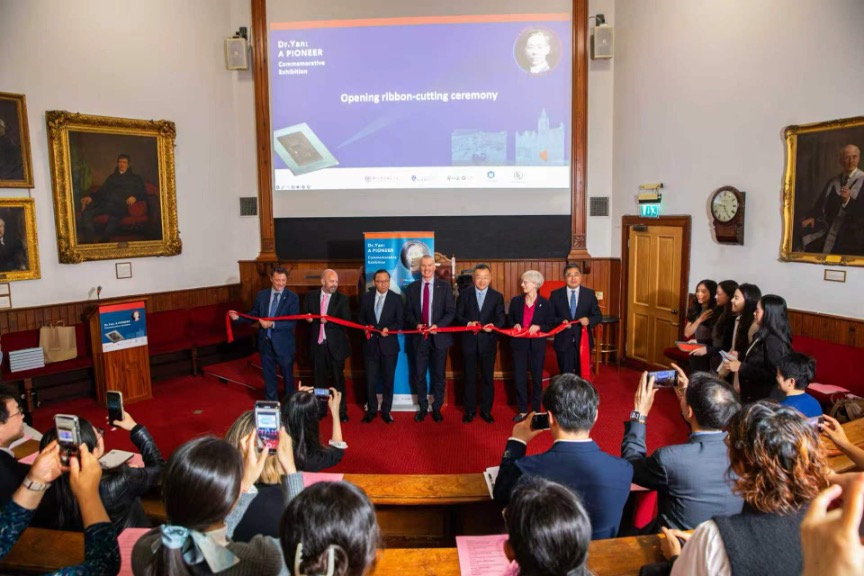
Jointly presented by Shanghai Medical College, Fudan University, Jiefang Daily and the University of Liverpool, the exhibition was launched on 22 September at the Liverpool Medical Institution.
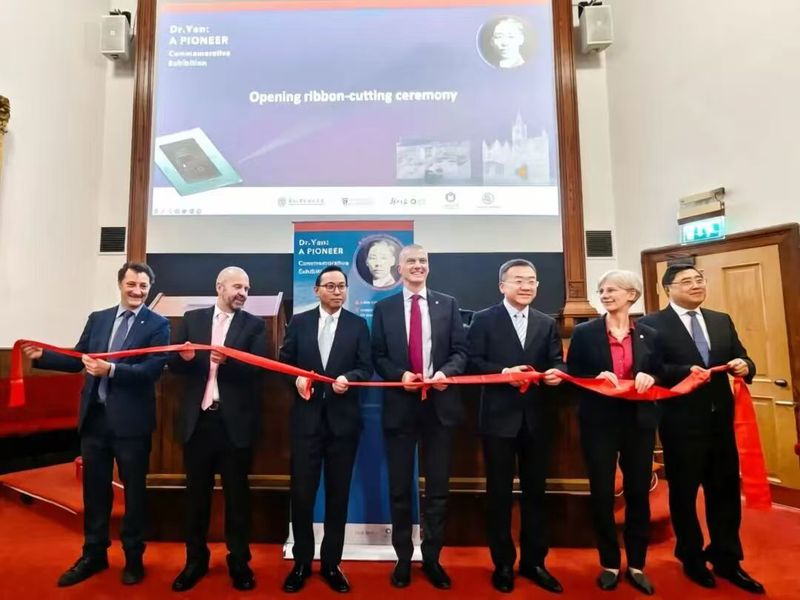
Guests take part in the ribbon-cutting ceremony for Dr Yan: A Pioneer in Liverpool.
The exhibition commemorates Dr YAN Fuqing (1882–1970), a pioneer of modern medicine and medical education in China who had a special connection with Liverpool. After becoming the first Asian person to earn a medical doctorate from Yale University in 1909, Dr Yan pursued further studies at the Liverpool School of Tropical Medicine, University of Liverpool, where he was exposed to pioneering work in tropical medicine, disease prevention and public health.
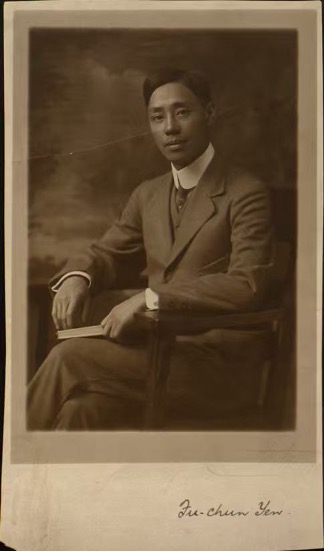
Dr YAN Fuqing (1882–1970)
A Letter from Liverpool
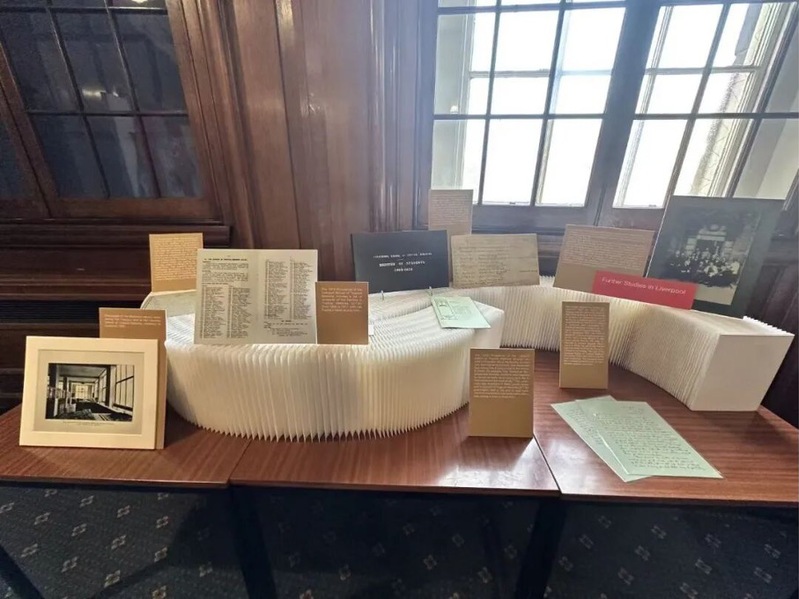
Highlights include Dr Yan’s register at the University of Liverpool and his doctorate from Yale School of Medicine.
On display is a handwritten letter Dr Yan sent on 24 September 1909 from “15 Sunnyside, Liverpool” to William H. Sallman, executive secretary of the Yale-in-China Mission in New Haven. In it he notes that he had been instructed to procure surgical instruments in Britain for use at the hospital upon his return to China.
He also comments on his studies: “My work in the Liverpool School of Tropical Medicine has already begun and I find it to be the most interesting. The course is excellent in preparing men to carry on independent research work later...”
The letter is among nearly 50 exhibits on display, which include rare archival documents, handwritten manuscripts, historical photographs, newspapers, periodicals and books illustrating his life and achievements. Videos about Dr Yan by Prof HAN Qide (韩启德), Prof WEN Yumei (闻玉梅), Prof FAN Jia (樊嘉), Prof ZHANG Wenhong (张文宏), and other scholars are also included, highlighting his significant contributions and legacy.
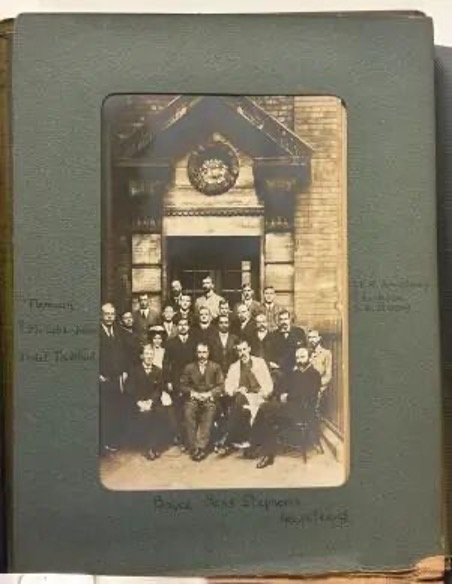
The group photograph taken in Liverpool.
Also in the hall is a group photograph of 22 people taken the same year, with a landmark building of the University of Liverpool in the background. Dr Yan is the only Asian in the frame, and it is the only known photograph of him in Liverpool.
Among the professors seated in the front row are Sir Ronald Ross, who won the Nobel Prize in 1902 for discovering how malaria is transmitted and helped found the Liverpool School of Tropical Medicine, and Sir Rubert Boyce, an early co-founder of the school.
His experience in Liverpool had a lasting influence on his subsequent medical career. After returning to China, Dr Yan became the founding dean of two landmark medical schools that later developed into Xiangya School of Medicine, Central South University and Shanghai Medical College, Fudan University. He also played a key role in establishing the Chinese Medical Association and several major medical institutions, while promoting preventive medicine and public health.
By bringing knowledge and ideas gained through his overseas studies into China’s emerging modern medical system, Dr Yan became an early bridge between Chinese and British medicine. The exhibition traces this remarkable journey and pays tribute to his lasting contribution to Sino-British medical and cultural ties.
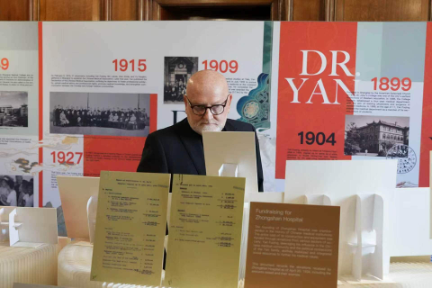
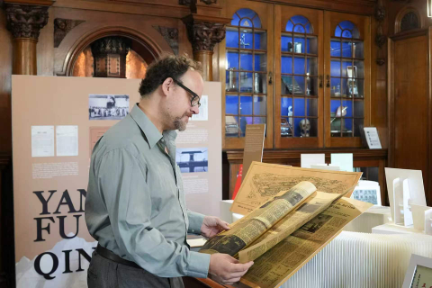
Visitors explore the exhibition and its archival displays at the Liverpool Medical Institution.
A tribute, a return — and a new departure
The opening ceremony was attended by TANG Rui, consul general of China in Manchester; Professor Tim Jones, vice-chancellor of the University of Liverpool; Nick Small, deputy mayor of Liverpool; LIU Yonggang, deputy editor-in-chief of Jiefang Daily; Counsellor LIANG Yan, head of the Education Section at the Chinese Consulate-General in Manchester; XU Jun, deputy dean of Shanghai Medical College, Fudan University; Professor Sally Sheard, dean of the Institute of Population Health and the Andrew Geddes and John Rankin Professor of Modern History; and Professor Peter McCormick, associate pro-vice-chancellor for Postgraduate Affairs and International Partnerships.
Tim Jones described Dr YAN Fuqing as one of the University’s most distinguished alumni and a founding figure of modern medical education in China. “His life demonstrates how education can bridge cultures, advance knowledge and improve lives.” he said.
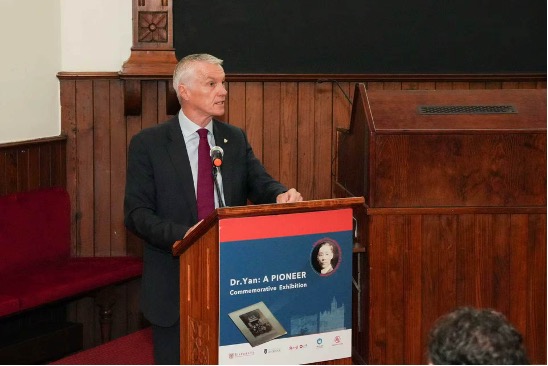
Professor Tim Jones, vice-chancellor of the University of Liverpool.
TANG Rui said Dr Yan's time in Liverpool forged a link between Shanghai Medical College and the University of Liverpool that endures to this day. Looking ahead, TANG reaffirmed the Consulate General’s support for closer cooperation in medical education, public health research and cultural exchange between the two countries.
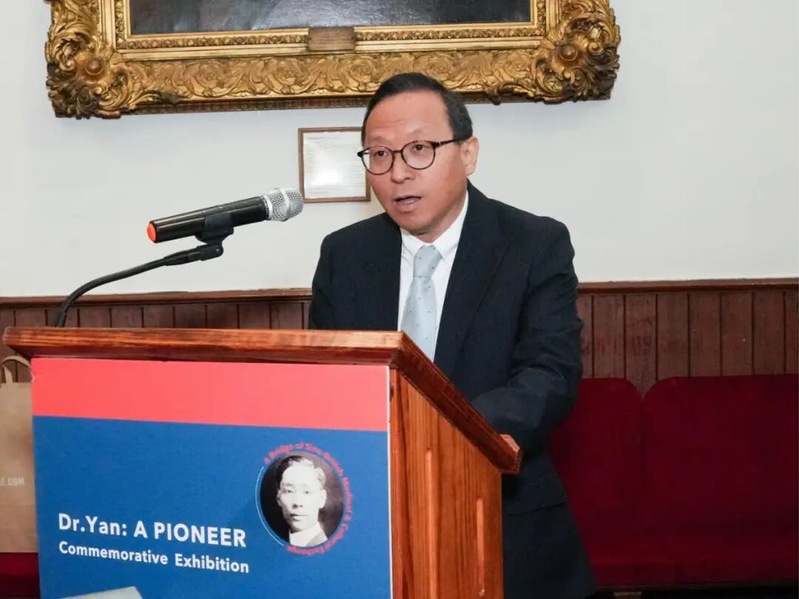
TANG Rui, consul general of the Chinese Consulate General in Manchester.
Nick Small highlighted the city’s long-standing ties with China, particularly its 27-year sister-city relationship with Shanghai. He described Dr Yan’s story as a powerful example of cross-cultural learning and exchange, and expressed the hope that the exhibition would introduce his legacy to a wider audience.
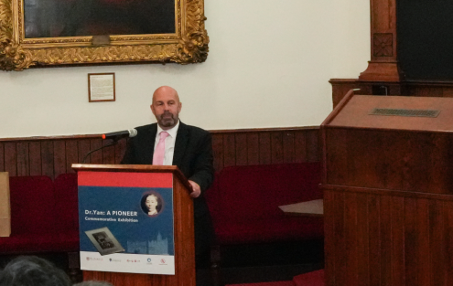
Nick Small, deputy mayor of Liverpool.
Reflecting on Dr Yan’s connection with Liverpool, XU Jun highlighted “serving the people” as an enduring part of Dr Yan's legacy, describing the exhibition’s return to Liverpool as both a tribute to a medical pioneer and a new starting point for deeper Sino-British cooperation in medical education and public health.
Sally Sheard placed Dr Yan’s time in Liverpool within the wider history of the city’s pioneering work in public health and tropical medicine. She added that the University was enormously proud to count Dr Yan among its distinguished alumni, with his legacy continuing through collaboration between Liverpool and China in medicine.
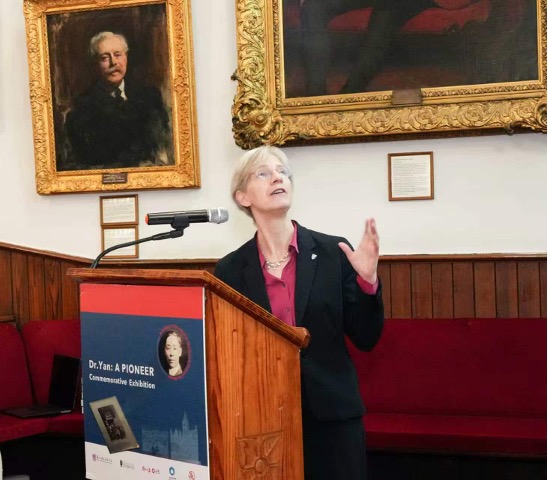
Professor Sally Sheard, dean of the Institute of Population Health and Andrew Geddes and John Rankin Professor of Modern History.
Following the speeches, representatives of the participating institutions exchanged commemorative gifts. Shanghai Medical College, Fudan University presented the University of Liverpool with a woven artwork depicting the college’s oldest historic building, the East Building No. 1. In return, the University presented Shanghai Medical College with a high-resolution facsimile of Dr YAN Fuqing’s 1909 university student registration record.
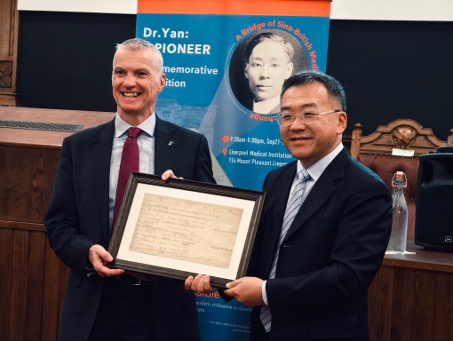
Professor Tim Jones presents Shanghai Medical College, Fudan University with a high-resolution facsimile of Dr YAN Fuqing’s signed 1909 student registration record.
Jiefang Daily presented the University of Liverpool with an original issue of Shen Bao dated 21 December 1921. The issue reported on the China visit of Percy Maude Roxby, the University's Professor of Geography. In return, the University presented Jiefang Daily with artwork of Liverpool's Three Graces.
Exhibition draws strong interest
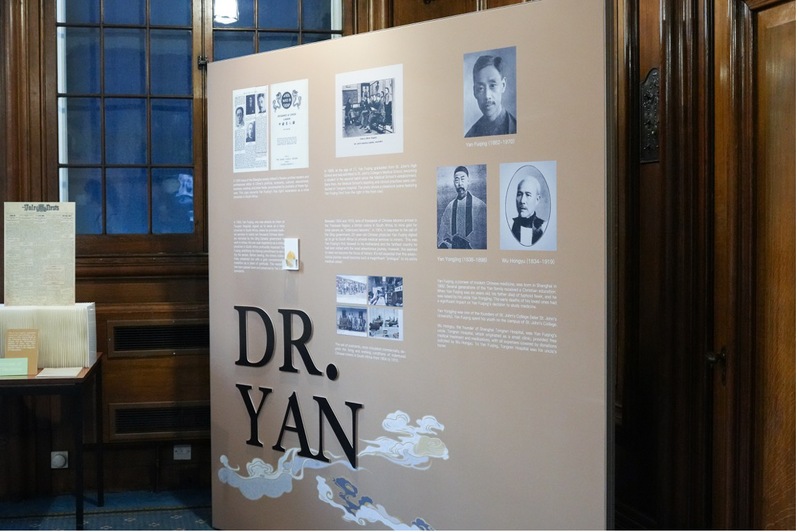
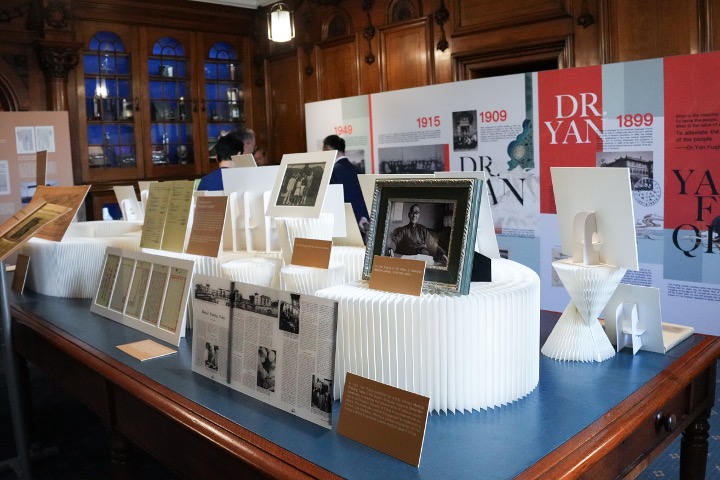
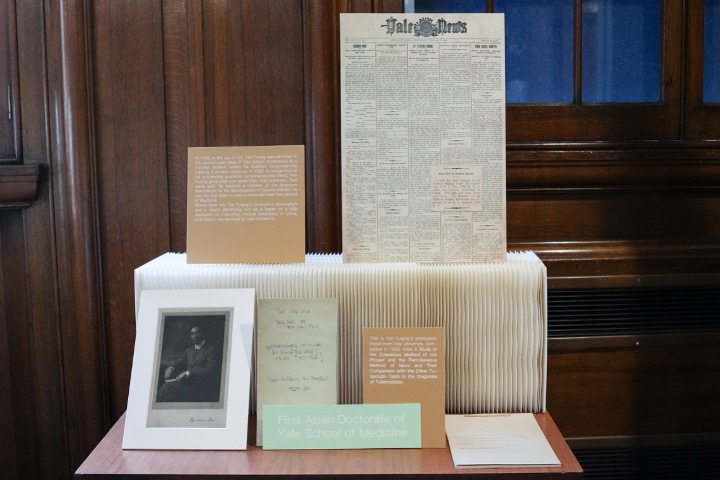
Exhibition displays trace Dr YAN Fuqing’s life, education and contributions to modern medicine.
WANG Na, editor of Jiefang Daily and curator of Dr Yan: A Pioneer, said: “It would hardly be an exaggeration to say that this humble pioneer’s historic contributions to modern medicine in China. Dr Yan’s life was, in this sense, truly extraordinary. He not only helped build a modern system of medical education but also inspired successive generations of Chinese doctors and medical students to travel to Britain for further study and training.”
She added that such a life required “moral integrity and immense courage”, saying: “I hope that, as visitors here in Liverpool leave the exhibition hall, they will carry with them this sense of moral courage and a deeper appreciation of the century-spanning Sino-British medical and cultural dialogue that Dr Yan helped to initiate.”
Professor Russell Stothard from the Liverpool School of Tropical Medicine was particularly struck by the little-known story of a young Chinese doctor who came to Liverpool to study tropical medicine more than a century ago. He noted that Dr Yan later made significant contributions to medicine and medical education in China and welcomed the exhibition for bringing this remarkable historical connection back to life in Liverpool.
ZHOU Jing, a medical researcher who holds a PhD in physiology from the University of Liverpool, said the exhibition gave her a deeper appreciation of Dr Yan’s legacy. “Learning that Dr Yan studied in Liverpool in 1909 and brought ideas about public health back to China was deeply inspiring”, she said. “His commitment to medicine and serving the public has strengthened my own determination to contribute to medical research, improve patients’ lives and advance public health.”
The exhibition also drew interest from students at the University of Liverpool. One student was surprised to discover Dr Yan's connection with the city more than a century ago, describing his journey from studying medicine in Liverpool to making significant contributions to medical education in China as an inspiring example of the lasting impact of international education.
Liverpool is the second stop on its global tour and the first in Europe for Dr Yan: A Pioneer, following its debut in South Africa. After its run at Liverpool Medical Institution, the exhibition will continue at a venue to be announced, with the support of Pagoda Arts, a Liverpool-based Chinese arts organization.
(END)
Source: Shanghai Medical College, Fudan University, China Daily, University of Liverpool, YM Liverpool
Editor: WANG Mengqi