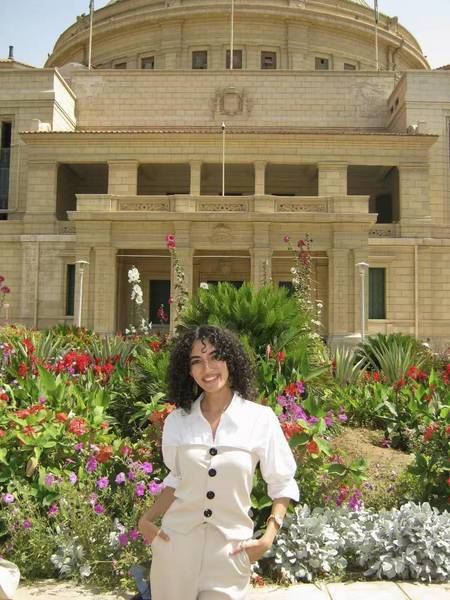

At this year’s Opening Ceremony of Fudan University, one speech stood out — and it came from Egypt.
“We are not just spreading culture. We ourselves are part of global cultural exchange,” said Ola, an international student representative from Egypt.
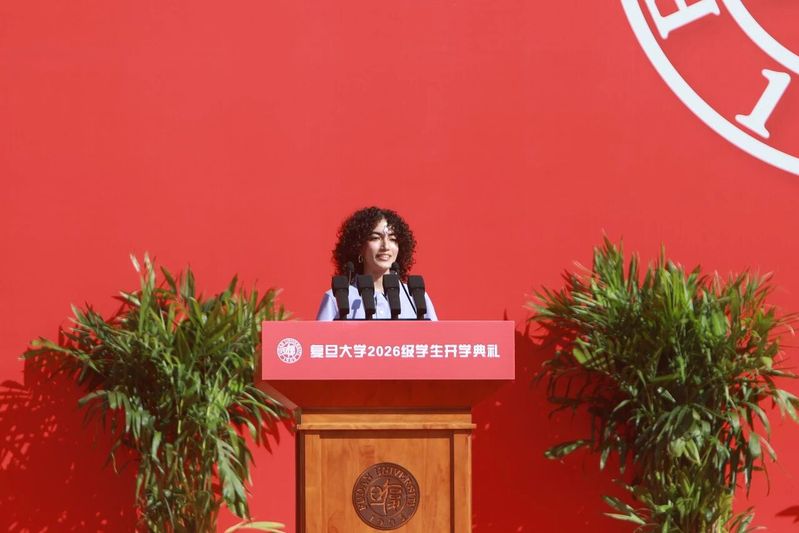
Ola is delivering a speech at the 2026 fall university opening ceremony for new students
A graduate in Chinese Translation from Cairo University, Ola competed in the 24th “Chinese Bridge” Chinese Proficiency Competition for Foreign College Students, a prestigious international Chinese-language competition organized by China’s Center for Language Education and Cooperation, often described as the “Olympics” of Chinese language learning, and placed among the top five worldwide.
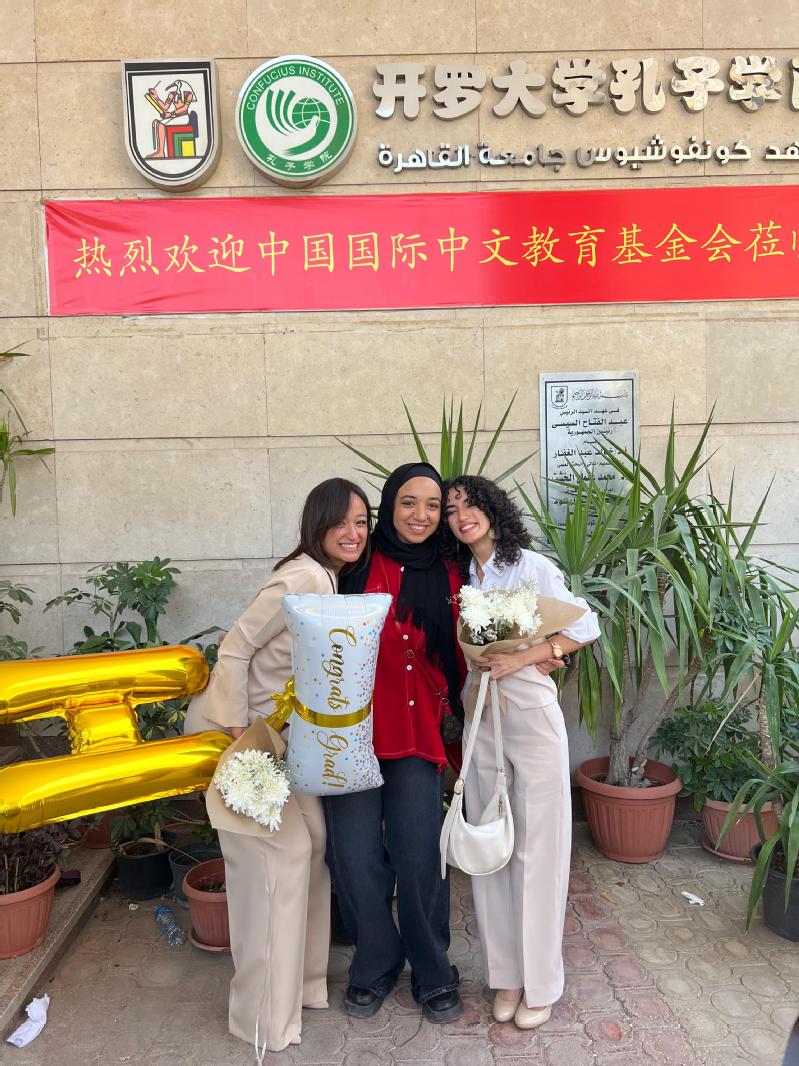
This September, driven by her passion for Chinese culture and a vision for cross-cultural communication, she began a master’s program at Fudan’s School of Journalism, opening a brand-new chapter in her life.
Encountering Chinese Culture Through Passion
Ola’s bond with Chinese culture began in her leisure hours during adolescence. The first piece of Chinese pop culture Ola encountered was the Arabic‑dubbed Blazing Teens (“火力少年王”) broadcast on Egyptian TV. Fascinated by the brilliant yo‑yo performances in the series, she begged her parents to buy her a yo‑yo and played its tricks whenever she had spare time. In high school, the film “The Karate Kid” starring Jackie Chan and Jaden Smith further intrigued her passion for Chinese culture.
Although the access to Chinese film and television works was quite limited in Egypt back then, the impression of China being a vibrant country with traditional culture and wisdom was deeply rooted in her heart.
“Watching Chinese content has been part of my everyday life since I encountered Chinese and Chinese culture.” Ola recalled.
Music has also accompanied Ola along her Chinese‑learning journey. “Music gave me courage and opportunities to better embrace Chinese culture.” Ola said.
During a one-year exchange program at Nanjing University as an undergraduate, Ola came across a campus poster and, on a whim, signed up for the Nanjing University Top-Ten Singers Contest. It was her very first time performing Chinese songs on stage. Competing with mostly Chinese contestants, she felt extremely nervous and uncertain whether she could advance in the competition.
To create better interaction with the audience, Ola set aside songs in her mother tongue that she was more adept at and stepped out of her comfort zone to sing a well‑known Chinese song “Last Dance” by WU Bai.
Through repeated practice, she corrected and refined her pronunciation. In this way, she accumulated plenty of Chinese vocabulary from song lyrics and sharpened her oral Chinese. Also, introverted as she was, the desire to prove to herself that she could achieve what she wanted fueled her confidence on stage. Eventually, she won the third‑place award in the contest.
From looping Chinese songs in her earphones to performing them vividly on stage, music opened a door for Ola to learn Chinese and helped her grow into her unique, radiant self.
From Onlooker to Participant
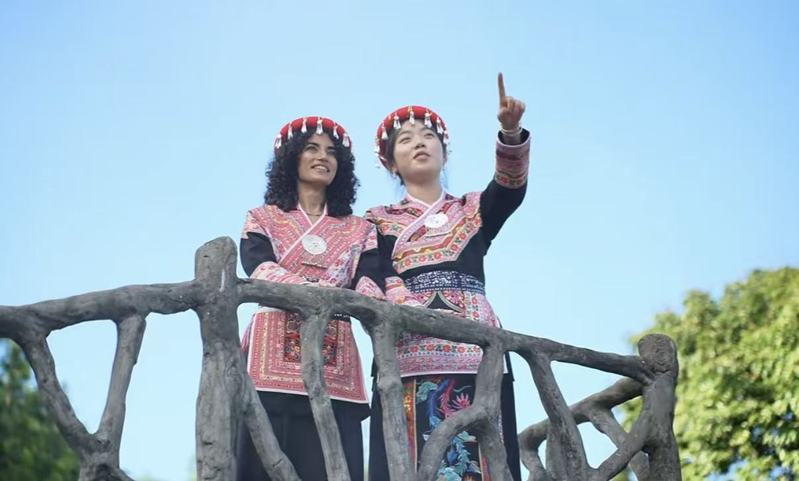
While taking part in the “Chinese Bridge” Competition, Ola travelled to Luoyuan in Fujian Province, immersed herself in local culture, and learned the routines of Bajing Quan, an intangible‑heritage martial‑art form, from its inheritors.
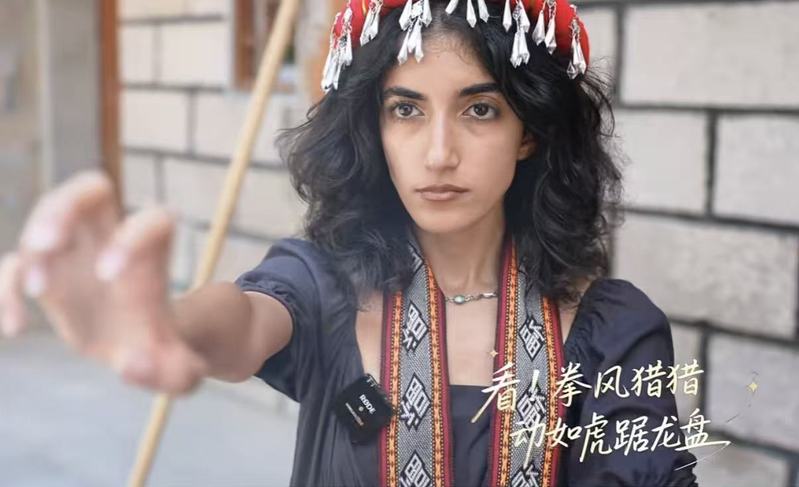
Unlike Tai Chi being gentle and slow‑paced, Bajing Quan features a much faster rhythm. “I think the most interesting thing is imitating animal movements, like a tiger pouncing on its prey.”
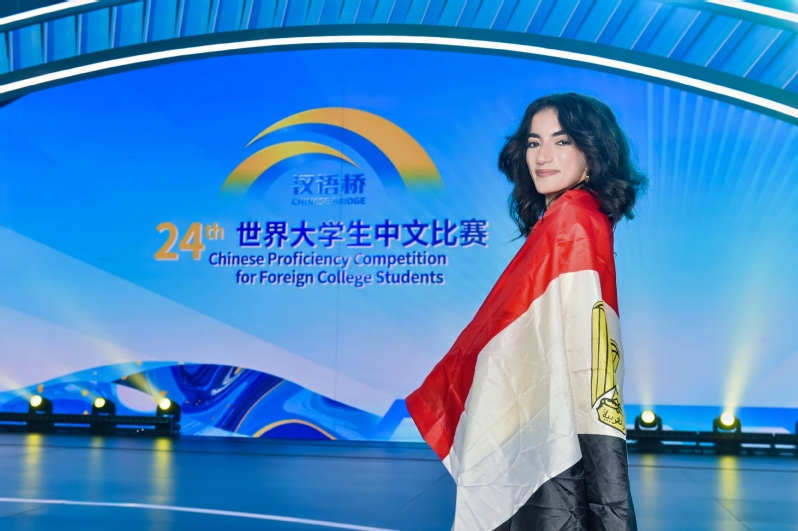



Ola on stage of the “Chinese Bridge” competition
Beyond the physical routines themselves, what truly left a deep impression on Ola was the inheritor’s personal experience. He was deeply worried about this martial art not being carried forward in the future. For this reason, he was delighted to see young learners including Ola, a foreign student, eager to learn it, and taught every willing learner with immense patience.
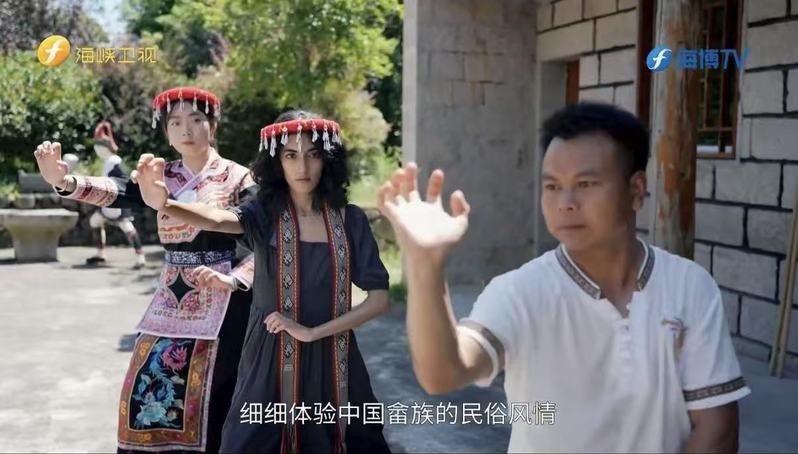
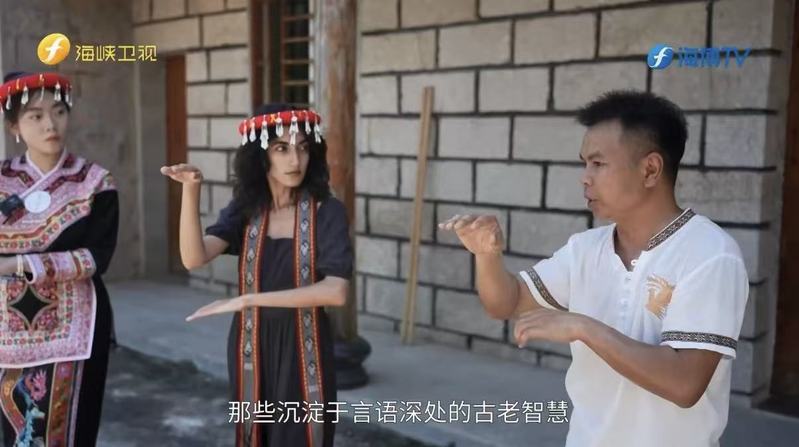
This resonated with what Ola had seen in Egypt. There, too, intangible cultural heritage was under threat: the ancient papyrus‑making craft was gradually being replaced by modern techniques, and traditional handmade hats called Tarbush are fading out of Egyptians’ daily lives.
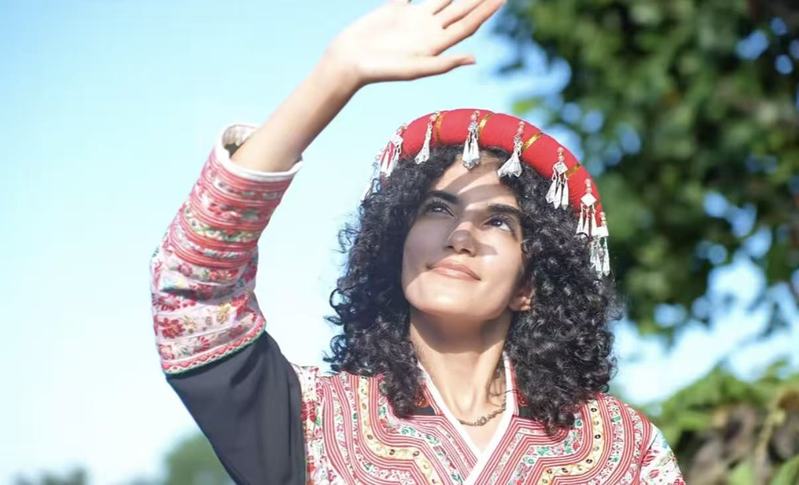
Experience in Luoyuan inspired Ola. She hopes that she can make the most of media, documentaries and social media platforms to contribute to preserving these vanishing cultural traditions.
“We don’t work on change; We lead the change”
Before coming to Fudan, Ola worked as an operations manager at Dragon Bridge Media in Egypt, serving Chinese clients targeting the Arabic‑speaking market and vice-versa. Equipped with substantial hands‑on industry experience and fluent Chinese, she was well aware of her lack of systematic theoretical training of cultural communication. Learning that Fudan University is a prestigious university especially in journalism and communication, she hoped to receive professional training here to fill gaps in her theoretical knowledge.
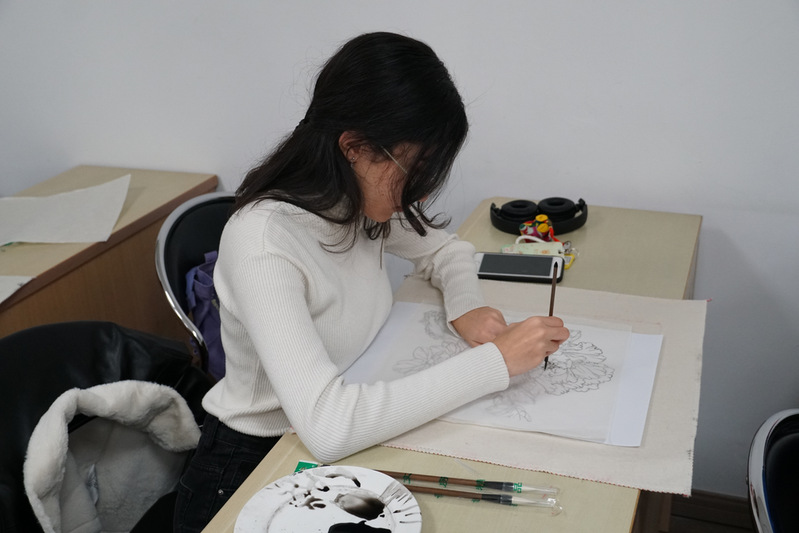
Ola is practicing Chinese painting
Compared with the translation knowledge she acquired during her undergraduate studies, journalism and communication present brand‑new challenges for her.
“Translation is about transferring meaning accurately. It’s quite objective and you have things to refer to. But for communication and journalism, it’s more like creating your own work. Plus, you are totally responsible for your work and even its impact on people.”
After coming to China, she has observed differences between Chinese and Egyptian media industries: Egyptian media prioritizes creativity and dares to test bold creative ideas with uncertain outcomes; Chinese media features stronger systematic frameworks and industry norms.
What resonates with her most during the first two weeks’ study is an idea shared by one of the professors in class: “We don’t work on change; we lead the change.”
To her, this is more than just a classroom slogan. It is a conviction she deeply identifies with and lives out across her past, present and future.
“In the past, I didn’t have much self-confidence.” Ola admitted. But her participation in a wide range of Chinese‑language‑related activities, including hosting events, taking part in singing contests and running an Arabic‑Chinese bilingual podcast for Arabic‑speaking Chinese learners, showed how far she can go in language learning. Now she has been convinced that she boasts the ability to change.
After arriving at Fudan, the campus culture that encourages exploration and tolerates trial‑and‑error has further boosted her self‑confidence to make difference in cultural communication. “Now I can stand on stages and speak under pressure, telling everyone my aspiration to pioneer in global communication between China and the Middle East North Africa region. Everything that I am now is because of the steps I’ve taken.”
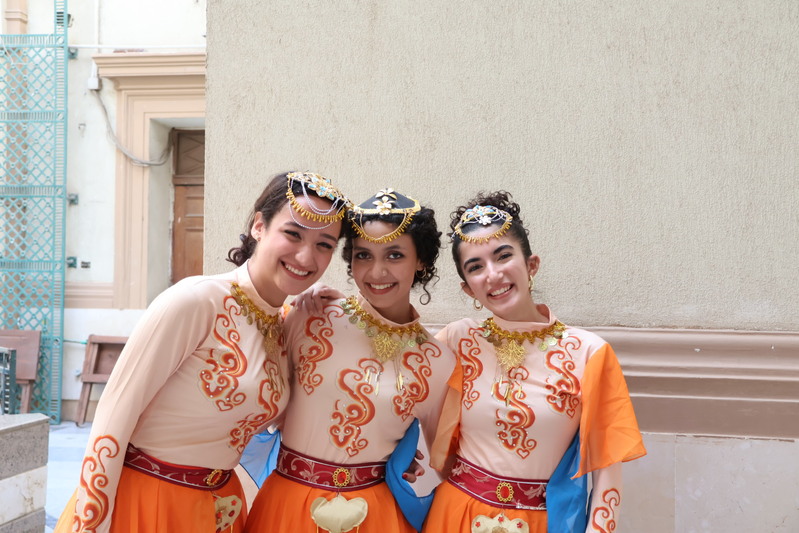
From a spectator watching from the screen, to a firsthand participant in cultural experiences, and further to an active‑voiced communicator, Ola is steadily stepping out of her comfort zone and advancing toward her ideal of international communication.
(END)
Writer: ZHOU Zhiying
Proofreader: WU Zhengyang
Video by Eun JUNG
Editor: WANG Mengqi, LI Yijie