
As shifts in great-power dynamics continue to reshape the international landscape, a panel of leading scholars and former policymakers convened at the Shanghai Forum on April 24 to discuss “The Reconfiguration of China-U.S.-Europe Relations and Its Impacts”.
The panelists broadly agreed that the post-WWII international order led by the U.S. is under significant strain, with new challenges emerging across all three bilateral relationships, and the trilateral dynamic as a whole.
Professor WU Xinbo, Dean of Fudan University’s Institute of International Studies, offered a vivid characterization of U.S.-Europe drift, observing that “the Atlantic Ocean is growing wider and wider,” while describing the China-Europe relationship as undergoing a process of “rebalancing”.
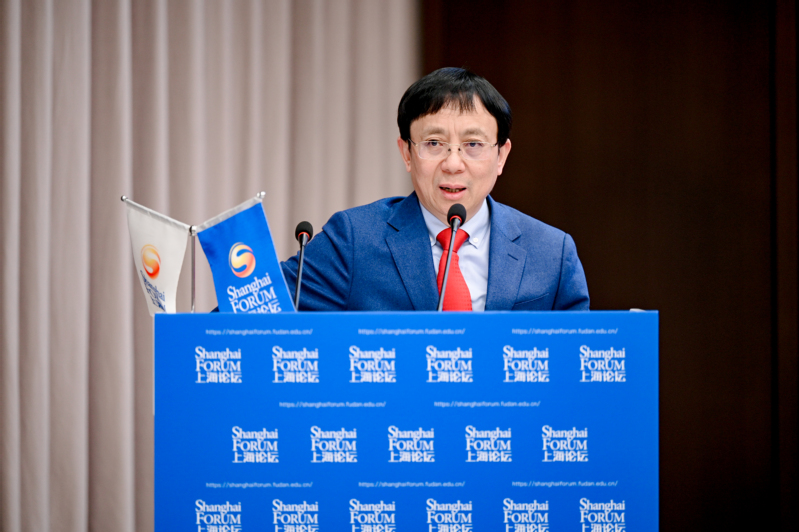
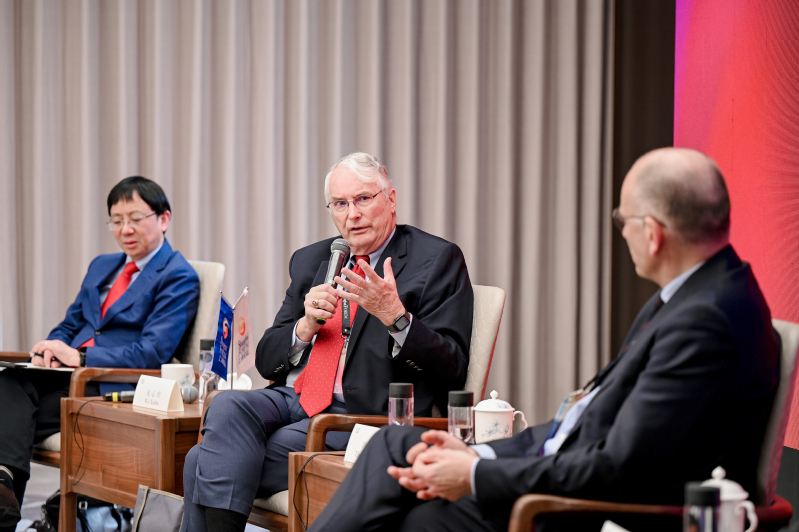
Thomas Fingar, Shorenstein APARC Fellow, Freeman Spogli Institute for International Studies at Stanford University, acknowledged a visible decline in American soft power, but cautioned against overstating the rupture, noting that “Europe and the U.S. have joint problems” that continue to bind them together.
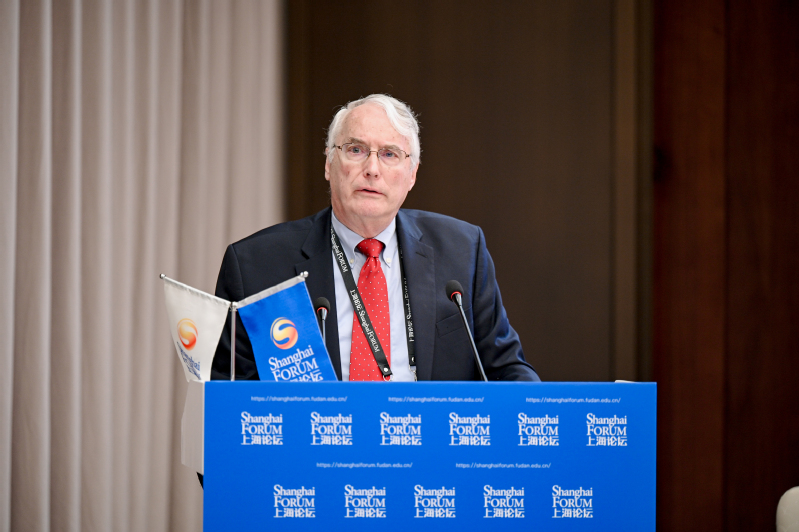
Europe’s dependence on the U.S. emerged as a shared concern, as both former Italian Prime Minister Enrico Letta and FENG Zhongping, Director of the Institute of European Studies at the Chinese Academy of Social Sciences, highlighted the risks it poses. Letta, nevertheless, stressed the uncertainty that geopolitical tensions have introduced into the China-Europe relationship. Fingar added that a reassessment of the vulnerabilities inherent in interdependence is now underway among all three players.
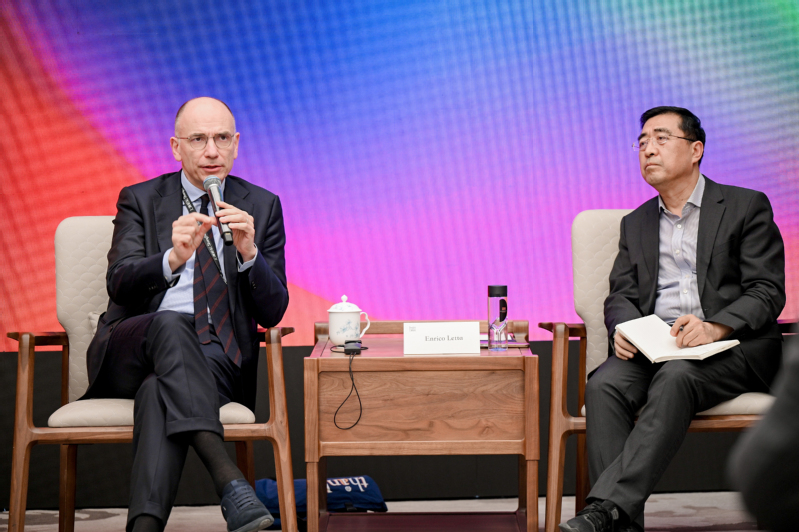
Looking ahead, however, the panelists diverged on how the current moment would unfold. Fingar expressed skepticism that any serious alternative to a U.S.-led world order has yet materialized and suggested that the upcoming U.S. midterm elections in favor of the Democrats and subsequent administrations after the 2028 federal elections could present an opening for U.S.-Europe reconciliation. He also called for deeper discussion on what “co-governance” might practically mean for the trilateral relationship going forward. Wu offered a contrasting outlook, arguing that the fissures between the U.S. and Europe are not merely temporary but structural in nature. In his view, the trajectory points toward an era of diminishing American hegemony, a trend that would persist beyond the current U.S. administration.
Feng argued that for Europe, “hard power is everything”, a blunt assessment of where strategic priorities now lie.
The sub-forum was part of the Shanghai Forum 2026, a three-day annual conference under the theme “The Age of Reconfiguration: Innovation and Global Governance”. Co-hosted by Fudan University and the Chey Institute for Advanced Studies, this year’s forum brought together nearly 400 participants from over 50 countries and regions for discussions spanning artificial intelligence governance, green transition and the Global South development.
(END)
Writer: JIN Mingkun
Proofreader: YANG Xinrui
Editor: WANG Mengqi, LI Yijie