
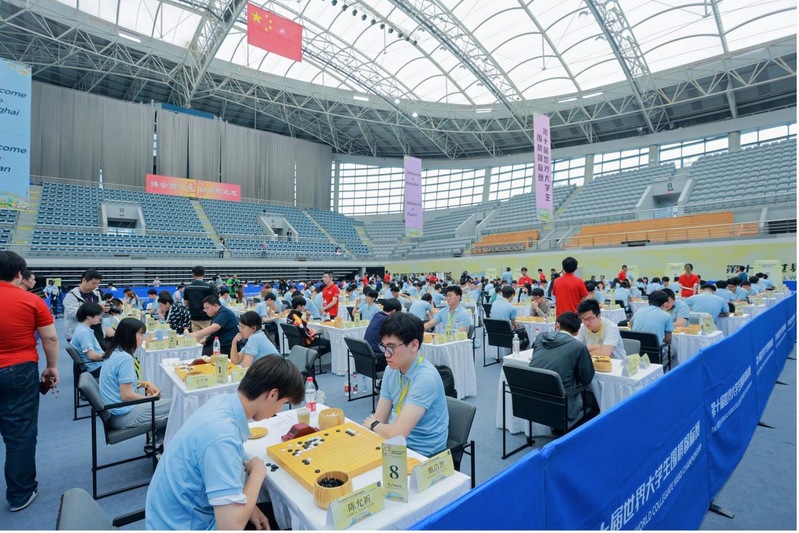
The 10th Annual World Collegiate Weiqi Championship concluded at Fudan University on Saturday after four days of intense competition, bringing together 150 student players from 101 universities across 37 countries and regions.
Hosted on Fudan’s Handan campus from July 7 to 13, the event marked the first time the championship had been hosted by a university on the Chinese mainland and set new records for both university participation and on-site scale.
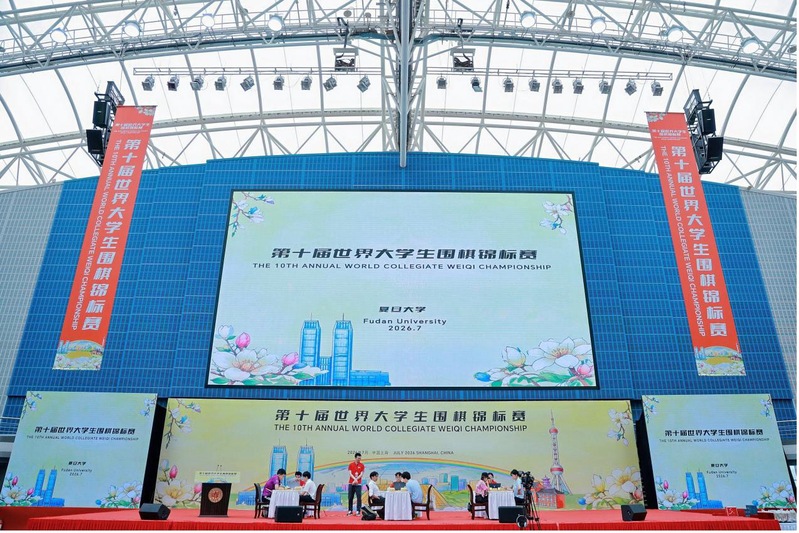
Players competed across five divisions at Zhengda Gymnasium on Fudan’s Handan Campus. WANG Zihua of Guangxi Minzu University won the Men’s Championship Group title, while Kwon Gayang of Myongji University in the Republic of Korea claimed the Women’s Championship Group title. ZHANG Wenyi of Peking University and Kim Jisu of Myongji University took home the Men’s and Women’s Excellence Group titles, respectively, while Iván Vásquez of the National Autonomous University of Mexico finished first in the Friendship Group.
At the closing ceremony, the championship flag was handed over to Frank Jenssen, president of the Dutch Go Association, representative of the next host institution.
From Competition to Connection
Founded in 2014, the championship aims to support the development of collegiate Weiqi, also known internationally as Go, and create opportunities for student players to connect across national and cultural boundaries. This year’s tournament was the largest in the event’s history, with participants ranging from 17-year-old undergraduates to postgraduate students.
After her first match on July 8, Olesia Malko shared her thoughts in an interview, describing Weiqi as “really difficult, but a form of art”. “On the board, you are free to build, create, compete and make your own decisions. In that sense, it is a lot like life.”
The 18-year-old Ukrainian player has practiced Weiqi for 12 years, and she continues to find creativity in the game. “My first game began quite calmly, but it later developed into a fight. My opponent made a few mistakes, and I managed to seize the opportunity and gain an advantage.” For her, the process of deciding whether to defend, give up or take risks has its own charm.
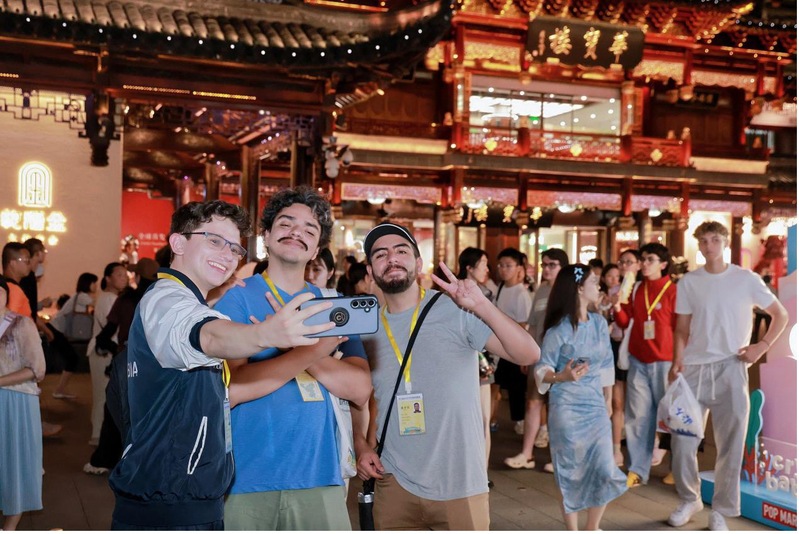
Robert from Croatia shared his passion for Weiqi and his impressions of Shanghai. “Go offers almost infinite possibilities. You will hardly ever see two games that are truly alike, and every player develops a unique style that is impossible to copy. The way each of us plays is almost like a signature.” After a night trip to downtown Shanghai, Robert found the city “clean and impressively convenient.” “I love Shanghai. I was especially impressed by the greenery around People’s Square, as well as the skyscrapers and other buildings, each with its own character.”
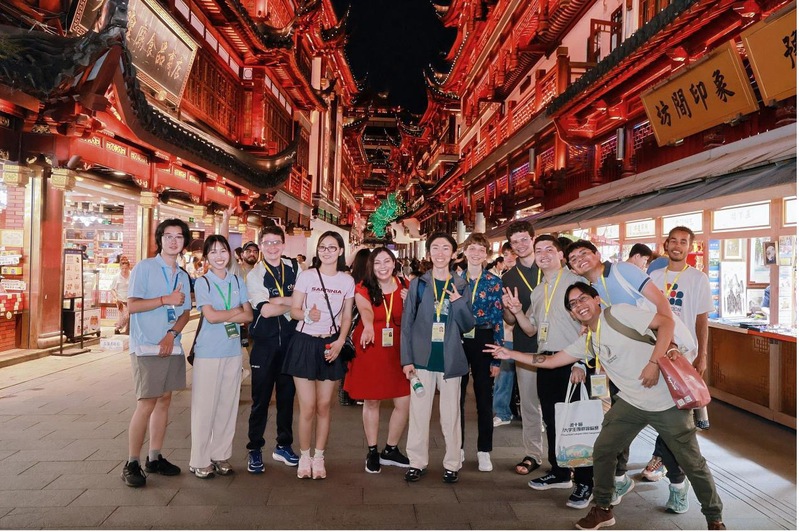
The tournament also created opportunities for students from different cultural backgrounds to connect beyond formal competition. Omer, a player from Turkey, said the international scale of the event was one of the highlights of his visit.
“Players from so many universities have come to Shanghai not only to play Go, but also to take part in cultural exchange. That is what makes the experience so exciting,” said Omer. He also talked about his stay at Fudan. “The campus is very pleasant. I am very grateful for the arrangements made for us.”
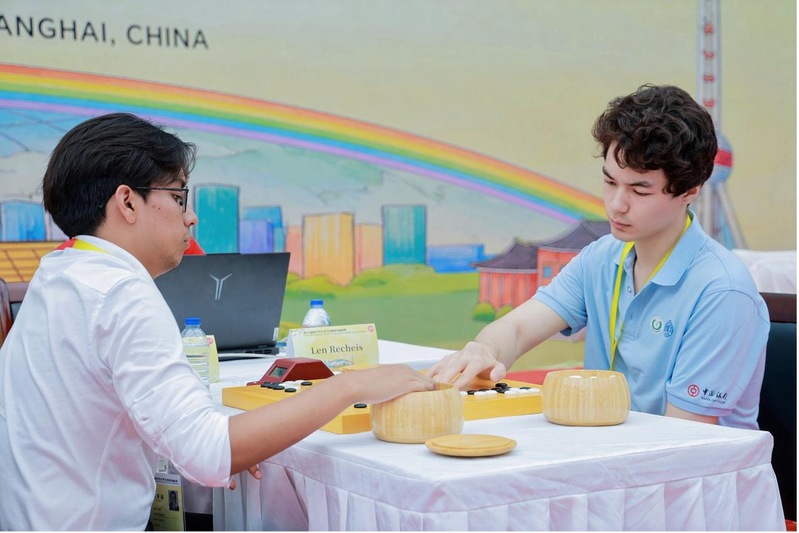
Fudan and Shanghai as hosts
In 1995, with the support of the Shanghai Yingchang Qi Weiqi Education Foundation, Fudan became the first Chinese university to establish an amateur Weiqi academy. Over the decades, it has continued to advance Weiqi education through sustained program development and outreach.
Fudan has long promoted Weiqi education through general-education courses and student clubs. With the championship coming to the Chinese mainland for the first time, young players deepened their understanding of Weiqi culture and built friendships through competition and exchange.
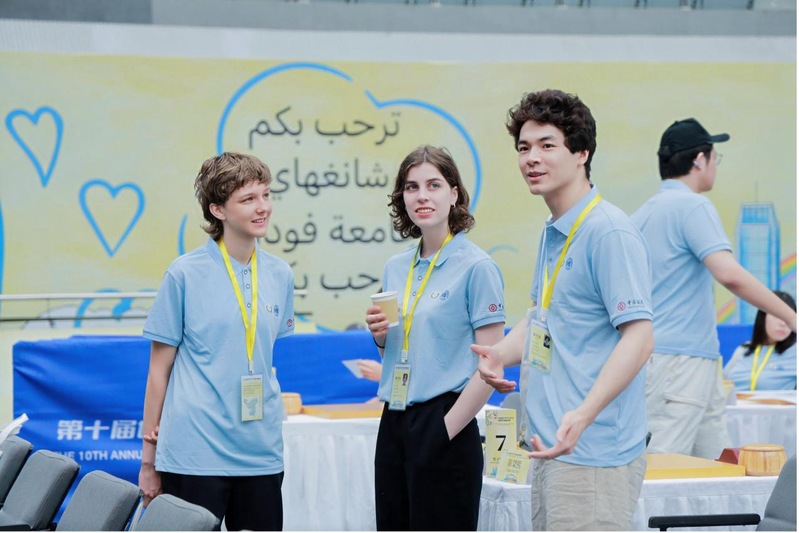
For Gustavo from Chile, the championship was memorable not only for the intensity of the competition, but also for the people he met along the way. “Playing in such a large stadium, surrounded by so many players and so much silence, made the experience especially intense,” he said. “I have also met people from all over the world whom I would probably never have met elsewhere. That has made the tournament very special for me.”
When the championship flag passed to the next host, players were still huddled over the boards. Though the formal competition had ended, the games, analyses, and connections made in Shanghai were poised to continue.
(END)
Writer: YANG Xinrui
Video by LU Yi
Editor: WANG Mengqi, LI Yijie