This summer, over 140 faculty and student volunteers from Fudan University Shanghai Medical College, serving as the Boyi Medical Brigade, launched a nationwide healthcare service initiative covering China’s remote rural and border regions.
Split into eight teams, the volunteers traveled to Jilin, Xinjiang, Yunnan, Fujian, Shanxi, Ningxia, Hunan and Tibet, bringing premium medical resources to underserved areas with limited grassroots healthcare capacity.
Throughout nearly a month of continuous on-site service, the brigade benefited more than 2,000 local residents. Volunteers delivered over 100 medical consultation sessions and professional exchange events, conducted in-depth academic and clinical cooperation at more than 20 healthcare institutions, and extended services to numerous communities, villages and border outposts, bringing tangible medical benefits to grassroots populations.
Moving beyond one-time charitable visits, the Boyi Medical Brigade focuses on building sustainable medical support mechanisms for long-term public health improvement.
In Yadong, Tibet, faculty experts and doctoral students conducted home visits for elderly border patrol workers. They offered physical examinations, optimized medication regimens for seniors living with hypertension, diabetes and post-cerebral infarction complications, and helped establish personalized chronic disease health records in collaboration with local hospitals.
In Ningxia, the team strengthened grassroots medical capacity by upgrading remote imaging diagnosis, prescription review and online consultation platforms, ensuring sustained professional guidance for complex clinical cases at the county and township levels. In Xinjiang, telemedicine systems and standardized quality control protocols for ophthalmology and ENT services were formally rolled out in local medical facilities.
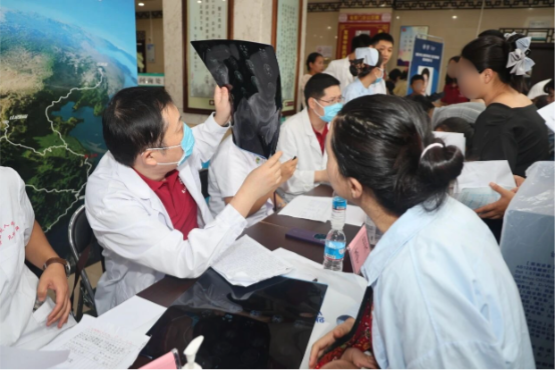
By combining offline on-the-ground assistance with continuous online remote guidance, the brigade has built a robust, long-lasting healthcare safety net, transforming temporary volunteer aid into enduring medical support for local communities.
The initiative prioritizes grassroots capacity building, shifting its model from merely solving individual clinical problems to equipping local medical staff with replicable, standardized clinical solutions.
In Chengbu, Hunan, doctoral volunteers systematically reconstructed patient medical histories through thorough physical examinations and detailed inquiries for residents with incomplete health records and unclear medication histories. At county hospitals, the team conducted standardized ward rounds, hysteroscopy operation demonstrations and multidisciplinary case discussions based on real clinical scenarios, enabling grassroots practitioners to adopt executable, standardized diagnosis and treatment protocols. In Shanxi, multidisciplinary experts reviewed imaging findings alongside local clinicians to formulate standardized, context-adapted treatment pathways suitable for grassroots medical conditions.
The brigade aims to foster a permanent local medical workforce, empowering grassroots healthcare providers with independent clinical decision-making capabilities.
To assist mobility-impaired residents in remote mountainous regions, volunteer medical professionals traveled along winding mountain roads to provide door-to-door healthcare services.
In rural villages of Mangshi, Yunnan, Dr Huang Peng from orthopedics department at Fudan University Children’s Hospital visited children with congenital orthopedic disorders. He conducted comprehensive functional assessments, repeatedly demonstrated home-based rehabilitation exercises, and created illustrated rehabilitation guides for family follow-up care, effectively mitigating long-term health risks during children’s critical developmental stages.
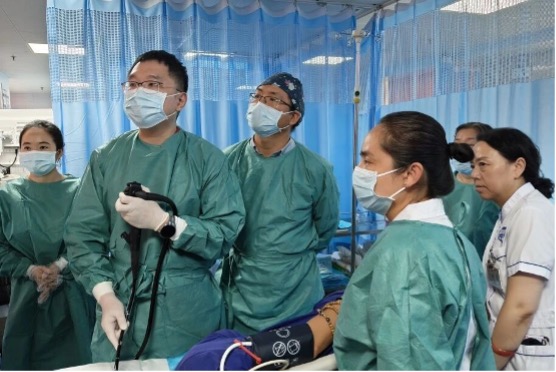
A quarter-century-long tradition of medical mentorship and grassroots assistance continues to unfold in Dehong, Yunnan.
Twenty-five years ago, Dr Li Hao came to Dehong as a doctoral volunteer and pioneered long-term collaborative medical partnerships between Fudan University Children’s Hospital and Dehong Prefecture People’s Hospital. Twenty-five years later, now an experienced pediatric expert, he returned with a new cohort of young doctoral volunteers from the Boyi Medical Brigade.
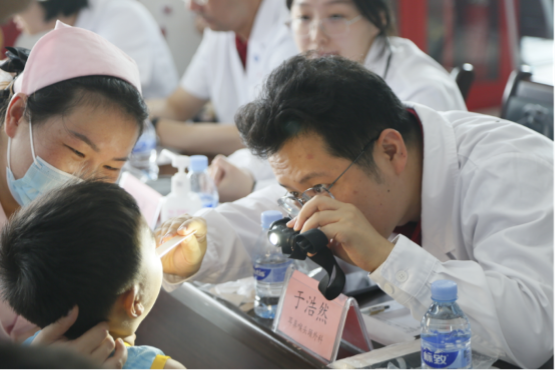
Continuing this decades-long cooperation, the team carried out outpatient services, teaching ward rounds, surgical demonstrations and discussions on complicated medical cases. The volunteers also expanded outreach to border villages and local schools, integrating clinical treatment, health education and public literacy promotion. The long-term assistance model has evolved from one-way “blood transfusion-style support” to sustainable “hematopoietic capacity building” that strengthens grassroots healthcare systems from within.
Spanning mountains, borderlands and rural communities across the country, the eight volunteer teams share a unified mission: to enhance accessibility to high-quality medical services, sustainably upgrade grassroots healthcare capabilities, and align young medical talents’ growth with national public health demands and people’s wellbeing needs.
Through steadfast dedication and hands-on practice, young medical professionals from Fudan continue to serve the nation’s most needed regions, safeguarding public health at the frontline of grassroots medical development.
(END)
Source: City News Service
Writer: Christine Cai
Editor: WANG Mengqi, LI Yijie