
In recent years, the number of international students coming to China has been on the rise.For those working toward a PhD, it is a uniquely immersive experience: navigating a different academic culture, wrestling with a language that constantly evolves, and producing original research far from home.
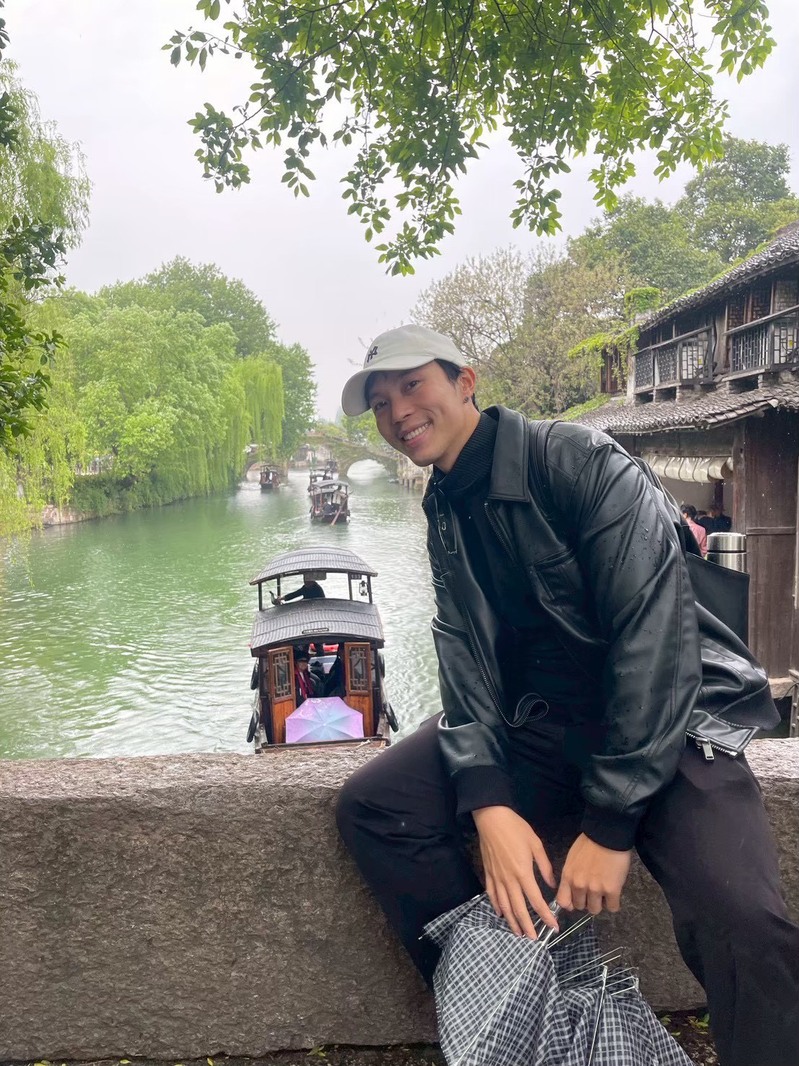
For Kotchaphop Kornphetcharat, who recently completed his PhD at Fudan’s School of International Relations and Public Affairs and is now a full-time lecturer at the Faculty of Social Sciences and Humanities, Mahidol University, it has been precisely that — a demanding yet intellectually transformative journey.
What brought him here was a gap he could no longer ignore. After earning his bachelor’s in international politics at Thammasat University in Bangkok and his master’s in Southeast Asian studies at the National University of Singapore, he built a solid career: three years at Thailand’s Ministry of Culture, followed by three years as a lecturer at Ubon Ratchathani University. Yet his research on Sino-Thai relations had relied almost entirely on foreign-language materials, leaving him unable to read Chinese primary sources or grasp modern China beyond translated textbooks.
“In Thailand, many scholars study China-Thailand relations, but few can speak Mandarin well or access the Chinese materials directly,” he explains. Determined to bridge that divide, he gave up his stable teaching position and arrived at Fudan in 2023 as a doctoral student.
His doctoral research examines the unofficial channels that sustained Sino-Thai ties during a period when formal diplomatic relations were absent. Drawing on archives from both countries, he looks at how overseas Chinese communities kept transnational connections alive through schools, newspapers, and clan associations. “International relations are not only about formal diplomacy,” he argues. “They also run through people, through trade networks and private associations.” His work challenges mainstream International Relations frameworks by highlighting the role of these informal ethnic networks.
The intellectual rewards, however, have come at a steep personal cost. Kotchaphop describes doctoral study as profoundly isolating, especially for an international student with prior work experience. Unlike undergraduate or master’s programs with fixed schedules, a PhD demands strict self-management, and candidates quickly drift apart as each disappears into their own research topic. “You don’t really discuss things with classmates because your fields are completely different,” he says. Still, he credits his adviser Professor MA Jianbiao —who once patiently took his call while caring for a crying child at home—and several Chinese classmates who taught him how to navigate Chinese archives and local historical materials. Their guidance proved invaluable to his research.
Language remains a daily battle. Though his Mandarin is impressively fluent—a skill he attributes to “thick skin” and relentless practice through television dramas and casual conversation—he insists it is never good enough. “Chinese is a language you cannot stop learning,” he says. “There are too many expressions, too many ways to say things.”

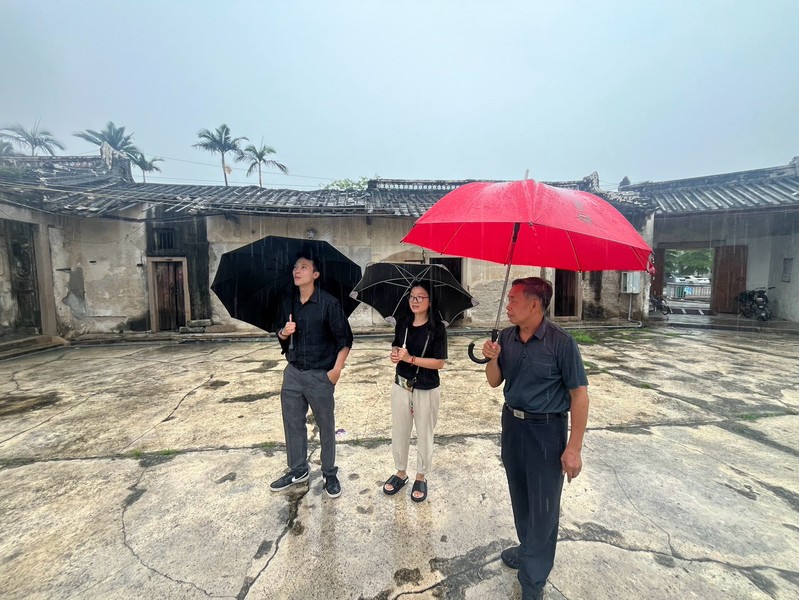
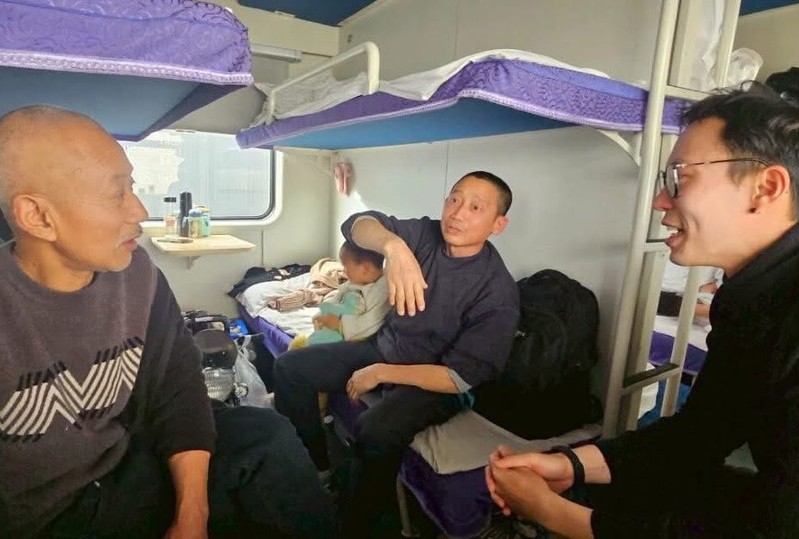
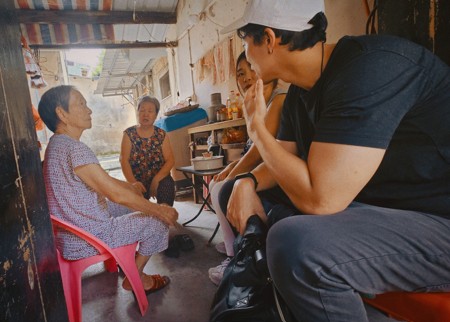
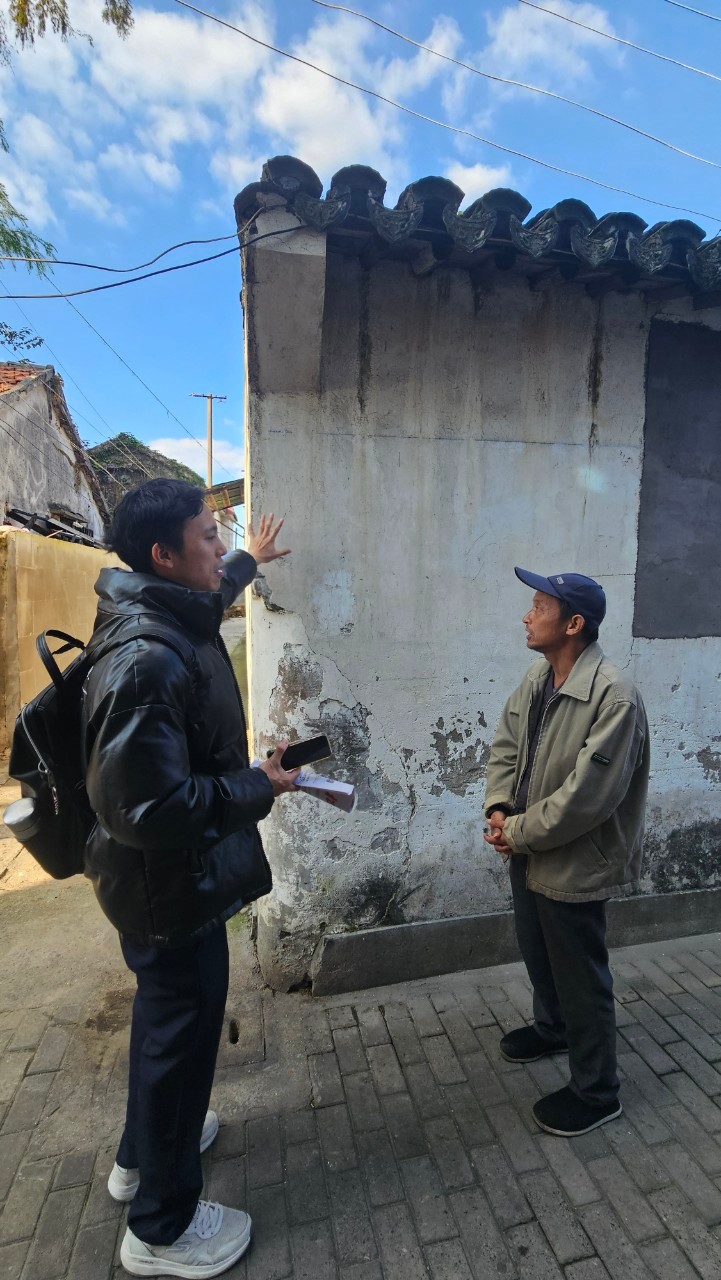
Kotchaphop during a fieldwork trip in China
Beyond the library, Kotchaphop has turned China itself into his classroom. He has traveled to Fujian, Guangdong, Gansu, Xinjiang, Jiangsu, Zhejiang, Jiangsu, Tianjin, Shandong, Jiangxi and Sichuan, treating ordinary people’s oral accounts as “living historical documents.”
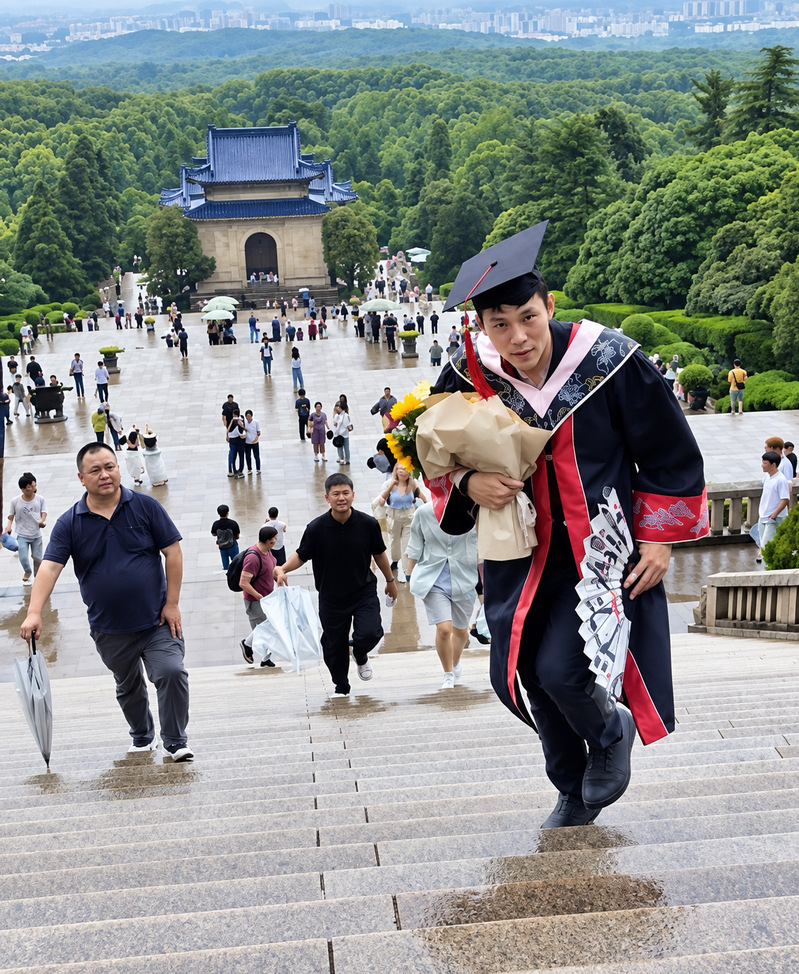
He was also invited to watch the launch of Fudan No.1 Lancang-Mekong Future Satellite as a student representative to witness the technological development of both the university and country, and has returned repeatedly to the Sun Yat-sen Mausoleum in Nanjing, drawn by his research on the 1911 Revolution and the overseas Chinese who funded it. He recalls making a quiet promise to Sun’s spirit after completing his thesis proposal: “I told him if my research completed, I would bring him flowers. So I did.”
If there is one lesson he would impart to prospective students, it is the importance of knowing why. “Some young people enter PhD programs because they don’t know what else to do,” he says frankly. “But if you don’t have a clear purpose, you will suffer and lost.” For his own part, that purpose was never in doubt: to experience the China he had long studied from afar. He summed up his experience with the Chinese saying “百闻不如一见” — seeing is believing.
He recommends Fudan without reservation, praising its abundant archives, globalized platforms, and supportive faculty. He fondly recalls lectures by leading scholars like Barry Buzan and notes that the university’s resources helped him break free from conventional theoretical frameworks. This year, after completing his doctorate, he returned to Thailand and joined Mahidol University—one of the country’s top institutions—as a lecturer, leveraging his Fudan experience to continue building bridges between Thai and Chinese scholarship.
For Kotchaphop, the doctorate has been less a triumphant march toward a title than a solitary, sometimes maddening pilgrimage. It has demanded everything he has—time, energy, and no small amount of his “blood”. But it has also given him what foreign textbooks never could: a seat at the table of Chinese academia, and a voice that moves fluidly between two worlds.
(END)
Writer: WANG Mengqi, Mahek
Editor: LI Yijie