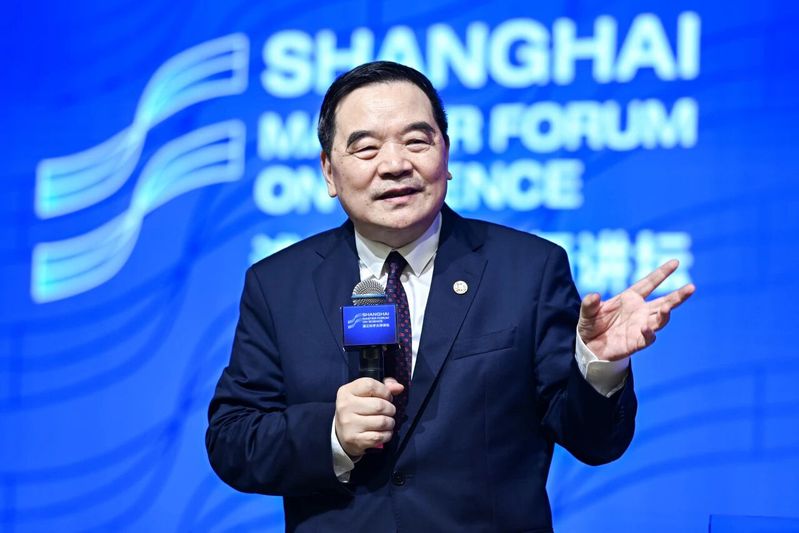

On September 24, BAO Xinhe, member of the Chinese Academy of Sciences and dean of the Advanced Institute for Future Energy at Fudan University, delivered a lecture on the role of catalysis in the clean energy transition at the 15th Shanghai Master Forum on Science, held at Fudan University.
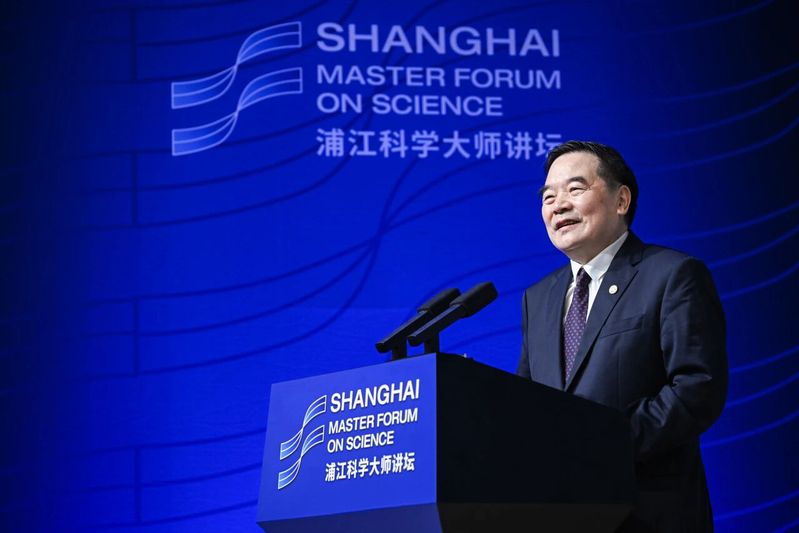
“Building a new green and low-carbon energy system is not only a requirement of the carbon peaking and carbon neutrality goals — it is the bottom line of energy security,” BAO said.The numbers speak for themselves: China relies on imports for roughly 73% of its oil and 45% of its natural gas.
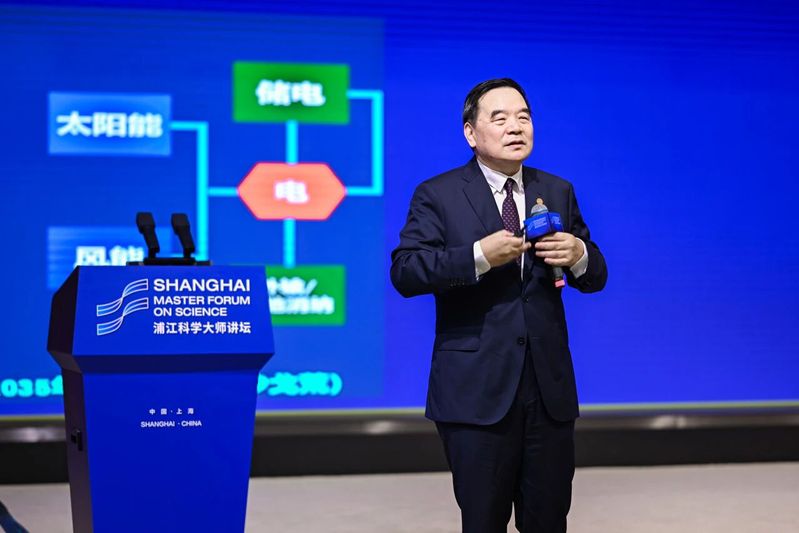
The underlying logic of that transition, in his view, is a shift from a fossil-fuel-driven system to one powered by renewable electricity, built on three pillars: converting renewable energy into electricity, electrification, and molecular fuels. Catalysis — a field that has produced more than 20 Nobel laureates in chemistry and underpins some 80% of the chemical industry — provides the core scientific support for this shift.
“A chemical reaction is like climbing a high mountain — hard for anyone to scale. What catalysis does is carve that mountain into several lower peaks, so the reaction can get over them more easily,” BAO explained.

His decades of work on nano-confined catalysis led to OXZEO, a technology that converts coal-based syngas directly into light olefins in a single step, bypassing the traditional multi-stage route. In 2020, his team partnered with Shaanxi Yanchang Petroleum to build the world’s first thousand-tonne-scale industrial pilot unit — a result, BAO stressed, of demand-driven research carried out with industry partners from day one.
BAO’s vision of the future is an era of electrons and molecules: electricity will be the mainstay, while hydrogen, difficult to store and transport, will be converted into “molecular fuels” such as methanol and ammonia. The transition, he emphasized, must be “established before dismantling the old” — first build the dominance of renewable energy, then gradually shed dependence on fossil fuels. Catalysis, meanwhile, is not about eliminating coal overnight but transforming how it is used. “Catalysts are like a pair of scissors,” he said. “We can cut coal directly into the chemicals we need, such as acetylene — without emitting carbon dioxide or consuming water.”
A member of Fudan’s Department of Chemistry Class of 1978, BAO traced the starting point of his academic career to Fudan, where he received a recommendation letter from then-President of Fudan University XIE Xide to study in Germany. After nearly 30 years devoted to catalysis, he returned to his alma mater last year as dean of the Advanced Institute for Future Energy. “Everyone’s growth is closely tied to the nation's development,” he reflected — a conviction that earned him the first prize of the 2020 State Natural Science Award as first contributor for his work on nano-confined catalysis.
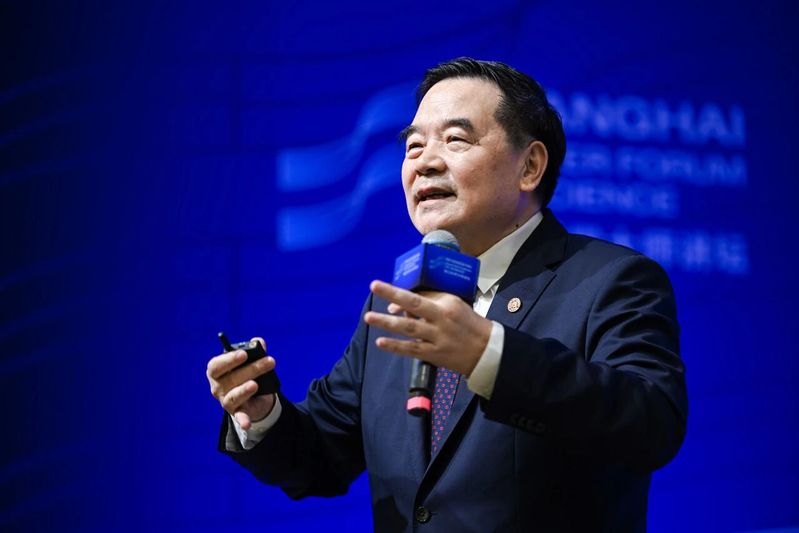
On AI and the future of research, BAO was equally direct: although AI can rapidly acquire knowledge, innovation stems from the human brain's internalization and reorganization of it — only solid foundational knowledge enables critical, original use of AI. His team is now building AI-driven autonomous laboratories and applying for a proof-of-concept center to bridge the “valley of death” between laboratory research and industry.
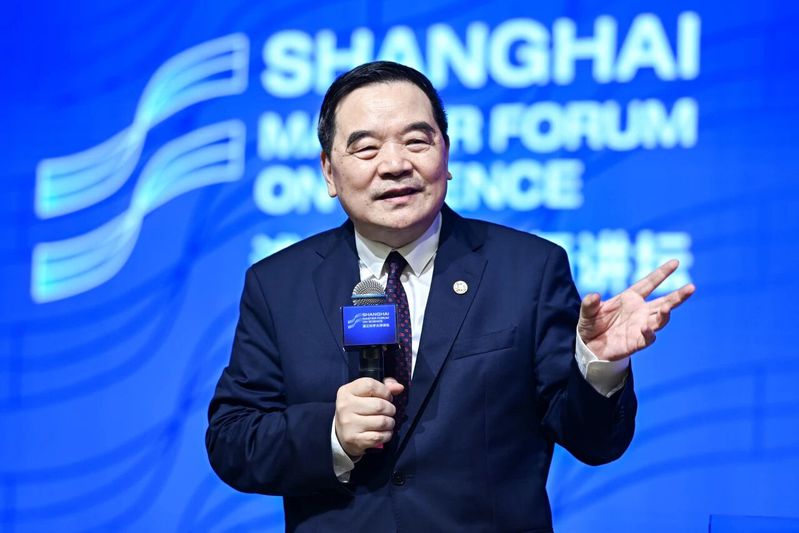
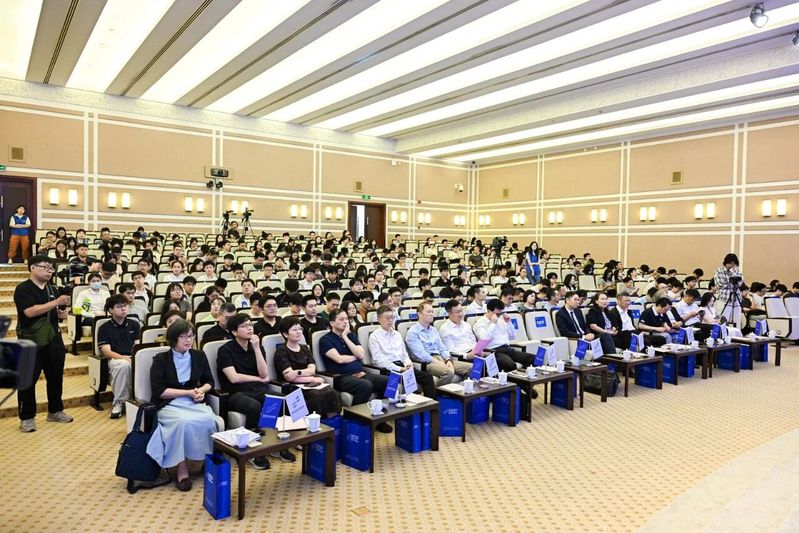
In the Q&A that followed, students pressed him on practical choices: why hydrocarbons over the eco-friendlier ammonia? Because ammonia is a gas at room temperature and hard to transport — methanol will dominate for the foreseeable future, though his team is already converting ammonia directly into fuel-cell fuel to power computing centers with green energy. And on photocatalysis, he noted that converting solar energy into electricity first remains more efficient, while encouraging young researchers to advance the field. “Science keeps advancing,” he told the students. “I hope you will carry it forward.”
(END)
Writer: HUANG Sibo, WU Zhengyang
Proofreader: WU Zhengyang
Editor: WANG Mengqi, LI Yijie