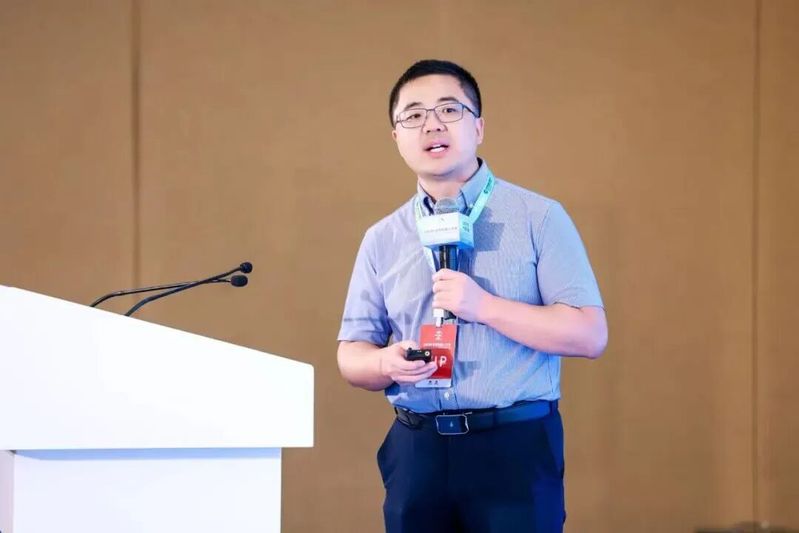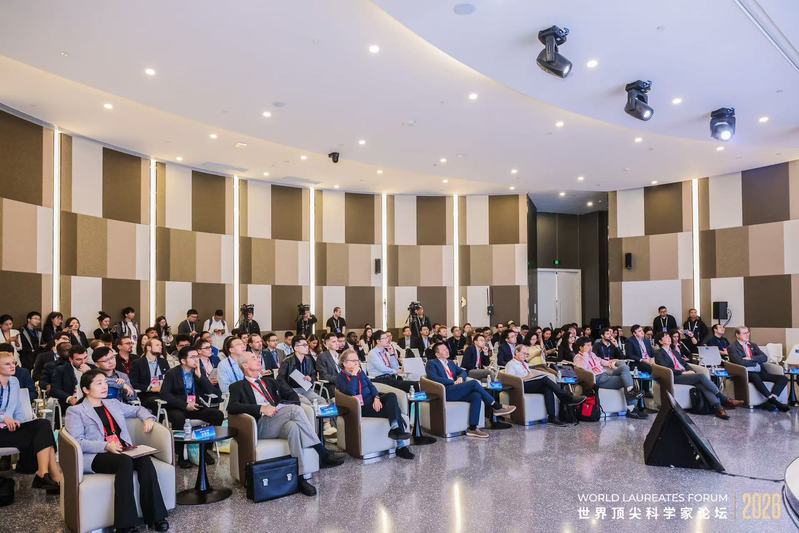

Prof. CHEN Tao’s research on efficient embodied AI is feeding directly into real robots, real products and real classrooms.

On Sep. 30, at the No. 1 Food Store on the bustling East Nanjing Road in central Shanghai, Xiaoyi — a robot bartender dressed in a black waistcoat — picks up a glass, pours, mixes and serves a drink in one fluid sequence of more than a dozen movements. It can also converse with customers in real time. Behind its fluid movements lies embodied AI — and the challenge that Fudan professor CHEN Tao and his startup Motion Brain are tackling: making that intelligence efficient enough to run on a robot’s own limited computing capacity and power budget.
Toward a common ‘brain’ for robots
Chen, a professor at Fudan’s College of Future Information Technology and director of its Efficient Deep Learning Laboratory, co-founded Motion Brain (a.k.a. Moushen Intelligence), a Shanghai-based company, in January 2025. His co-founders are Fudan alumnus MU Zelin and ZHANG Yimin, a former chief scientist at Intel China.
The venture builds on technology developed at Fudan to connect AI models with robot hardware through a single system that works across different robot designs, models and tasks — reducing the need for a separate solution for every combination.
In industrial production, the challenge is clear on any factory floor. A wheeled robot might transport materials, a quadruped might inspect equipment, and a humanoid might tighten screws. Each could come from a different manufacturer and use a different AI model, yet all of them would need to work together. A common control system could make adapting robots to new tasks more manageable.
 Motion Brain’s World Motion Model is designed to anticipate changes in the environment and generate actions consistent with physical constraints.
Chen describes his objective as keeping models “within a manageable resource budget while maintaining performance, so that task results are largely unaffected.”
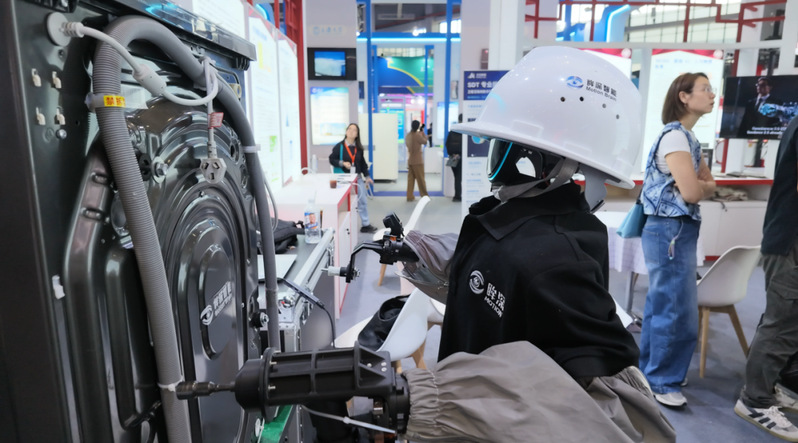
Factory assembly is one test. Working on a task for a major home appliance manufacturer, the team has taken on screw fastening, one of the most demanding steps in production. Its robot M-Worker 01 has been tested on flexible assembly, coordinating robotic manipulation with AI control.
In hospitality, the movement sequences used by robot bartenders like Xiaoyi — known as the M-Cyber Shaker — could be adapted to prepare a range of drinks, from alcohol to coffee and milk tea.
Food inspection offers another application. A preliminary functional validation has been passed where two or three robots working together to prepare reagents and carry out tests, including checks for spoilage in foods such as tofu and processed meat. Chen sees repetitive tasks with a clear public benefit as especially promising ground for robotics.
These applications also feed back into research. Early partnerships give the team access to operating environments and data that can inform the next generation of models. The company says it secured orders worth tens of millions of yuan in its first six months and that its outstanding orders have since exceeded RMB 100 million.
Building foundations for efficient embodied AI
Chen’s interest in taking AI out of the lab grew out of his experience in industry. His doctoral research involved image recognition for mobile robots. Later, at Huawei’s research center in Singapore, he worked on deploying visual AI but repeatedly ran into high energy use, poor generalization and unreliable recognition.
Those problems pointed to gaps in how software and hardware work together. Chen wanted the time and a team of like-minded people to dig into them at a more fundamental level. So he joined Fudan in 2019, taking on the question of how a powerful AI model could run on a small autonomous device without a significant loss of performance.
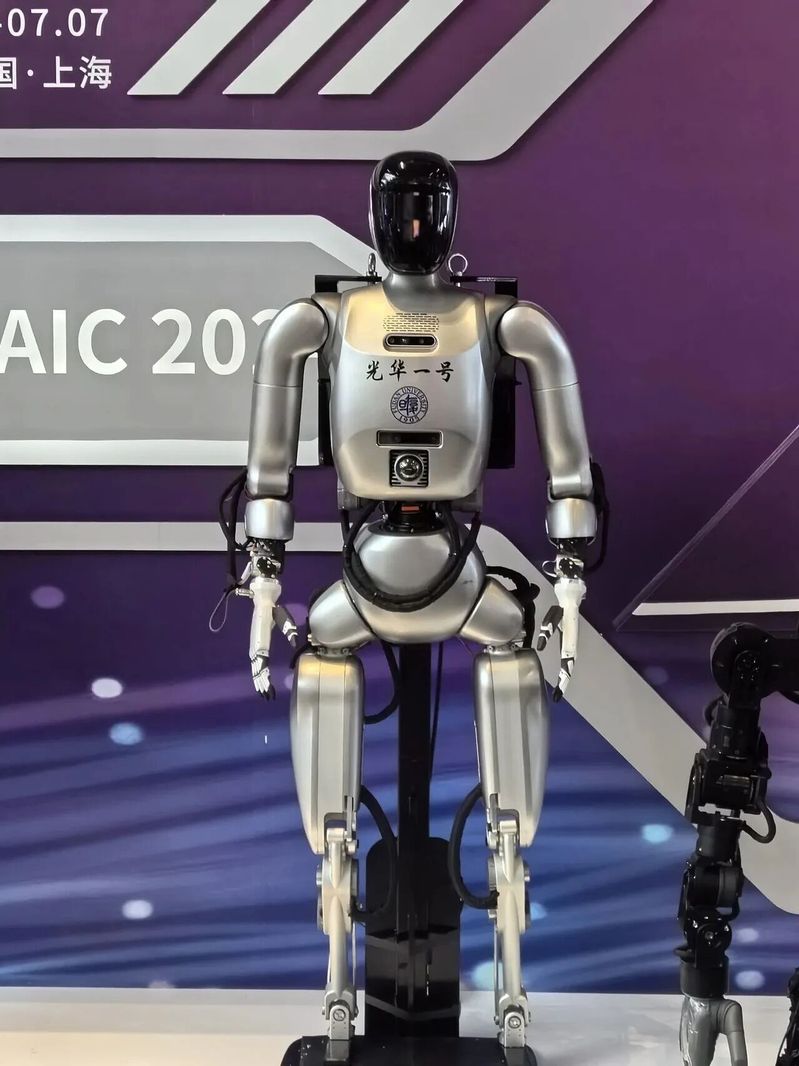
At Fudan, his team contributed three-dimensional vision algorithms to Guanghua No. 1, a humanoid robot for elderly care. Presented at the 2024 World Artificial Intelligence Conference in Shanghai, the robot also served as an early platform for validating the intelligence that Motion Brain would later develop.
The team’s research has appeared at leading international AI and computer vision conferences. In 2025, a paper co-authored by Chen, “Boost Embodied AI Models with Robust Compression Boundary,” received a Distinguished Paper Award at the International Joint Conference on Artificial Intelligence (IJCAI). It addresses the challenge of making embodied AI models more efficient while preserving accuracy and robustness in real-world conditions.
A classroom wired to the factory floor
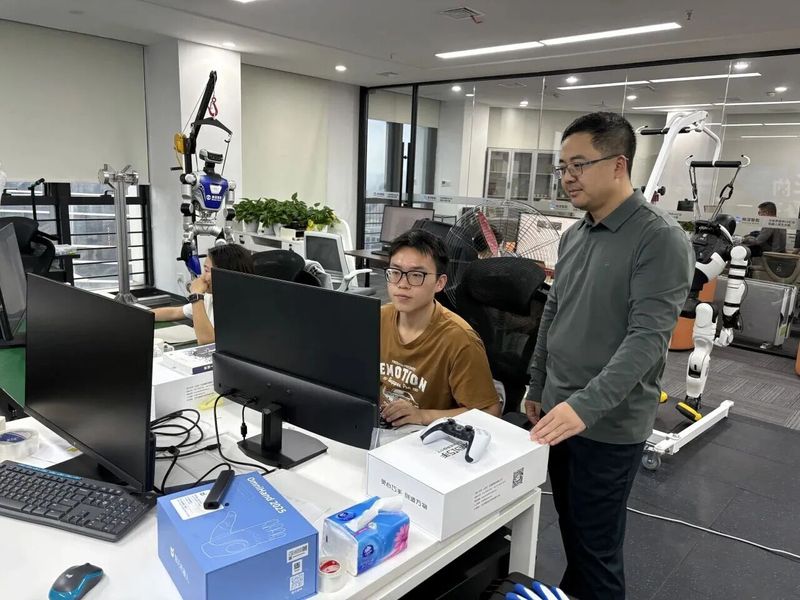
Chen believes universities have a crucial role in developing the talent that embodied AI needs, particularly because the field requires students to work across disciplines.
At Fudan, that begins with access to equipment. A laboratory houses dozens of robots and dexterous robotic hands, alongside computing systems purchased by Motion Brain at a total cost of more than RMB 10 million. The equipment is available to undergraduate and postgraduate students working on relevant research projects. In groups of three to five, students can deploy their models on real robots and watch them perform.
Industry problems also enter the classroom. A course Chen leads on emerging developments in electronic information technology draws on challenges his company is tackling, including robot stability, grasping unfamiliar objects and accelerating AI computation on devices. These problems help shape postgraduate thesis projects and projects within Fudan’s undergraduate research programs.
Several Fudan master’s and doctoral students also contribute to the company’s core research and development. Their work links the design of algorithms with the practical demands of deploying them in industry.
“Teaching, research and entrepreneurship can be brought together organically,” Chen said. His approach gives students a route from learning how a model works to testing whether it can perform a useful task under real constraints.
For prospective students interested in AI and robotics, the work offers a concrete view of how research at Fudan can connect laboratory experiments with industrial practice. For Chen, the long-term ambition remains global: “We hope to equip one billion robots worldwide with brains at the lowest possible cost.” The work starts with the models and machines that Fudan researchers and students are putting to the test today.
(END)
Writer: WANG Yiyao, ZHANG Ruiyi
Proofreader: WU Zhengyang
Editor: LI Yijie, WANG Mengqi