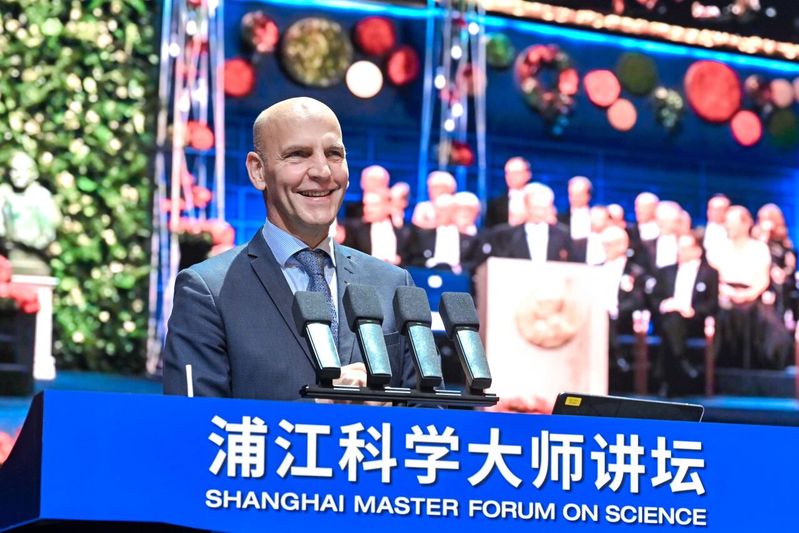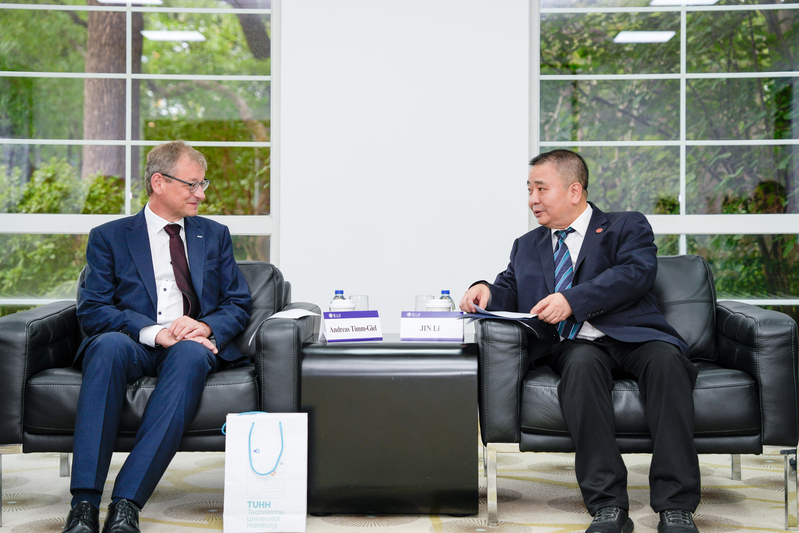

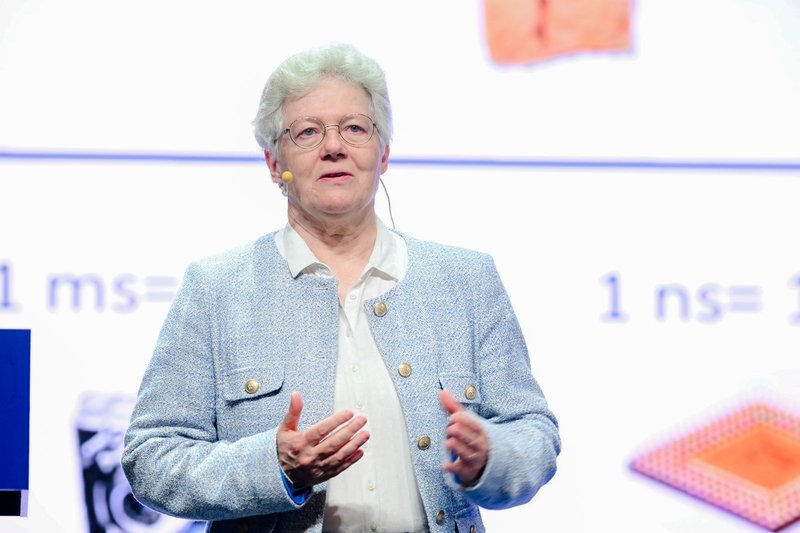
On April 18, Anne L’Huillier, Nobel Prize-winning physicist and professor at Lund University, Sweden, visited Fudan University to give a lecture titled “The Route to Attosecond Light Pulses” in the Shanghai Master Forum for Science, marking her first visit to China.
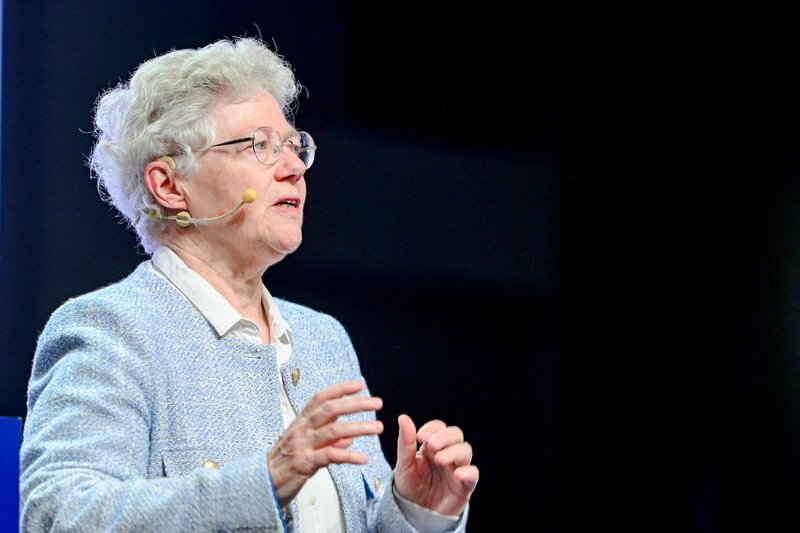
L’Huillier, along with Pierre Agostini and Ferenc Krausz, won the 2023 Nobel Prize in Physics for developing methodsto generate attosecond light pulses, enabling scientists to see electrons moving inside atoms, molecules, and solids—something previously impossible.
To grasp the scale, 1 attosecond (10-18 seconds) is to 1 second what 1 second is to the age of the universe. Capturing electron motion at this speed requires a “camera” far beyond conventional technology: ultrafast attosecond laser pulses. As L’Huillier explained, this is like building a camera fast enough to watch electrons dance inside atoms.
In the late 1980s, as a young researcher at the Commissariat à l'Energie Atomique, in Saclay, France, L’Huillier accidentally discovered a solution while experimenting with infrared lasers and gases. She observed high-order harmonics, a phenomenon where the gas emitted overlapping flashes of extreme ultraviolet light, naturally forming attosecond pulses. This serendipitous breakthrough laid the foundation for the world’s fastest camera, giving scientists unprecedented temporal precision to study electron dynamics.
Before attosecond pulses, ultrafast processes were studied on the femtosecond scale (10-15 seconds), capturing atomic vibrations and chemical reactions—a breakthrough that earned Ahmed H. Zewail the 1999 Nobel Prize in Chemistry. Yet electrons move thousands of times faster, requiring attosecond precision to resolve their dynamics. Attosecond technology has sparked another ultrafast revolution, allowing scientists to measure electron emission delays in the photoelectric effect and explore interactions that were previously invisible.
Applications are already emerging across disciplines. In chemistry and biomedicine, attosecond pulses allow observation of charge transfer and DNA damage. In industry, extreme ultraviolet light pulses enable nondestructive inspection of nanoscale semiconductor structures, supporting the development of next-generation electronics.
Now more than half of L’Huillier’s work involves teaching, connecting research with practical experiments and inspiring the next generation. The day she won the prize, she was in the middle of teaching a class of over a hundred students. Even after getting the news, she didn’t break off the lesson and completed it as usual.
From a young researcher at the French Atomic Energy Commission to postdoctoral positions in Sweden and the United States, and eventually establishing her own research team at Lund University, L’Huillier’s career path has been steady, solid, and richly varied. She said that throughout her research, she kept learning new things—and that was what drove her forward. She also encourages international research experiences and advocates greater female participation in science.

During the Q&A session, one audience member asked what kind of impact attosecond technology might have on everyday life in the next decade. L’Huillier said that while attosecond technology has already shown potential in chemistry, physics, and industrial inspection, large-scale applications will still require more time and further observation.
When L’Huillier was asked about the growing number of Chinese students studying in Europe, she said that working in different countries had broadened her own way of thinking. Drawing on her experiences in France, Sweden, and the United States, she encouraged students to pursue international opportunities and experience different research environments.
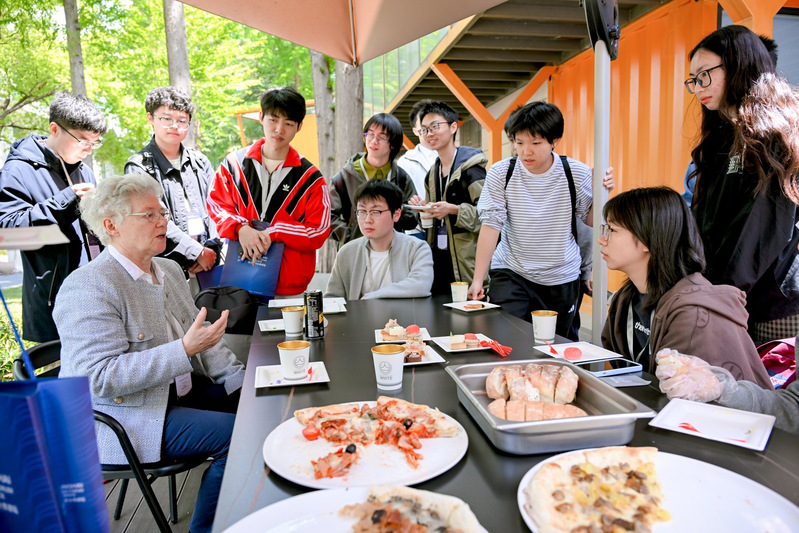
And as the fifth woman to win the Nobel Prize in Physics, L’Huillier also shared her observations on women in science. She noted that many of the most active participants in the lecture were female students and described this as a very positive sign, encouraging more women to stay in scientific research.
The lecture concluded with lively discussions between L’Huillier and Fudan students, underscoring the excitement of the attosecond world, where humans can now see, measure, and one day control the ultrafast dance of electrons.
(END)
Writer: CHENG She Vern
Proofreader: YANG Xinrui
Editor: WANG Mengqi, LI Yijie