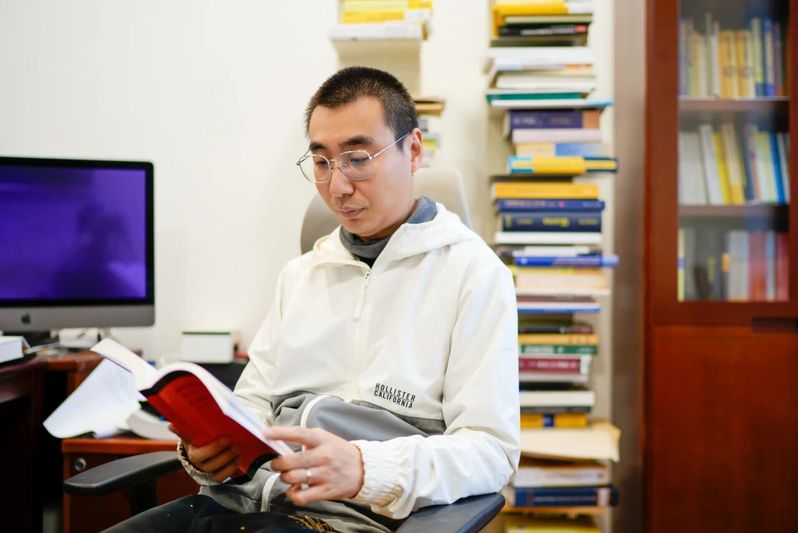

As the principal investigator leading COGNIZE Lab (Cognition and Neuroimaging Lab) at Fudan University’s Institute of Science and Technology for Brain-Inspired Intelligence (ISTBI), Professor Deniz Vatanseverand his lab members study several seemingly distinct topics in brain science, but all under one big umbrella: mental navigation.
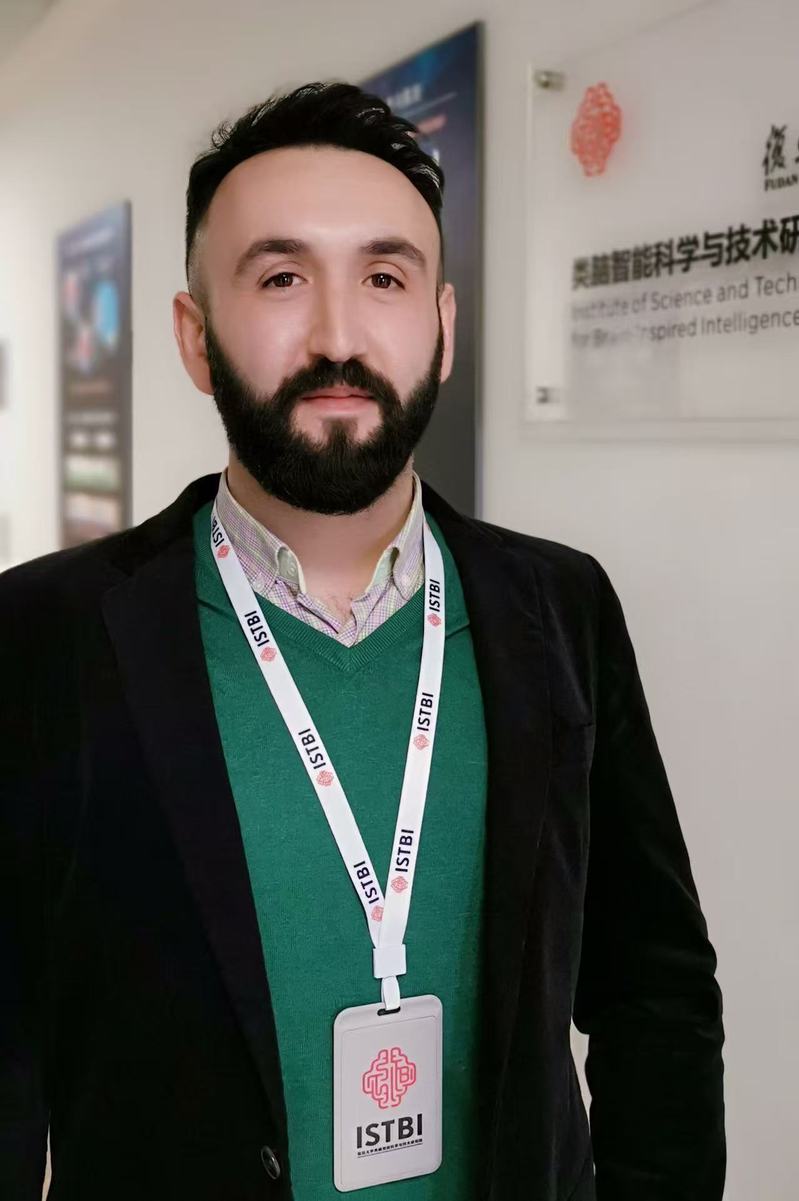
Here’s the question that drives them: How does the brain take everything that happens to us in our daily lives and turn it into knowledge that actually helps us make decisions?Their hypothesis is simple: The brain navigates ideas the same way it navigates physical space.
Decoding the Brain’s Inner GPS
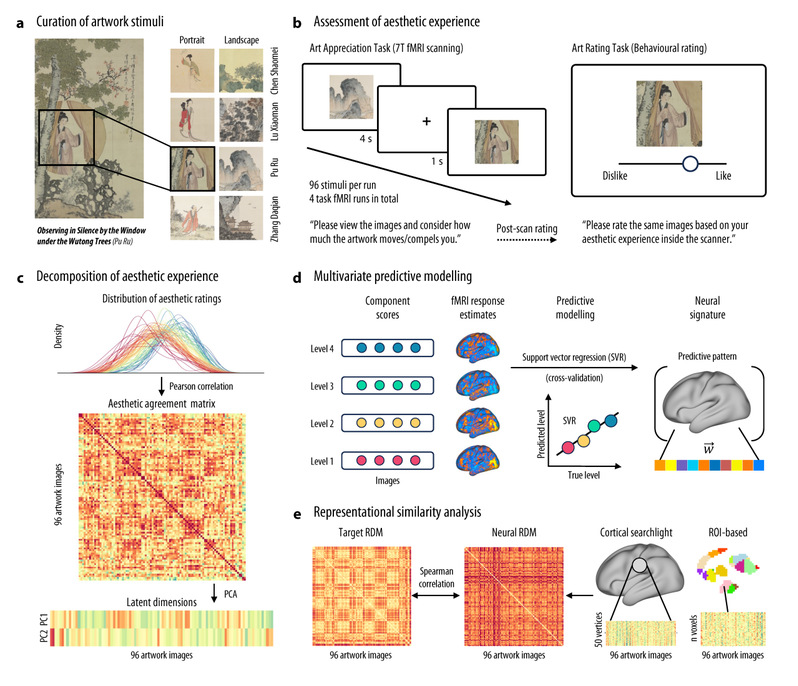
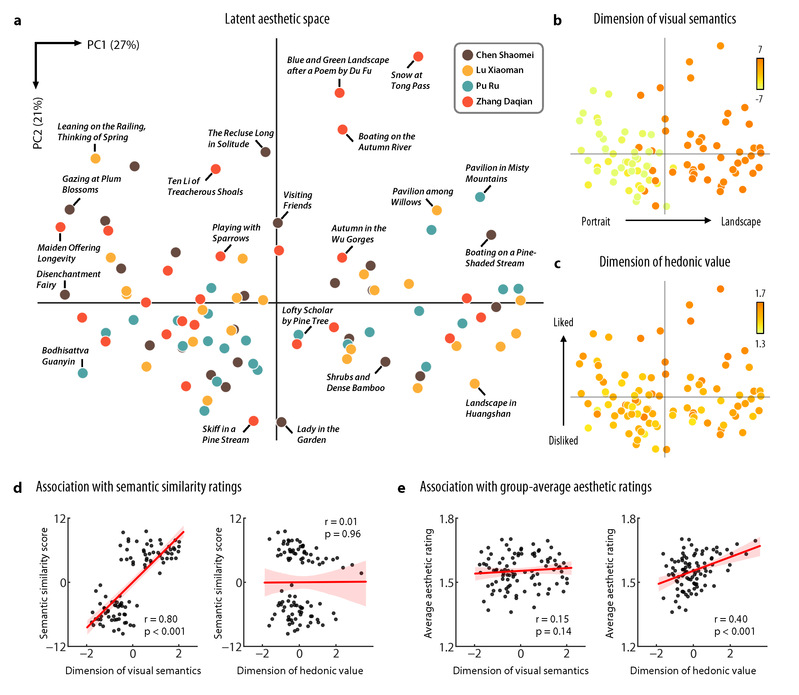
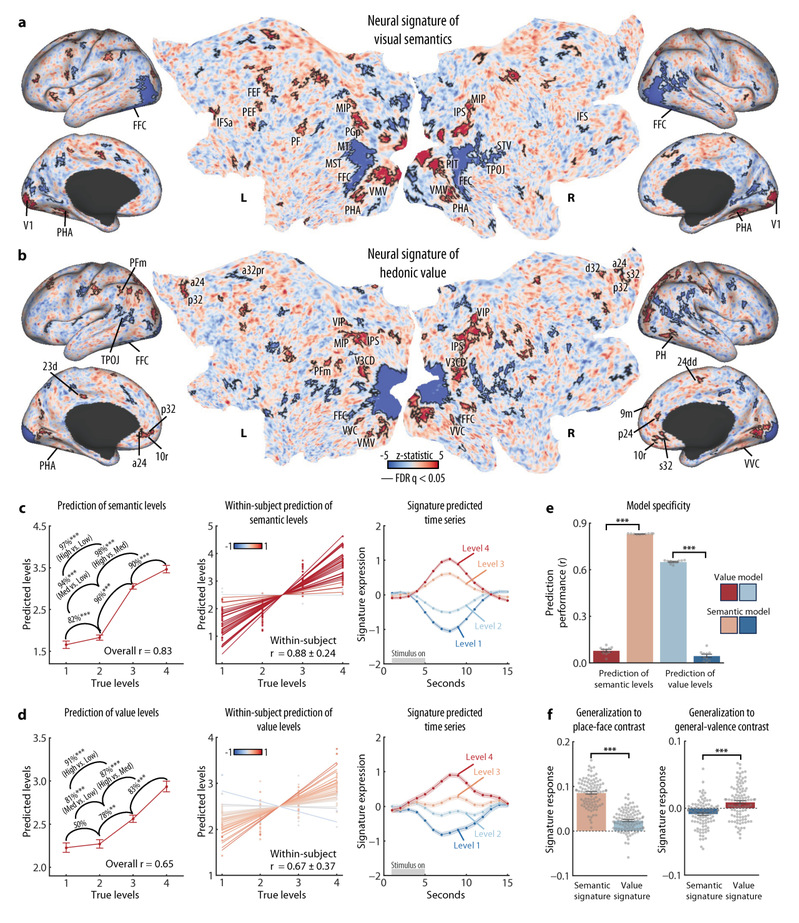
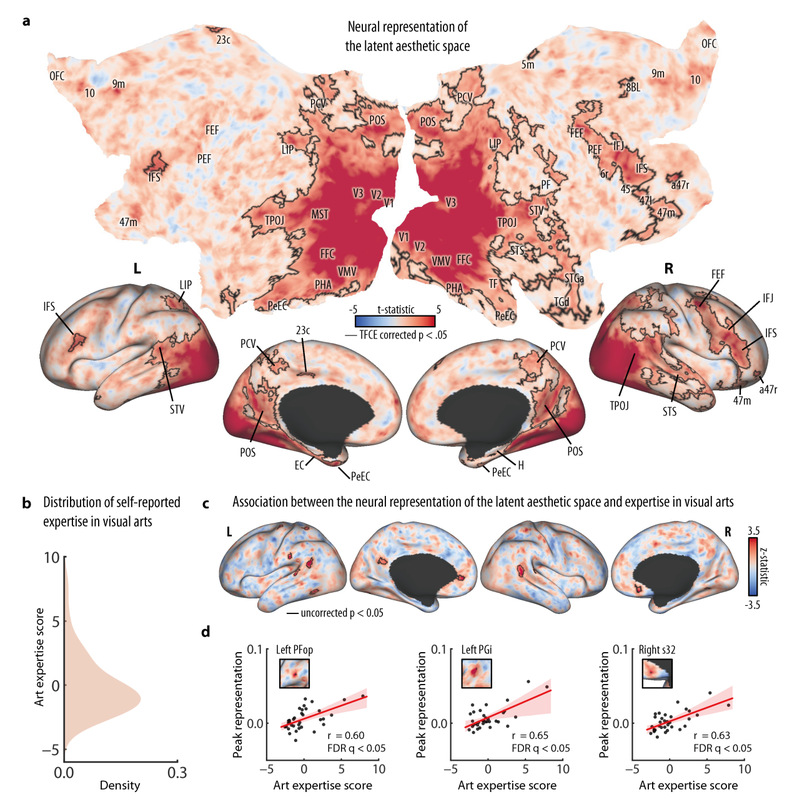
Figure 1. Experimental procedures and analytical framework
Figure 2. Decomposition of shared aesthetic experience into low-dimensional cognitivecomponents
Figure 3. Neural prediction of latent components underlying shared aesthetic experience
Figure 4. Neural representation of the latent aesthetic space and its relation to art expertise.
One of the lab’s recent studies, published last month in Nature Communications titled “Latent neural architecture organising shared aesthetic evaluations of visual artworks”, explores this question: How does the brain evaluate the beauty of an artwork?
“Neuroaesthetics is still a very small community,” Vatansever says. “Most existing studies are in the West, so they mostly use Western paintings.” To fill this gap, the team chose to use 96 Chinese ink-and-wash paintings as the material for the experiment.
Inside a high-resolution 7T fMRI scanner, participants viewed these paintings and rated each one afterward. The team then used a technique called collaborative filtering, the same kind of algorithm behind movie recommendations, to build an “aesthetic agreement matrix.” This allowed them to extract two key dimensions underlying our shared aesthetic judgments.
The first is visual semantics — what’s in the painting: figures, scenes, objects. The second is hedonic value — how much pleasure it gives us. These two dimensions are processed separately, but together they shape what we call beauty.
More importantly, the team found that the default mode network(DMN), a set of brain regions linked to imagination, self-reflection, and meaning-making, becomes more engaged as participants gain more artistic experience. In other words, art training doesn’t just change what we know. It literally reshapes how our brain processes beauty.
This is exactly the kind of process that COGNIZE Lab’s “mental navigation” theory seeks to explain. In fact, COGNIZE Lab has proposed that the DMN may be the key to “mental navigation”, transforming everyday experiences into knowledge that can then guide decisions and actions.
But Vatansever admits much remains unknown. “We know physiologically it’s there in the brain,” he says. “But we still don’t necessarily know what it does or how it contributes to cognition.”
To chip away at that mystery, the lab has also been exploring how the DMN handles spatial information. In November 2025, the lab published a study in Nature Communications, titled“Graded encoding of spatial novelty scales in the human brain” on how our brain keeps track of what is new and what is familiar as we move through the world. Participants explored a virtual environment while their brains were scanned. Rather than flipping from one to the other, the study discovered that the brain represents the transition from “novel” to “familiar” as a smooth gradient.
The lab’s exploration of the DMN doesn’t stop there. This March, another paper“Machine-Learning Decomposition Identifies a Big Two Structure in Human Personality with Distinct Neurocognitive Profiles” appeared in Advanced Science, revealing the “big two” structure of human personality: how we engage with others socially, and how we engage with ideas and experience, both anchored on key DMN regions of the brain.
COGNIZE Lab is now in conversation with both Fudan Art Institute and the West Branch of Fudan University Huashan Hospital, exploring how their findings might one day inform aesthetic education, as well as treatments for neuropsychiatric disorders.
The Road to Fudan’s ISTBI
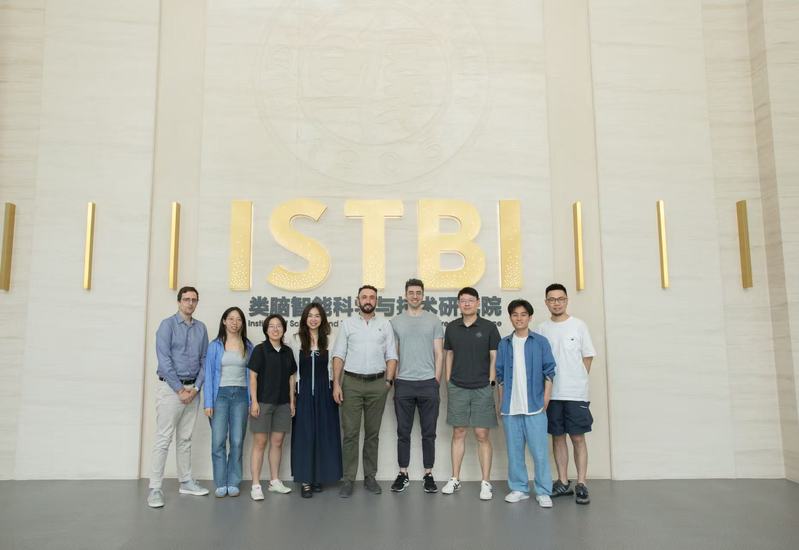
COGNIZE Lab members
Vatansever didn’t plan to end up in Shanghai. In 2018, he was finishing a postdoc at the University of York when his mentors from his PhD days at the University of Cambridge, Barbara Sahakian and Trevor Robbins, both now ISTBI professors, told him about opportunities for young scientists at Fudan’s ISTBI.
He met with Professor FENG Jianfeng, dean of ISTBI. “He invited me to give a talk in Shanghai and experience the city for myself,” Vatansever recalls.
He came. He liked it. And in Novemberthat year, he joined Fudan’s ISTBI.
What he found here was an “action-oriented” culture. “It’s like: let’s go ahead and do it. Make some mistakes along the way, then fix it and do it again,” he explains.
Asked to sum up his years at Fudan in one word, Vatansever says: “Progress.”
Not just scientific progress, he explains, but personal growth. “The feeling I’ve had over the past eight years is that Fudan encourages independence, the freedom to establish yourself as an independent researcher.”
In 2022, he secured funding from the “China Brain Project”, the Chinese National Science and Technology Innovation 2030 program for Brain Science and Brain-like Research. Two years later, in 2024, he was promoted to Research Professor and Principal Investigatorat the university.
“Progress didn’t happen by itself. It happened with all these different people helping and supporting me.” Looking back on his eight years at Fudan, he is deeply grateful to his colleagues and the staff, especially those at ISTBI and the Zhangjiang International Brain Imaging Center. “If I trace back to the start, it wouldn’t have happened without my meeting with Professor Feng, who put his trust in me. At the end of the day, especially with young scientists, you’re taking a chance, right? It could turn out good, or it might not.”
Vatansever’s COGNIZE Lab now brings together international and Chinese students, and he strongly emphasizes a collaborative, supportive culture. As some of his lab members finish their postdoc training, he hopes they will carry that culture into their own labsand research directions, wherever in the world they end up. “That’s just how science grows over time,” he says.
From Turkey to Shanghai, One Sip at a Time
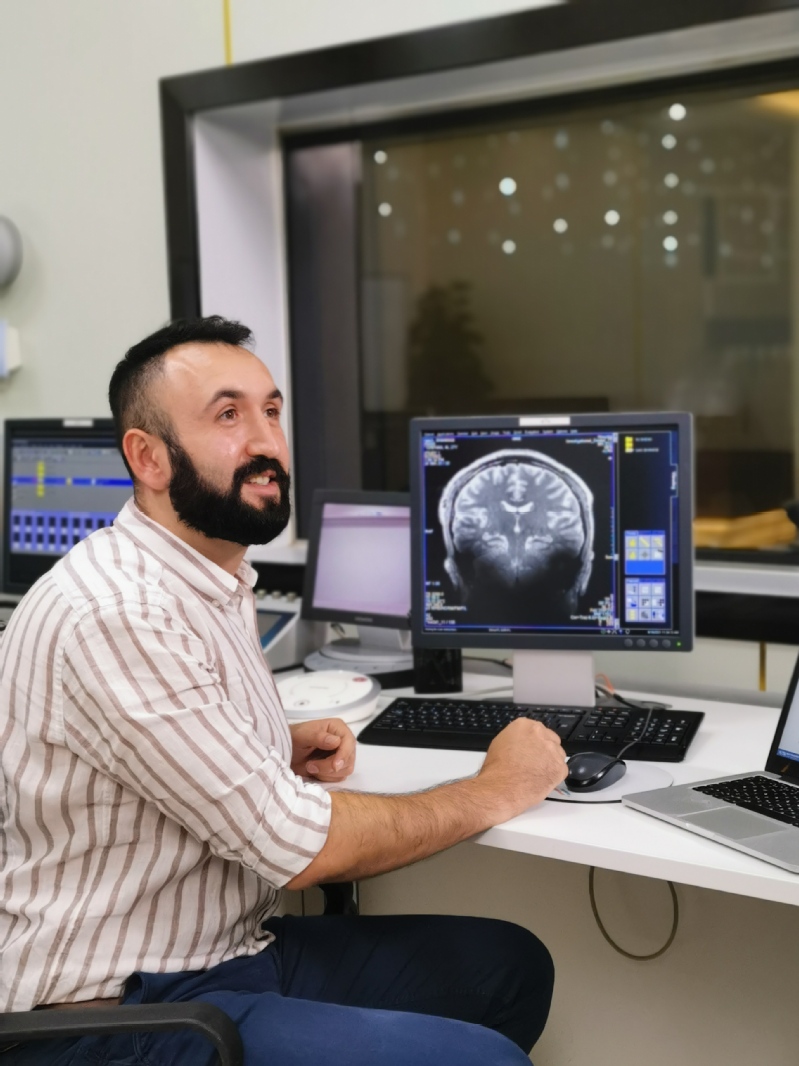
Vatansever’s own life has been a kind of navigation — across countries, languages, and cultures. Born in Bulgaria and raised in Turkey, atage 16, he left Turkey for the United States through a United World Colleges program.
His expectations of the United States were “basically all based on my experiences from watching movies and TV shows,” he admits. But he managed to adapt slowlyby finding that many other international students were in the same boat.
That experience taught him that cultural adaptation isn’t about fluency. It’s about letting go of the fear of difference.
Eight years ago, he moved to China, where the cultural and language barriers were even greater. Fortunately, his colleagues at ISTBI all spoke fluent English, which eased the transition. Meanwhile, he started learning Chinese and has since passed HSK Level 4.
“Shanghai is such a metropolitan city,” he says. “I love immersing myself in the culture, visiting museums, exploring new spots.” After nearly eight years in Shanghai, Vatansever has picked up some local habits. “The biggest change is definitely drinking hot water — even in summer.”
He loves Shanghai’s coffee culture. “I feel like there’s a period around May and June when new coffee shops open to prepare for the summer,” he shares, describing a pattern hehas noticed as a coffee enthusiast.
Reflecting on the past eight years at Fudan — building a lab, shaping a research community, learning a new language, finding his rhythm in Shanghai — Vatansever believes that Fudan University is where young scholars with ambitions can truly grow.
Presented by Fudan University Media Center
Writer: ZHOU Yiting, LI Yijie
Editor: WANG Mengqi