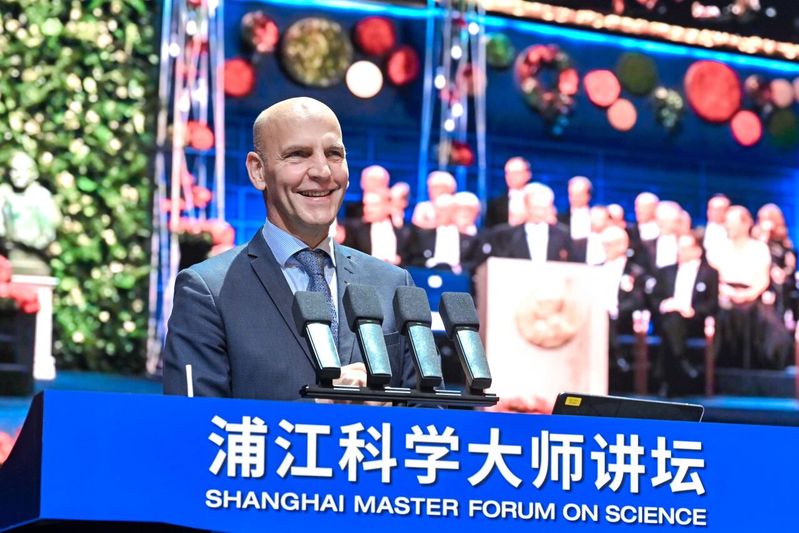
On July 2, Fudan University held its 2026 commencement ceremonies at the Zhengda Gymnasium, conferring degrees upon more than 10,000 undergraduate and postgraduate students.
A Call to “Sustained Endeavor” for a New Generation
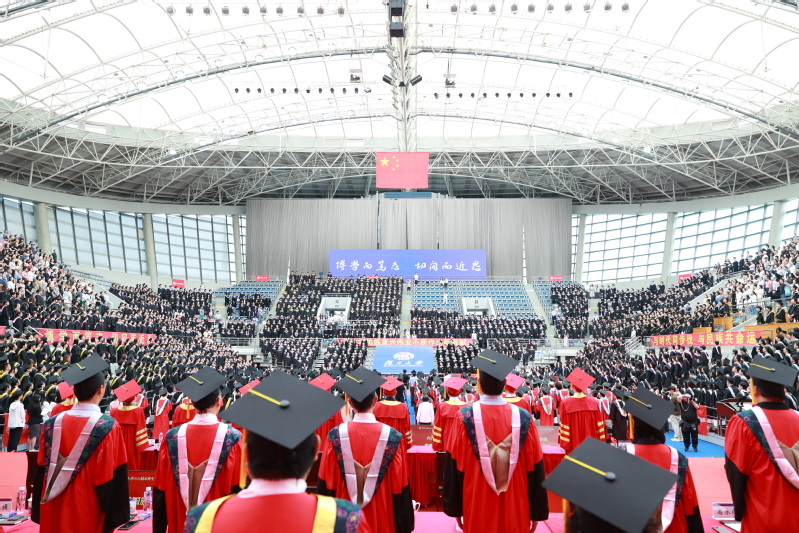
Addressing the undergraduate graduates in the morning ceremony, President JIN Li of Fudan University urged students to view their upcoming journey not as a sprint but as a marathon. He distinguished genuine effort from mere competition, emphasizing that true fulfillment comes from connecting one’s work to a purpose larger than oneself.
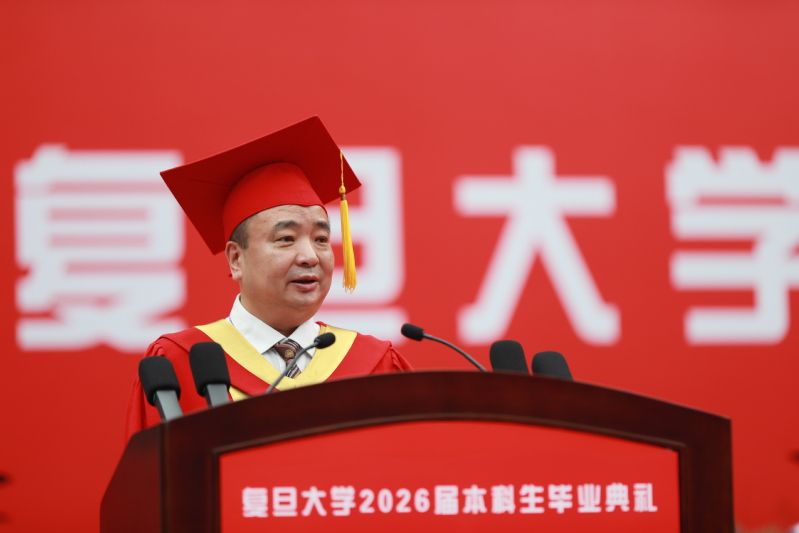
“Leaving campus is a migration from a ‘greenhouse’ to the ‘uncharted territory’,” President Jin remarked. “The future is bright, but the road ahead will have storms. How do we face it? Through sustained endeavor.” He encouraged graduates to embrace collaboration, resilience, and their own unique paths.
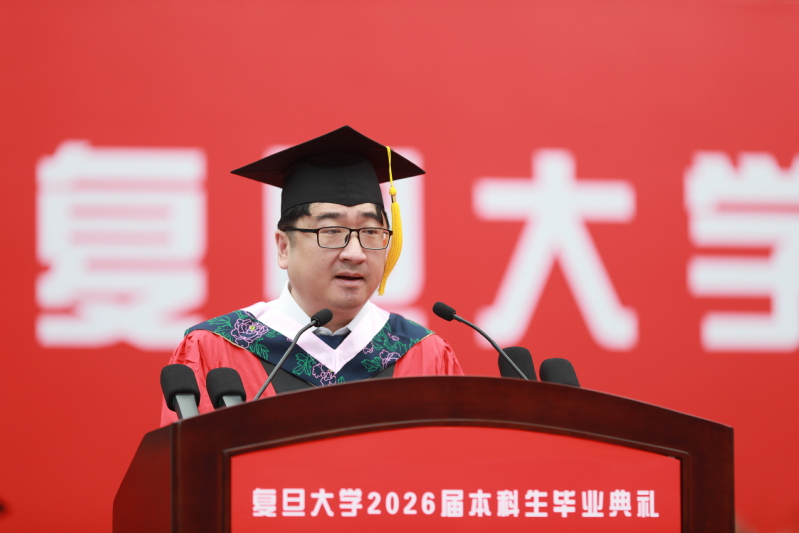
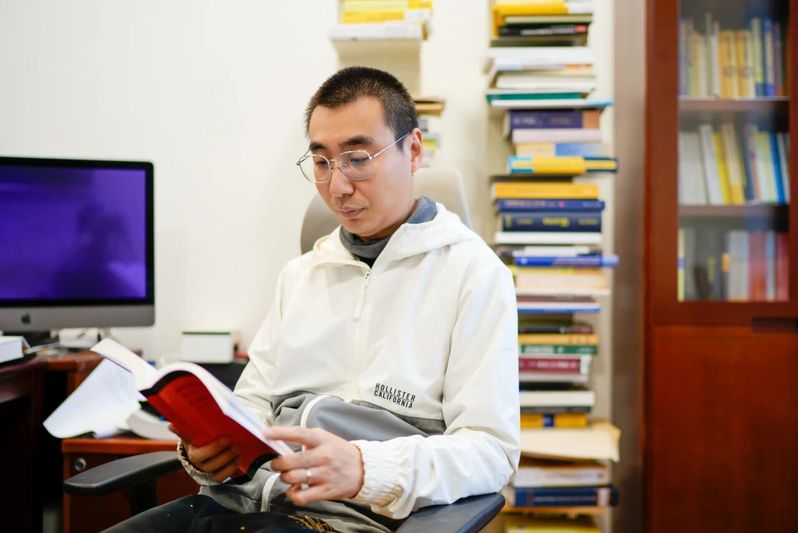
Associate Professor WEN Shaoqing at the Department of Cultural Heritage and Museology, shared how he has navigated the intersection of archaeology and artificial intelligence. He noted that Fudan had proactively introduced over 100 AI-related courses in 2024 to equip students with “stem-cell-like” capabilities to thrive amid rapid technological change. Addressing student anxieties about being outpaced by AI, he advised: “If you can’t keep up, wait a little. Learn to reconcile with yourself and reject internal friction. Face the world and its changes with composure and grace, as a true Fudaner.”
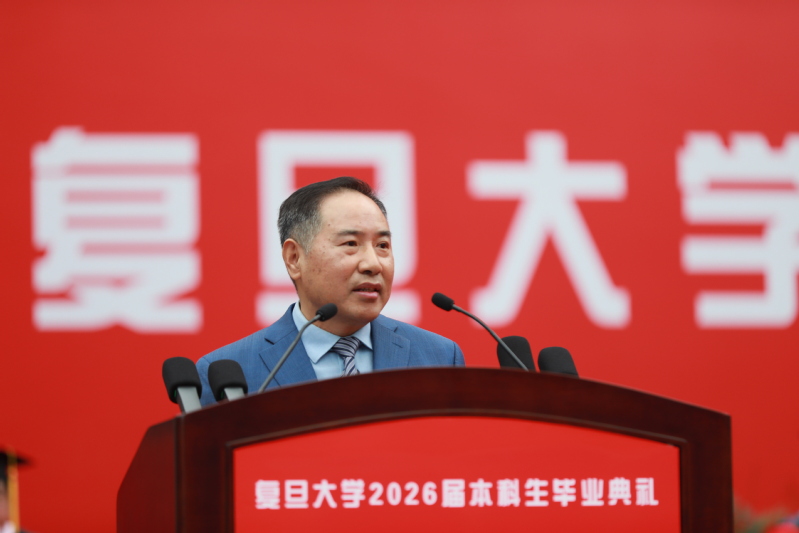
TAN Ruiqing, a Fudan Board Member and 1984 chemistry alumnus, shared three insights with graduates: integrate personal aspirations with national progress; take time to grow deep roots like bamboo before shooting upward; and commit to a lifetime of contribution. Life is a marathon, not a sprint, he said. He urged graduates to stay healthy, stay grounded, and carry the Fudan spirit forward.
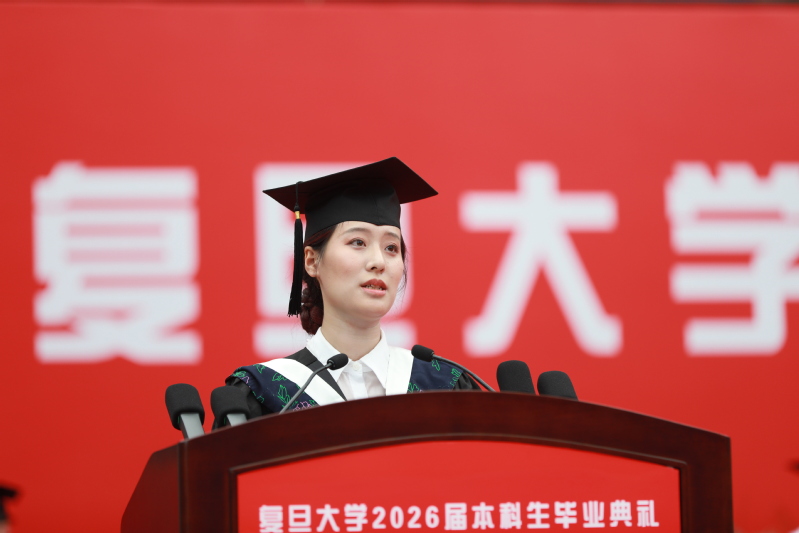
Undergraduate representative YE Yinuo, a medical student, reflected on her five-year journey from confusion to purpose. Through laboratory research, volunteer science communication, and teaching in western China, she discovered that basic research is the foundation of national scientific strength. “Fudan taught us not to answer with a standard key, but to ignite curiosity with passion and respond to the times with action,” she said.
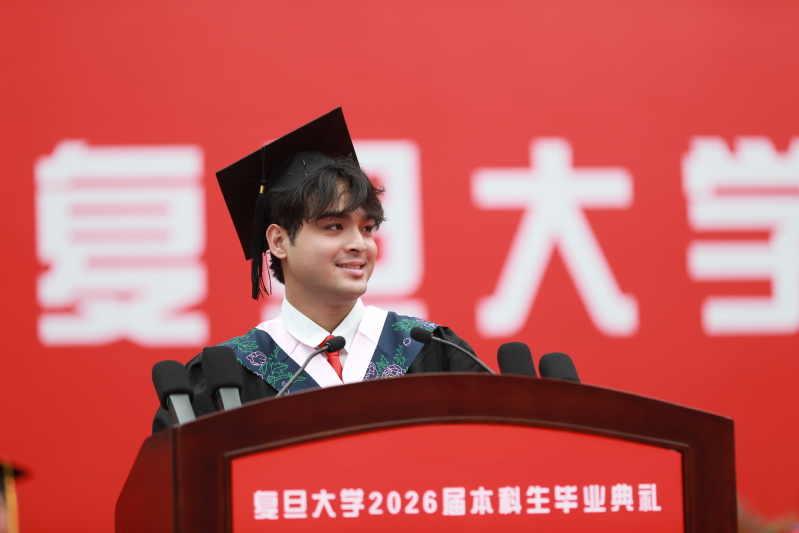
The ceremonies also showcased Fudan’s international community. Nicodemus D'silva, a student of multi-ethnic heritage from the International Cultural Exchange School, shared how Fudan gave him an identity beyond borders. “Where I am from no longer seems to matter,” he said. “My most cherished identity now is being a ‘Fudaner’.” He will remain in Shanghai for a career in economic trade, hoping to stay close to his alma mater.
The “Difficult Road” and the “New Long March”
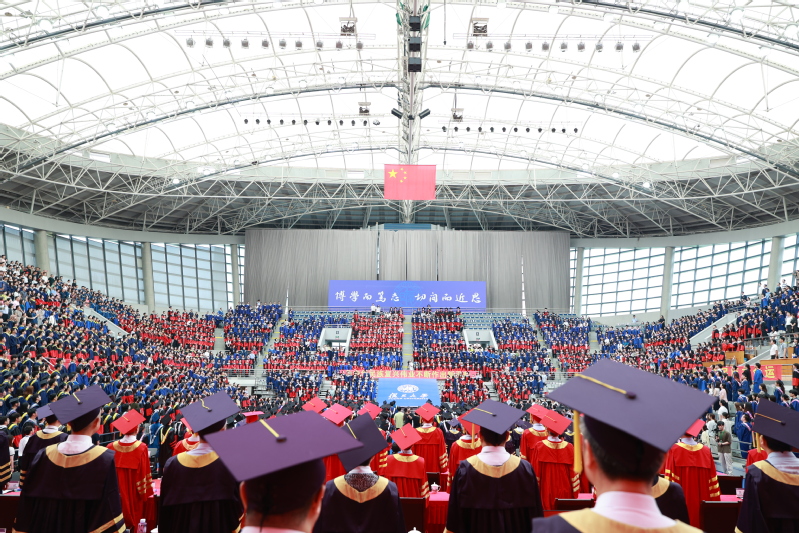
At the afternoon postgraduate ceremony, President JIN Li framed the graduates’ future as a “New Long March”, drawing a parallel to the 90th anniversary of the Red Army’s historic Long March. He encouraged students to embrace the “difficult road”, arguing that such paths often lead to greater rewards and personal growth.
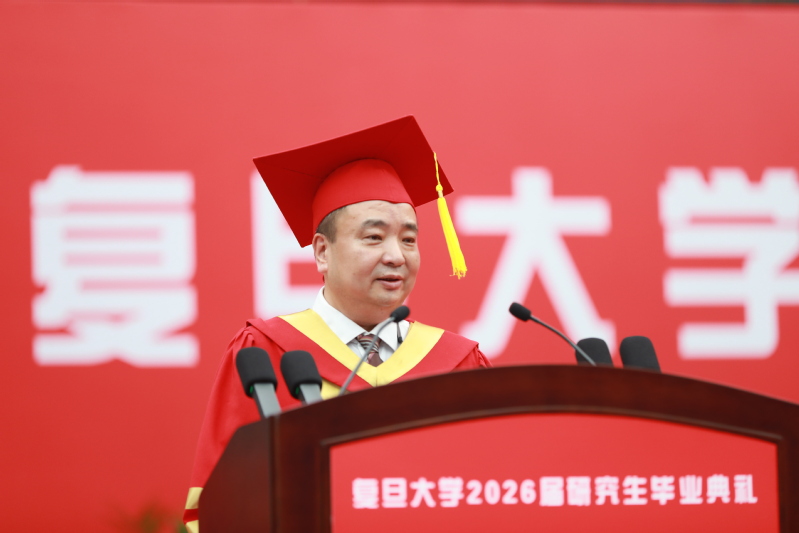
“The ‘South Slope’, the comfortable, low-risk path, is already crowded,” Jin observed. “To break new ground, we often must take the ‘North Slope’ that others are unwilling or unable to tread. This is true for institutional reform and for individual endeavor.” He praised the resilience cultivated through graduate studies—learning to make judgments amid complexity, persist through uncertainty, and collaborate in solitude. “The tough road makes you stronger,” he said, “and ultimately, more grounded.”
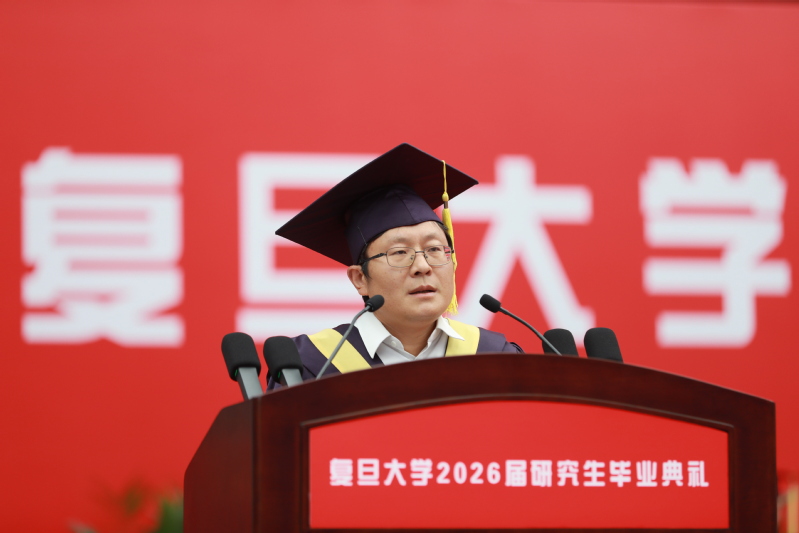
Professor YU Jintai from Fudan University Huashan Hospital, a faculty representative, encouraged graduates to “choose the hard problems” and “embrace the solitude” of deep work, reminding them that true growth often happens in moments of greatest difficulty. “Only you can defeat yourself,” he told them. “Let the judgment of right and wrong be your own compass; let praise and criticism be decided by others; and let success and failure be left to time.”
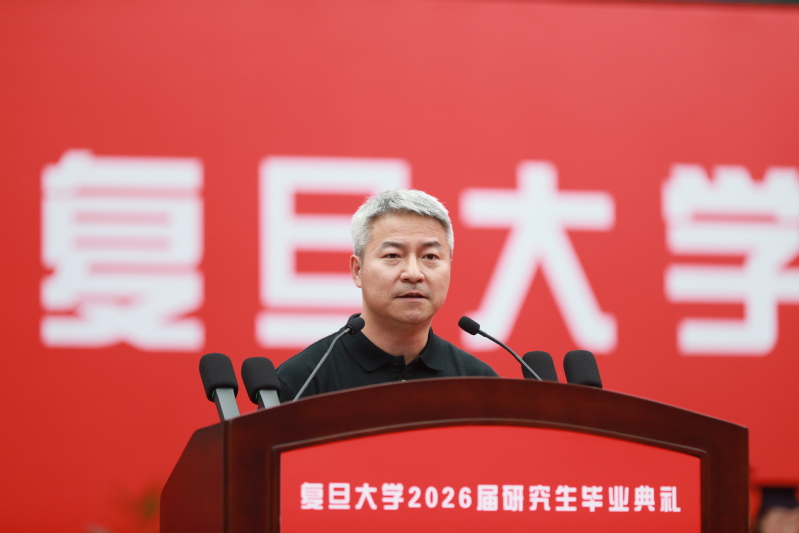
WU Gansha, a Class of 2000 Fudan alumnus and co-founder of UISEE Technology, challenged graduates to consider the future of AI and humanity. “Whether we become the lucky participants in a new age or the last generation of human civilization depends on whether we take the hard but right path—and whether we retain our ‘human touch’: reverence and gratitude.”
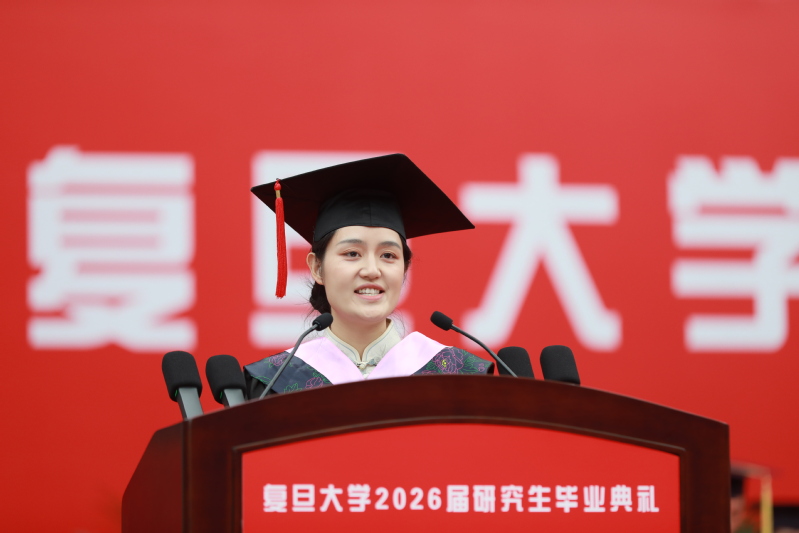
Doctoral graduate XIAO Fulian from the Department of History shared how Fudan gave her the courage to seek truth, through a five-year oral history project preserving the legacy of the medical pioneers of Fudan University Shanghai Medical College, and the confidence to cross disciplines, collaborating internationally on AI and historical research. “At Fudan, as long as you have curiosity, even the wildest ideas can find companions,” she reflected.
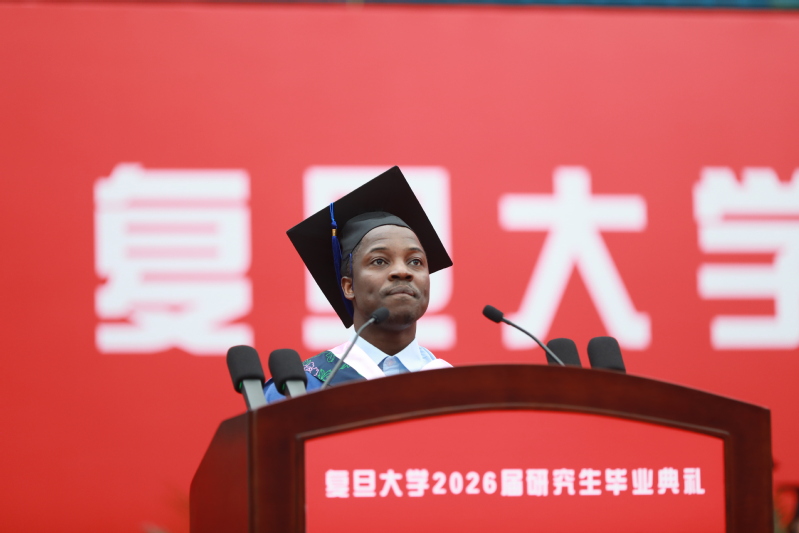
Abou Biridogo, a master’s student from Mali at the School of Journalism, chose Fudan on his teacher’s advice: “If you want to study journalism,choose Fudan.” His thesis on TikTok’s impact on Mali’s news ecosystem was accepted by International Communication Association Conference (ICA) 2026. “Fudan changed my life,” he said. “No matter where you come from, if you are willing to come, Fudan will give you a platform.” He will stay in China to foster exchanges between China and West Africa.
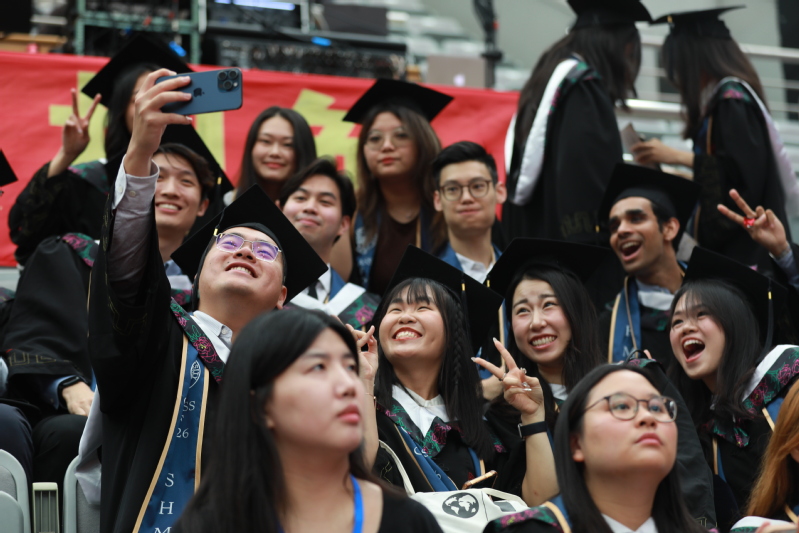
The ceremonies concluded with the traditional turning of the tassel, symbolizing academic completion and the start of a new voyage.
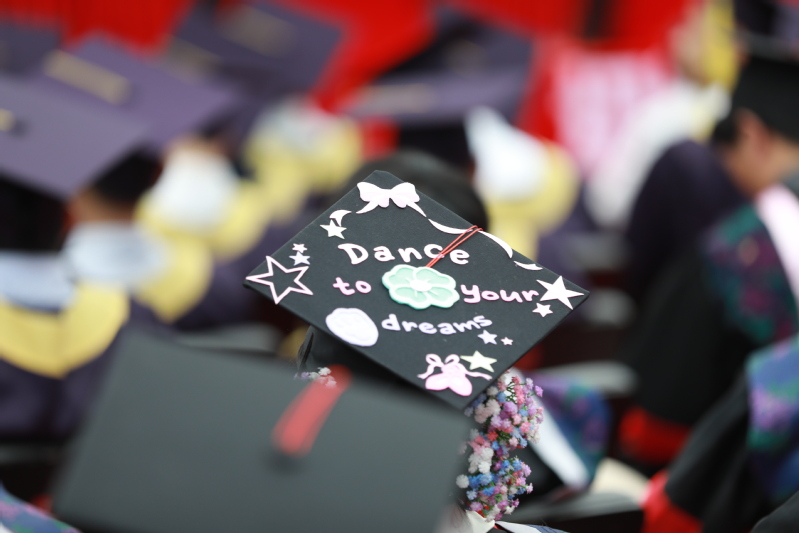
The Class of 2026 now joins a global network of Fudan alumni, carrying forward the university’s motto: “Rich in knowledge and tenacious of purpose; inquiring with earnestness and reflecting with self-practice.”(博学而笃志,切问而近思)
(END)
Writer: LI Yijie
Editor: WANG Mengqi