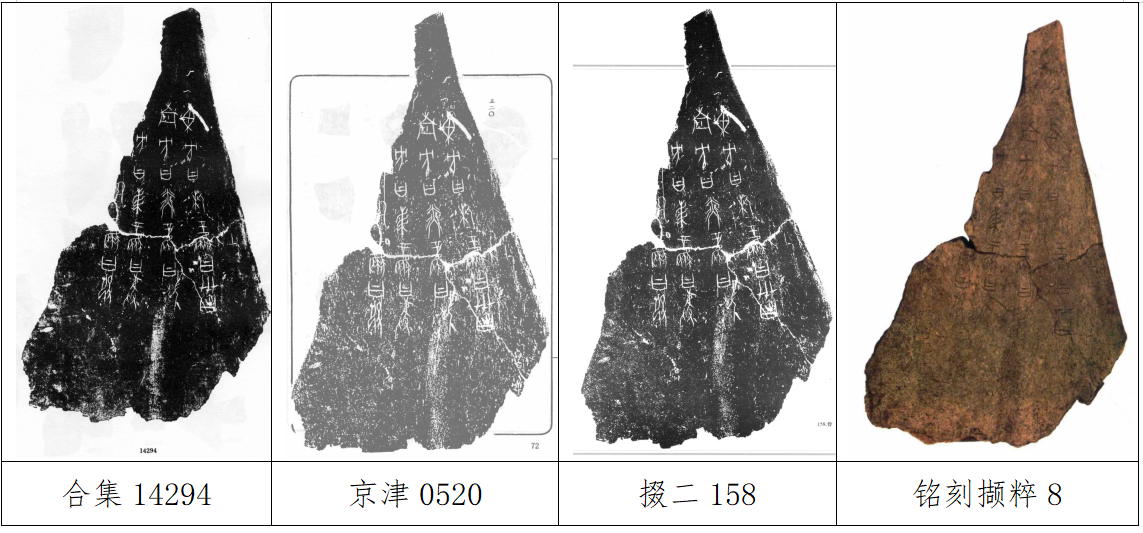

For researchers working with Chinese oracle bones, finding the right piece is harder than it sounds. The same inscribed bone or shell may appear in different catalogs under different numbers and names, forcing scholars to search manually through multiple publications to identify the one they need.
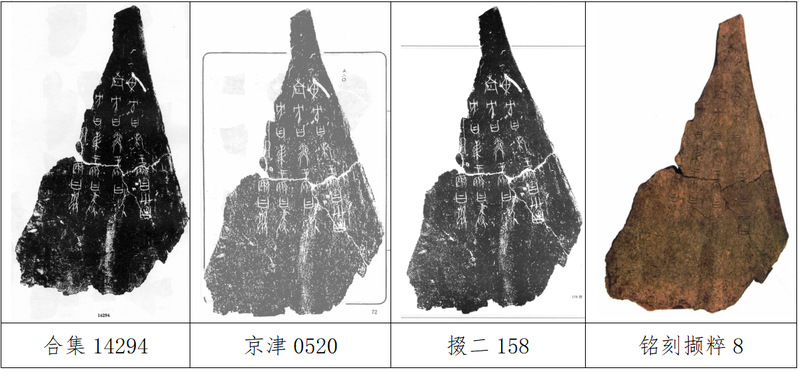 The same inscribed bone can appear under different names across catalogs
Oracle bone inscriptions are the earliest known systematic form of Chinese writing. They record royal divination, warfare, agriculture and ritual in Shang-dynasty China, a civilization roughly contemporary with the New Kingdom of ancient Egypt and serve as primary sources for the study of early states rather than later compilations. The material, however, is widely dispersed: more than 160,000 pieces are held by institutions around the world, and about 80,000 have been systematically published or gradually released since the inscriptions were discovered 120 years ago. Even when the same bone survives intact, it may carry several names across catalogs — a consequence of decades of trading, shifting collection status and fragmentation, compounded by early photographs that were often too poor for reliable identification. A slight variation in detail may represent a completely different character.
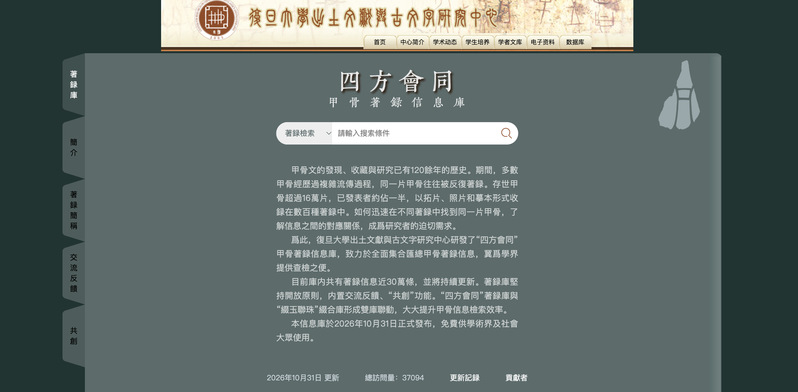
The open oracle bone database“Sifang Huitong” 四方会同
The “Sifang Huitong” database, launched by a team at Fudan University’s Center for Research on Chinese Excavated Classics and Paleography on Oct. 31, brings together nearly 300,000 records of Chinese oracle bone inscriptions, drawn from about 300 types of cataloging materials published since 1903. Each oracle bone is assigned a unique ID, so that users can retrieve all cataloging information for a target piece in a single search. The database also standardizes cataloging conventions, verifies and corrects earlier errors, and adds over a thousand explanatory notes reflecting the latest scholarship. A linked platform integrates updates on rejoined oracle bone pieces, helping researchers match separated fragments of the same bone and cutting down on repetitive searches.
The project was built as a volunteer effort by four doctoral students at the center, who began work in their spare time in 2023. In making the database fully accessible, they want to make oracle bone research less daunting — for specialists and interested laypeople alike.
The database is free to access at http://fdgwz.org.cn/ZhuLuLab/Home and welcomes contributions to future updates. It is also expected to support the center’s wider use of artificial intelligence in the study of excavated classics, including oracle bone inscriptions and Mawangdui silk manuscripts.
(END)
Writer: LI Yijie
Editor: WANG Mengqi