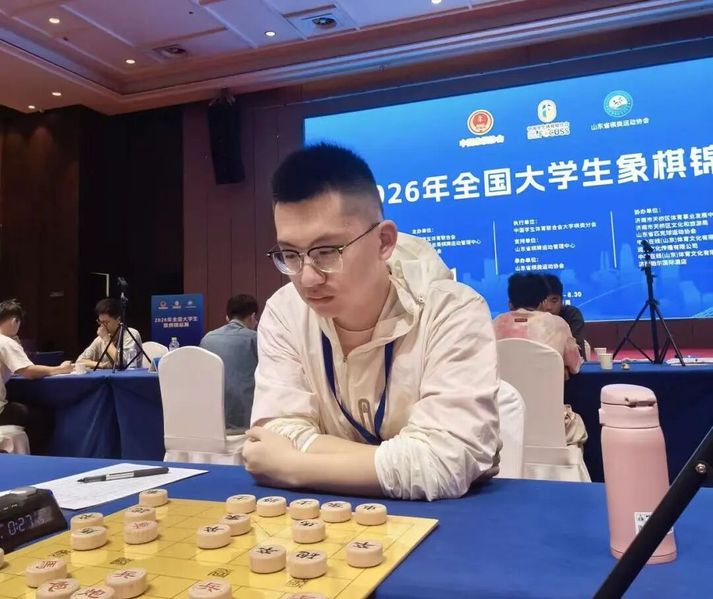

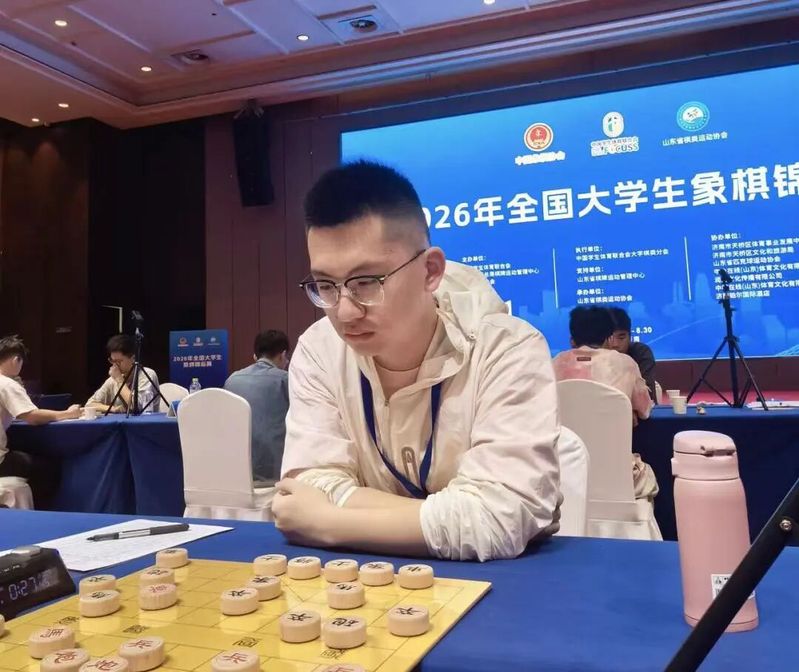
 Fang at the 2026 National College Student Xiangqi Championship
This August, FANG Ye won the men’s individual title at the National College Student Xiangqi Championship. A pharmacy undergraduate at Fudan University and a National First-Class Athlete in Xiangqi, Fang describes the game in his own words: “Xiangqi is a sport. It’s a marathon—double the length of a normal one.”
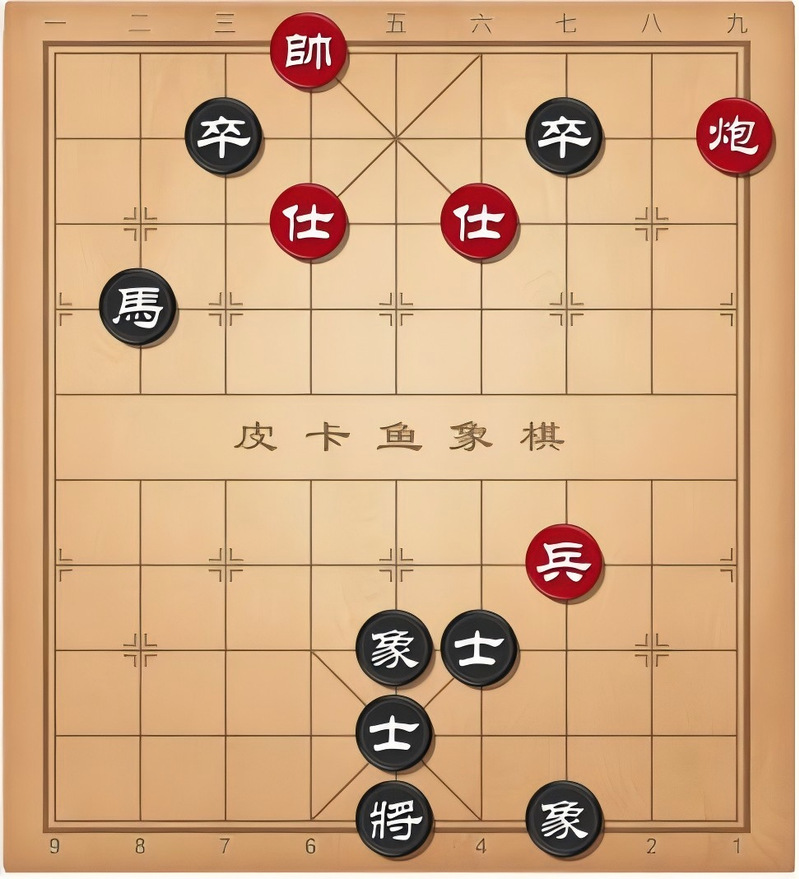
A simulated board position from Fang’s decisive game at the championship, where first place hung in the balance
Xiangqi, also known as Chinese chess, is a two-player strategy game with a long history, played on a 9×10 board divided by a central gap. It is faster and more aggressive than chess: its cannon captures by jumping over another piece, and a player with no legal move loses rather than earning a draw. The game is estimated to have more than a billion players worldwide.
Fang’s journey began unexpectedly in childhood, when his father signed him up for a local Xiangqi class, intending it merely as an extracurricular activity. But Fang soon developed a deep interest in the game. As a young boy, he would sit quietly at the board for a whole afternoon, thinking through his next moves.
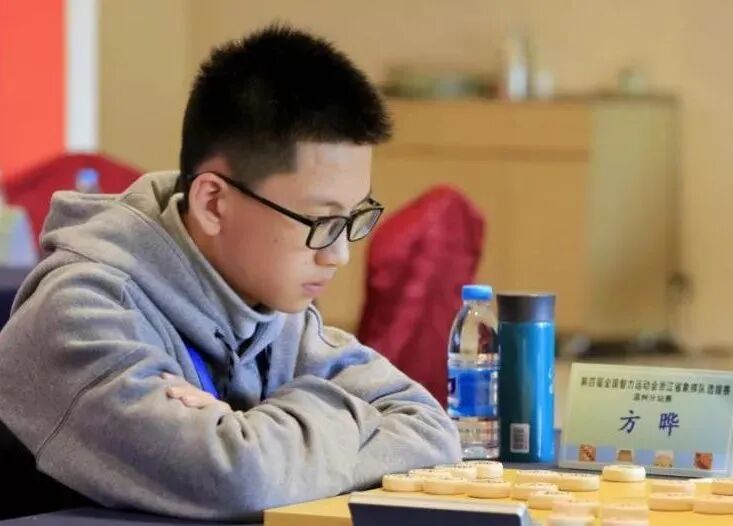
Fang at 12, competing
His parents supported his passion, with one clear ground rule: Xiangqi must never come at the cost of his schoolwork. To honour that agreement, he prioritized coursework on weekdays, took part in Xiangqi events on weekends, and reserved holiday breaks for intensive training.
Having played so many opponents, Fang came to understand the importance of winning the mental game. Before every match, he studies his opponent’s habits to tailor his plan. Against conservative players, he stirs up sharp, complex confrontations; against aggressive rivals, he drags out games to test their stamina. Even after matches end, he keeps refining his craft—poring over every game record, and once staying up night after night dissecting a run of frustrating draws until he broke through the slump.
Though Fang occasionally uses AI for practice, he prefers playing against humans. “AI is flawless. It can break down almost any creative plan with computing power,” he says. To him, however, the charm of Xiangqi lies in human imperfection: hesitation, error and on-the-spot adjustment. AI, by contrast, delivers perfect answers without revealing its thinking process.
Now president of Fudan’s Xiangqi Association, which he joined as a freshman, he organizes inter-university matches, freshman contests, and alumni events, creating spaces where players can learn from one another—just as he does over the board.
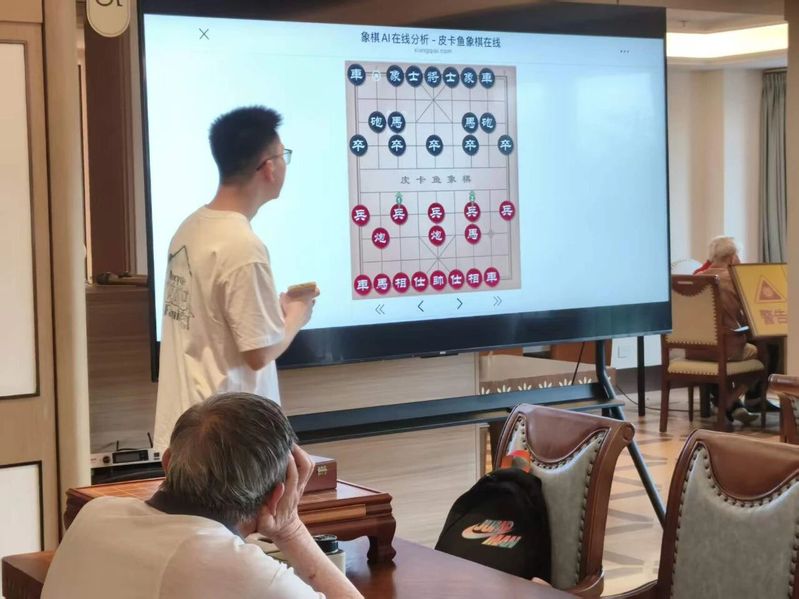
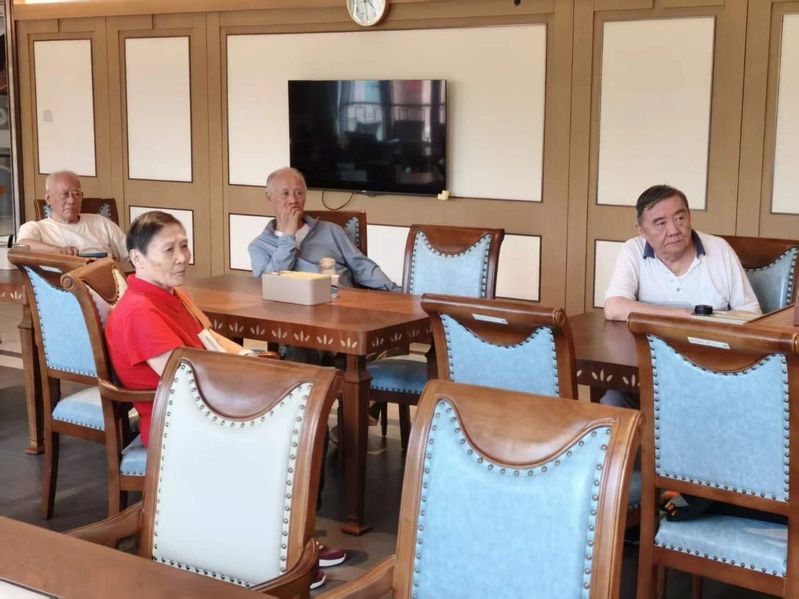
Fang teaches Xiangqi to elderly residents
His association has also hosted workshops for elderly residents at a senior care community in Putuo District in northwest Shanghai, linking Xiangqi tactics to ancient strategic wisdom in easy-to-follow lessons.
For Fang, Xiangqi transcends boundaries. On the board, external differences fade. People of different backgrounds and ages can all enjoy the fun and excitement of this ancient game.
(END)
Writer: WEI Siqi
Proofreader: WANG Yiyao
Editor: LI Yijie, WANG Mengqi